
China-Japan Tensions and the Implications for Asia-Pacific Defense and Aerospace Sectors: Strategic Investment Opportunities Amid Geopolitical Friction
Rising Defense Spending and Technological Competition
Japan's Fiscal Year 2025 defense budget of 8.7 trillion yen ($55.13 billion) reflects a 13th consecutive year of increases, driven by its Defense Buildup Program and the need to counter regional threats, particularly from China. A significant portion of this budget is allocated to modernizing communications infrastructure, including a new satellite system to replace the aging Kirameki-2, and stand-off weapons, with research indicates $5.95 billion earmarked for advanced missile systems and drones. Meanwhile, China is advancing its naval dominance, exemplified by the launch of the Type 076 amphibious assault ship, Sichuan (51), equipped with an Electromagnetic Aircraft Launch System (EMALS) and a 40,000-ton displacement. These developments underscore a strategic arms race, with both nations prioritizing localized production and technology transfer to reduce reliance on foreign suppliers.
Market Trends: PNT Systems and Superhydrophobic Coatings
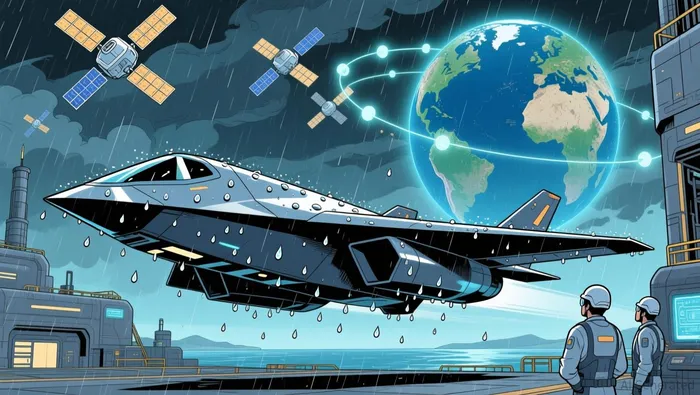 The demand for secure navigation and resilient infrastructure is fueling growth in two critical sectors: GNSS-independent Positioning, Navigation, and Timing (PNT) systems and superhydrophobic coatings. The global PNT constellation market, valued at $2.54 billion in 2024, is projected to grow to $2.9 billion by 2025, driven by the need to counter GNSS jamming and spoofing in defense and aerospace applications. Asia-Pacific is the fastest-growing region, with companies like Honeywell International Inc.HON-- and Thales S.A. leading the development of advanced solutions.
Simultaneously, the superhydrophobic coatings market, valued at $30 million in 2024, is expected to reach $171.7 million by 2034, growing at a 20.2% CAGR. These coatings, used in aircraft systems and military-grade electronics, enhance corrosion resistance and stealth properties, aligning with modernization programs in China and Japan. Innovations in carbon nanotube and graphene-enhanced coatings are further propelling demand.
Strategic Investment Opportunities
Investors seeking exposure to this evolving landscape can consider both equities and exchange-traded funds (ETFs). For instance, Japanese defense contractor Mitsubishi Heavy Industries and European aerospace giant Airbus SE are diversifying supply chains and securing international contracts, such as Australia's Mogami frigate project. In the U.S., companies like Lockheed MartinLMT-- and L3Harris Corp.LHX-- are benefiting from regional arms sales, such as the $705 million HIMARS rocket system deal to Australia.
For diversified exposure, ETFs like the Invesco Aerospace & Defense ETF (PPA) and SPDR S&P Aerospace & Defense ETF (XAR) offer access to a basket of companies operating in both aerospace and defense markets. Additionally, resource firms like United States Antimony Corporation (UAMY) are gaining traction due to their role in supplying critical minerals for defense technologies, including antimony used in ammunition and high-frequency electronics.
Geopolitical Risks and Supply Chain Resilience
While the sector presents compelling growth prospects, investors must remain mindful of geopolitical volatility. Japan's recent missile deployments near Taiwan and Prime Minister Sanae Takaichi's comments on potential military alliances have heightened tensions with China, prompting economic retaliation and market uncertainty. Furthermore, supply chain vulnerabilities-exacerbated by cyber threats and regulatory shifts-necessitate a focus on companies with robust risk mitigation strategies, such as Fortress Government Solutions, which has secured contracts to enhance U.S. Navy cyber supply chain defenses.
Conclusion
The China-Japan rivalry is catalyzing a renaissance in Asia-Pacific defense and aerospace sectors, driven by technological innovation and strategic autonomy. Investors who align with these trends-whether through equities in key players, ETFs, or critical mineral suppliers-can capitalize on the region's transformation. However, success requires a nuanced understanding of geopolitical risks and supply chain dynamics. As tensions persist, the ability to balance growth potential with resilience will define the most strategic investment opportunities.







Comentarios
Aún no hay comentarios