
China-Iran Trade Amid U.S. Sanctions: Resilient Infrastructure and Alternative Finance in a Multipolar Era
The China-Iran trade relationship has evolved into a masterclass in economic resilience, defying U.S. sanctions through a combination of physical infrastructure innovation and financial system reengineering. As Washington intensifies pressure on Tehran's oil exports, Beijing and Tehran have deepened a shadow economy that leverages barter systems, digital currencies, and alternative payment rails to sustain trade. For investors, this dynamic presents both risks and opportunities in a world increasingly defined by geopolitical fragmentation.
Resilient Trade Infrastructure: Barter, Transshipment, and Geopolitical Engineering
China's imports of Iranian oil have surged to record levels, with March 2025 data showing 1.8 million barrels per day (bpd) entering Chinese markets-despite U.S. sanctions targeting logistics networks, according to a Chainalysis report. This resilience is underpinned by a barter-style system where Chinese state-backed entities, such as Sinosure and Chuxin, finance Iranian infrastructure projects in exchange for oil shipments. For instance, a $700 million Persian Gulf Bridge project connecting Iran's Qeshm Free Zone to the mainland is partially funded through oil-for-infrastructure agreements, according to an Al Arabiya report.
To obscure the origin of Iranian crude, ship-to-ship transfers occur in international waters off Malaysia and Singapore, where oil is rebranded as "Malaysian blend" before reaching Chinese "teapot" refineries, a Bloomberg report found. These operations, coupled with AIS spoofing and falsified documentation, have created a labyrinthine supply chain that evades U.S. enforcement. Meanwhile, Iran is expanding transcontinental trade routes through Central Asia and rail links aligned with China's Belt and Road Initiative (BRI), reducing reliance on the Strait of Hormuz, a trend Chainalysis has also noted.
Alternative Finance: Digital Yuan, CIPS, and Blockchain Evasion
The financial architecture supporting this trade is equally sophisticated. China's digital yuan (e-CNY) has emerged as a critical tool for bypassing U.S. dollar-centric systems. By early 2025, the e-CNY had settled $250 billion in cross-border transactions, with 38% of China's trade already operating outside SWIFT, according to a Substack analysis. The Cross-Border Interbank Payment System (CIPS), connecting 1,400 institutions globally, processes $83 billion daily, according to an InvestOffshore analysis.
Iran, excluded from SWIFT, has exploited these systems through yuan-denominated payments and the CIMS/RUNC platform, which links to Chinese banks like the Bank of Kunlun, as reported by industry analysts. Cryptocurrencies further complicate enforcement: Iran's Nobitex exchange facilitates TetherUSDT-- (USDT) transactions routed through unregistered exchanges and privacy tools, while TRON rails enable illicit financial flows, a pattern detailed by Chainalysis. In 2024, sanctioned jurisdictions received $15.8 billion in cryptocurrency, with Iran leveraging no-KYC exchanges to sustain oil sales and proxy networks, according to Al Arabiya.
U.S. Sanctions: Constraints and Countermeasures
Washington's efforts to disrupt this trade have had mixed results. Over 60% of tankers involved in Iranian oil shipments have been sanctioned, and Chinese private refineries-unlike state-owned entities-remain largely insulated from U.S. jurisdiction, as reported by Bloomberg. President Donald Trump's recent comments allowing China to continue purchasing Iranian oil signal a strategic recalibration, prioritizing Iran's return to nuclear negotiations over strict enforcement, according to Al Arabiya.
Yet, the costs of evasion are rising. Shipments face higher insurance premiums, and the complexity of layered transactions increases operational risks. For investors, this duality-resilience amid rising friction-highlights the need to balance exposure to high-growth sectors with hedging against regulatory volatility.
Investment Opportunities: Sectors to Watch
- Digital Currency Infrastructure: Firms enabling yuan-backed stablecoins (e.g., Alibaba, JD.com) and blockchain platforms like ConfluxCFX-- 3.0 are positioned to benefit from China's push to internationalize the yuan, a theme explored in InvestOffshore's analysis.
- Energy Logistics: Companies specializing in transshipment hubs and tanker management in Southeast Asia could profit from the opaque but growing demand for Iranian oil, as Bloomberg has documented.
- Belt and Road Projects: Infrastructure developers engaged in Iran's rail and port expansions, such as those linked to the Qeshm Free Zone, offer long-term growth potential, according to Al Arabiya.
Conclusion: A New Financial Order
The China-Iran trade nexus exemplifies the rise of a multipolar financial system, where alternative currencies, blockchain, and state-backed payment networks challenge U.S. dollar dominance. For investors, the key lies in identifying firms that bridge geopolitical resilience with technological innovation. While sanctions will persist, the adaptability of Beijing and Tehran suggests that the future of global trade will be defined by those who can navigate-and profit from-the cracks in the old order.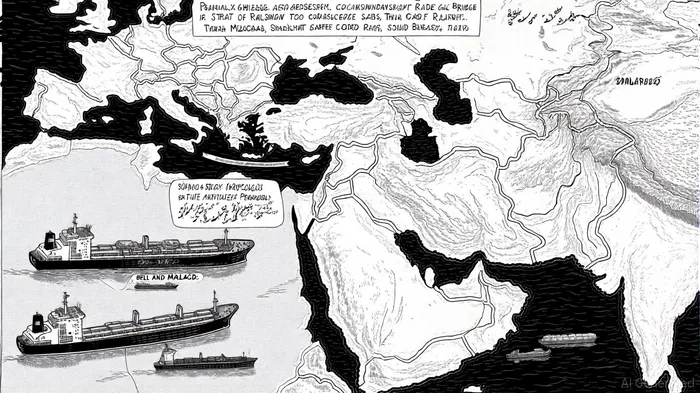






Comentarios
Aún no hay comentarios