
China's Household Sector: The Unfinished Rebalancing Act
The Chinese economy in Q4 2024 revealed a stark dichotomy: while manufacturing and exports thrived, household consumption remained a glaring weak spot. With trade frictions intensifying and real estate in freefall, the path to sustainable growth now hinges on structural reforms that boost domestic demand. The data tells a clear story: without addressing stagnant wages, deflation risks, and middle-class anxiety, China's “dual-circulation” strategy will falter.
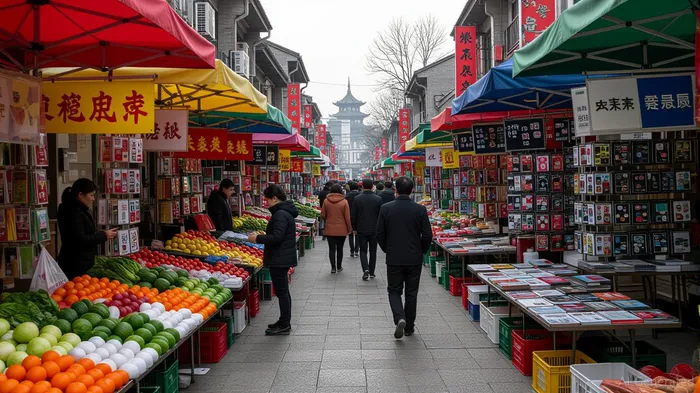
The Divergence in GDP: A Two-Speed Economy
China's 5% annual GDP growth in 2024 was driven by industrial sectors, not households. Manufacturing and high-tech industries surged—new energy vehicles rose 38.7%, and industrial robots climbed 14.2%—while household consumption grew just 3.8% in Q4, lagging behind even the weak 2023 pace. Meanwhile, real estate investment plummeted 10.6%, dragging down fixed-asset investment to 3.2%.
This gap underscores a systemic imbalance. The government's focus on export-led growth and tech self-reliance has left domestic demand starved of support. MERICS' Household Confidence Index hit a record low in Q4, with consumers citing stagnant wages and housing wealth erosion as key concerns.
The Consumption Dilemma: Deflation and Structural Neglect
Weak consumption is not a cyclical issue but a structural one. Deflationary pressures—with the CPI at 0.1% in December—reflect collapsing demand, not just temporary oversupply. The root causes are clear:
- Wage stagnation: Urban workers saw income growth lag behind GDP for years, with youth unemployment stuck near 16%.
- Wealth erosion: Real estate, once the pillar of middle-class wealth, saw prices fall 2.4% in Q4, eroding household net worth.
- Policy misalignment: Subsidies for appliances (e.g., microwaves, water purifiers) targeted short-term sales but ignored long-term drivers like healthcare access or housing affordability.
The government's 2025 budget hints at a pivot: it allocated funds for rural consumption upgrades and vocational training, but these are drops in a desert of systemic issues.
Real Estate: A Crisis Beyond Numbers
Official data claims real estate's GDP contribution grew 2% in Q4, but reality is grimmer. Land sales fell 17%, and apartment purchases remained depressed. The sector's collapse has ripple effects:
- Job losses: Construction and property services employ 50 million people, many now facing reduced hours.
- Banking risks: Non-performing loans linked to real estate are rising, with local governments' debt loads at unsustainable levels.
The solution? A managed decline, not a bailout. The government must allow zombie developers to fail while redirecting investment to affordable housing and urban renewal.
Geopolitical Risks: The Case for Domestic Demand
Trade frictions with the U.S. and EU are worsening. The new Trump administration's push to decouple from Chinese supply chains threatens export-dependent sectors. This makes rebalancing toward domestic demand more urgent than ever.
Investment Themes for 2025: Playing the Rebalancing
- Consumer Staples: Defensive plays in food, healthcare, and household goods.
- Pick: Companies with pricing power and rural reach, like Wumart or China Resources Enterprise (0998.HK).
Tech for Domestic Use: E-commerce, cloud services, and AI-driven logistics.
Pick: Alibaba (BABA) and Tencent (0700.HK), which dominate online retail and digital payments. Their cloud platforms are critical for SMEs adapting to domestic markets.
Services with Pricing Power: Healthcare, education, and elderly care.
Pick: United Imaging (688278.SH) in medical equipment or New Oriental Education (EDU) in K-12 tutoring.
Green Transition: Clean energy appliances and EVs, which benefit from subsidies and urbanization.
- Pick: BYD (002594.SZ) and Haier Smart Home (600690.SH), which dominate energy-efficient appliances.
Risks and Caveats
- Policy execution: Structural reforms require dismantling local government debt and SOE dominance.
- Global slowdown: If the U.S. enters recession, China's exports could crater further.
- Data reliability: Official statistics on consumption and real estate remain suspect.
Conclusion
China's economy is at a crossroads. Without bold reforms to boost household wealth—through wage growth, affordable housing, and social safety nets—the consumption slump will persist. Investors should focus on sectors that thrive in a rebalanced economy, avoiding those tied to fading industries like heavy manufacturing. The next leg of China's growth story will be written not in factories, but in households.
Actionable Takeaway: Overweight consumer staples and domestic tech, underweight real estate and export-heavy industrials. Monitor policy signals closely—2025 may finally be the year China's rebalancing moves beyond rhetoric.







Comentarios
Aún no hay comentarios