
China's Global EV Infrastructure Expansion: Strategic Investment in Battery Manufacturers with Strong Export Capabilities
The New Energy Titans: CATL, BYD, and the LFP Revolution
Contemporary Amperex Technology (CATL) is the undisputed leader, commanding 38.1% of the global market in Jan–May 2025, per MotoVerge data. Its 7.6-billion-euro Hungary plant, set to begin production in 2025, is a cornerstone of its European strategy, according to a CNBC profile. CATL's Q3 2025 net profit surged 41% year-on-year to $2.61 billion, fueled by rising demand and improved pricing power in a Morningstar article. Analysts at JPMorgan and Jefferies have upgraded their 2026 forecasts, anticipating further gains as the company scales its battery-swapping and recycling initiatives, as noted in the Morningstar article.
BYD, meanwhile, leverages its vertical integration and Blade Battery technology to secure a 17.4% global market share, according to a Yahoo Finance report. While its domestic market share dipped slightly in August 2025, its international sales are projected to double in 2025, driven by localized production in Brazil, Thailand, and Hungary, per a Substack analysis. BYD's Q1 2025 revenue hit RMB 170.36 billion, with net profit more than doubling, underscoring its resilience amid domestic price wars, as reported in the Substack analysis.

CALB and Gotion: Rising Stars in the LFP Era
Lithium iron phosphate (LFP) batteries, which accounted for 82.5% of China's EV installations in August 2025, are reshaping the industry (see CNEVPost report). CALB Group, a key player in this segment, reported a 31.7% year-on-year revenue increase in H1 2025, with net income surging 80.4% to RMB 753 million in a MarketScreener release. Analysts project 24% revenue growth for 2025, outpacing the industry's 14% CAGR, per a Simply Wall St forecast. CALB's 2-billion-euro Portugal plant, expected to operate by 2028, and its partnerships with Toyota and Volkswagen are noted in a BusinessNewsAsia announcement, positioning it as a critical player in Europe's energy transition.
Gotion High-tech, backed by Volkswagen, is another standout. Its 2025 earnings are forecast to grow 27.5% annually, with a 16.2% revenue CAGR, according to a PitchBook profile. The company's focus on solid-state batteries and its 5.87% market share in China (see CNEVPost report) highlight its potential to disrupt the mid-tier of the EV battery ecosystem.
Strategic Partnerships: Bypassing Barriers, Building Markets
Chinese battery firms are not just exporting products-they're exporting ecosystems. Stellantis' 20% stake in Leapmotor and joint ventures with CATL in Spain are documented in a Battery Tech Online analysis that exemplifies how partnerships mitigate trade barriers and accelerate market entry. Similarly, CALB's collaboration with GOVY on eVTOL energy solutions is noted in a StockAnalysis profile, signaling diversification into emerging niches. These alliances are critical for navigating geopolitical tensions and securing long-term contracts in markets like the EU and Southeast Asia.
The Investment Thesis: Growth, Scale, and Resilience
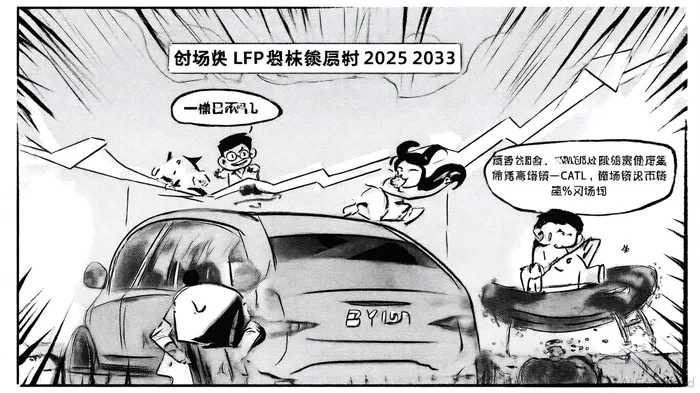
The global EV battery market is projected to grow at a 36.2% CAGR from 2025 to 2033, according to a DataInsightsMarket report, driven by China's energy storage targets and European decarbonization mandates. For investors, the key is to back companies that combine scale (CATL), innovation (BYD), and strategic agility (CALB and Gotion). While risks like trade restrictions and raw material volatility persist, the financial health of these firms-bolstered by strong cash flows and government support-makes them compelling long-term bets.
Conclusion
China's EV battery manufacturers are not just powering cars-they're powering the global shift to clean energy. For investors, the opportunity lies in companies that can scale production, navigate geopolitical landscapes, and innovate in technologies like LFP and battery swapping. As CATL, BYD, and CALB expand their footprints, they offer a unique blend of growth, resilience, and strategic foresight-a recipe for outperforming in the decade ahead.







Comentarios
Aún no hay comentarios