
China's Fossil Fuel Power Output Set for First Drop in a Decade: Investment Implications for Renewable Energy and Grid Modernization
China's energy landscape is undergoing a historic transformation. For the first time in a decade, fossil fuel power output is projected to decline in 2025, driven by the rapid expansion of renewable energy and a strategic shift toward decarbonization. This shift presents significant investment opportunities-and challenges-for stakeholders in renewable energy infrastructure and grid modernization.
The Decline of Fossil Fuels: A Structural Shift
According to Reuters, thermal power generation in China fell by 2.3% in April 2025 and declined 4.1% year-on-year from January to April, marking a sustained downturn. This trend is not isolated to a single quarter: data from Ember indicates that fossil-fuelled power generation dropped 5.4% year-on-year in September 2025, with thermal output down 1.2% over the first nine months of the year. 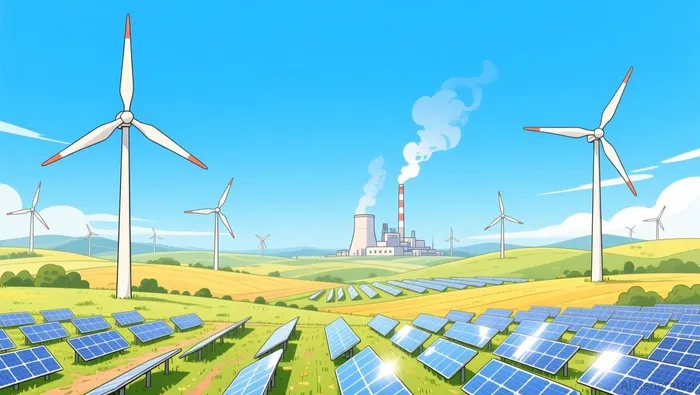 The decline is attributed to the rapid growth of renewables, which met 84% of China's electricity demand growth in the first half of 2025 and reduced fossil fuel use by 2%.
This shift aligns with China's broader energy transition goals. The DNV's projects that fossil fuels will supply 26% of the region's primary energy by 2060, down from 86% in 2024, as renewables and nuclear power expand. The government's "dual carbon control" policy, which includes carbon pricing mechanisms, is further accelerating emissions reductions in hard-to-decarbonize sectors like steel and cement.
### Renewable Energy: A $Trillion Investment Opportunity
China's renewable energy sector is poised to remain the global leader in 2025. The country is expected to install over 250 GW of new solar capacity and 130 GW of new wind capacity this year alone. This momentum is not new: in 2024, China installed 360 GW of wind and solar, surpassing its 2030 targets six years ahead of schedule.
For investors, this represents a dual opportunity. First, the scale of new installations-particularly in solar and wind-creates demand for upstream components like photovoltaic panels and wind turbines. Second, the integration of these resources into the grid requires downstream infrastructure, including transmission lines and energy storage systems.
The government's commitment to renewables is underpinned by its dual carbon goals (peaking emissions by 2030 and achieving carbon neutrality by 2060). As Ember notes, the growth of renewables is not just a policy-driven trend but a structural shift: clean energy now accounts for 84% of new electricity demand in China.
Grid Modernization: The $88 Billion Bottleneck
While renewable installations are surging, grid modernization remains a critical bottleneck. In 2025, China invested USD 88 billion in transmission and distribution infrastructure to address the mismatch between renewable deployment and grid capacity. This focus is essential for connecting remote solar and wind resources in western China to high-demand urban centers in the east.
Ultra-high-voltage (UHV) transmission lines are central to this effort. These lines, which can transport electricity over 2,000 kilometers with minimal losses, are enabling the integration of intermittent renewables into the grid. However, challenges persist. Grid congestion and inefficiencies in certain regions highlight the need for continued investment in flexible AC transmission systems and grid-forming inverters to stabilize the network.
Energy storage is another key area. The National Development and Reform Commission (NDRC) has launched an ambitious plan to deploy 180 GW of grid-level storage by 2027, supported by CNY 250 billion in funding. This initiative prioritizes lithium-ion batteries but also promotes emerging technologies like sodium-ion and solid-state batteries. For investors, the storage sector offers opportunities in both hardware and software solutions, including real-time grid monitoring and distributed energy resource management.
Risks and Rewards for Investors
The transition to a renewables-dominated grid is not without risks. The rapid deployment of solar and wind has outpaced grid expansion in some regions, leading to curtailment and inefficiencies. Additionally, the rising costs of grid infrastructure and storage systems could strain affordability for consumers, particularly as renewable generation costs decline.
However, the scale of government support and the long-term trajectory of China's energy transition mitigate these risks. The NDRC's energy storage plan and the IEA's World Energy Investment 2025 report underscore the country's commitment to modernizing its grid and achieving carbon neutrality. For investors, the key is to align with projects that address immediate bottlenecks-such as UHV lines and battery storage-while leveraging the long-term growth of renewables.
Conclusion
China's first decade-long decline in fossil fuel power output signals a pivotal moment in its energy transition. For investors, the opportunities lie in renewable energy infrastructure and grid modernization, where government policy, technological innovation, and market demand are converging. While challenges such as grid integration and storage costs remain, the scale of investment and the urgency of decarbonization make this a compelling area for long-term capital. As the world's largest energy consumer shifts toward a cleaner future, the winners will be those who can navigate the complexities of this transformation.







Comentarios
Aún no hay comentarios