
China’s New Feed Suppliers: Navigating the Trade Shift from Canada to Australia and India
The trade war between China and Canada has upended global agricultural supply chains, with profound implications for investors in the animal feed sector. After years of relying on Canada for 90% of its rapeseed imports—a critical ingredient for livestock feed—China has been forced to pivot to new suppliers following retaliatory tariffs imposed in March 2025. This shift has created opportunities in Australian and Indian agricultureANSC--, while exposing risks for Canadian farmers and exporters.
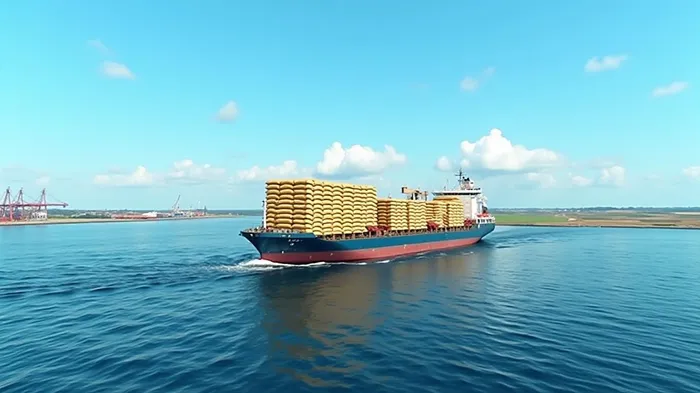
The Trade Dispute: A Perfect Storm for Canadian Exports
The conflict began in late 2024 when Canada imposed 100% tariffs on Chinese electric vehicles and 25% tariffs on steel and aluminum. In retaliation, China launched an “anti-discrimination” probe under its foreign trade laws, culminating in a 100% tariff on Canadian rapeseed meal and 25% duties on pork and seafood in March 2025. These measures directly impacted Canada’s $3.3 billion annual rapeseed exports and $780 million in rapeseed meal sales to China.
The tariffs are not merely economic penalties but part of a broader geopolitical calculus. Chinese state media framed the move as a “countermeasure” to Canada’s alignment with U.S. trade policies, warning against using Canada as a backdoor for Chinese goods. This has left Canadian farmers scrambling to diversify markets, while investors in Canadian agricultural stocks face significant headwinds.
Australia and India: Filling the Void
To mitigate the disruption, China is turning to Australia and India, which have emerged as critical alternatives:
- Australia:
- Key Assets: Australia is the world’s second-largest rapeseed exporter, with a strong agricultural sector and proximity to Asian markets.
- Challenges: Trade had dwindled to zero after 2010 due to quality disputes and geopolitical tensions. Reopening the market requires regulatory approvals and quality assurances.
Investment Play: Companies like Australian Agricultural Company (AGCO) and Wheatbelt Group could benefit from renewed demand.
India:
- Key Assets: India is the second-largest exporter of rapeseed meal, offering price advantages over European competitors. Indian meal costs $202/ton from Kandla port versus $332/ton from Hamburg.
- Challenges: Quality concerns, including high foreign material and inconsistent protein levels, require trial shipments and regulatory adjustments.
- Investment Play: Firms like Rasi Seeds (RCOM) and Kaveri Oil Industries could gain traction if China relaxes import standards.
Market Impact and Investment Risks
- Canadian Agriculture: The AgriStability program’s expansion to 90% compensation and $6 million caps offers short-term relief, but long-term risks persist. Canadian stocks like Agrium (AGF) and Weston Foods face valuation pressures as China diversifies.
- Geopolitical Risks: The U.S. is pressuring Canada to block Chinese steel imports, creating a “no-win” scenario for Ottawa. Investors should monitor U.S.-China trade dynamics, as further escalation could prolong the disruption.
- Quality and Logistics: Australia’s infrastructure and India’s pricing edge give them an advantage, but delays in regulatory approvals or quality disputes could hinder progress.
Conclusion: A New Era for Global Feed Markets
China’s pivot to Australia and India signals a permanent shift in agricultural trade patterns. Investors should prioritize firms with exposure to these emerging supply chains while remaining cautious on Canadian equities. Key data points reinforce this outlook:
- Australia: If exports to China reach pre-2010 levels, Australian rapeseed sales could hit 1.5 million metric tons annually, a 300% increase from 2024.
- India: Success in quality trials could boost Indian rapeseed meal exports to China to 500,000 tons/year, generating $100 million in annual revenue.
- Canada: Lost exports to China in 2024 totaled $1.3 billion in rapeseed and meal alone, with further declines likely unless tariffs are lifted.
The geopolitical and economic stakes are high. While Australia and India stand to gain, the broader lesson is clear: global supply chains are increasingly vulnerable to trade wars. Investors must factor in geopolitical risk premiums and seek diversified exposure to emerging agricultural powerhouses.
In this new landscape, the winners will be those who adapt fastest—and the losers will be those clinging to old alliances.





Comentarios
Aún no hay comentarios