
China Exports More to Vietnam Than Japan for First Time as Supply Chains Shift
Generado por agente de IAWesley Park
lunes, 13 de enero de 2025, 4:25 am ET1 min de lectura
ROAD--
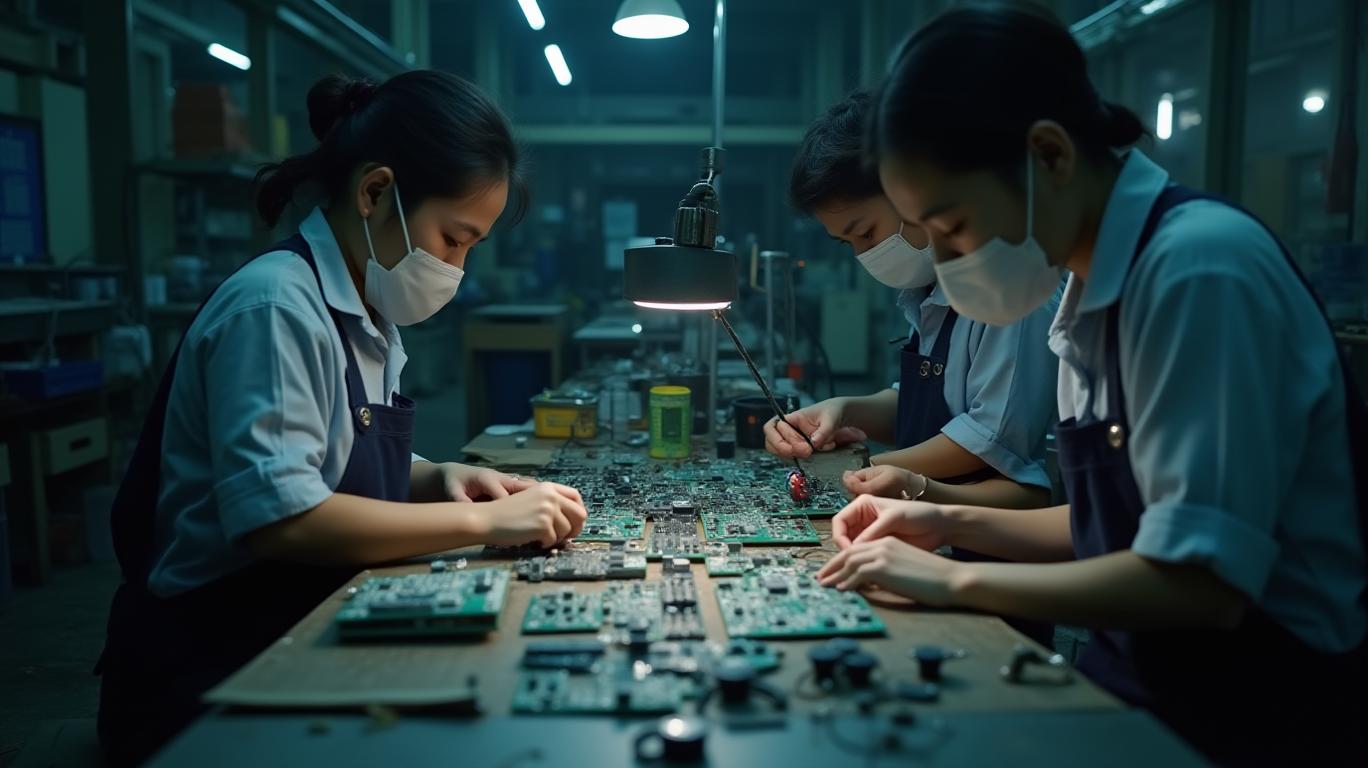
In a significant shift in global trade dynamics, China's exports to Vietnam have surpassed those to Japan for the first time, marking a substantial realignment of supply chains in the region. This development, driven by a combination of economic and geopolitical factors, underscores Vietnam's growing importance as a manufacturing hub and a key investment destination in Asia.
The rise of Vietnam as a manufacturing powerhouse can be attributed to several factors, including its competitive labor costs, skilled workforce, and strategic reforms. As China's labor costs have increased, many manufacturers have sought lower-cost alternatives, with Vietnam emerging as a popular choice. Additionally, the ongoing US-China trade war has prompted companies to diversify their production bases, further boosting Vietnam's attractiveness as an investment destination.
Vietnam's competitive labor costs and manufacturing capabilities have attracted significant Chinese investments, with FDI inflows increasing by 9.4% in 2024 to US$25.35 billion. This growth in FDI is partly attributed to Chinese firms investing in production bases in Vietnam, drawn by the country's lower labor costs and young, dynamic workforce.
The shift in supply chains from China to Vietnam has several potential long-term implications for both economies. For Vietnam, this trend is expected to drive economic growth and investment, with multinational corporations' "China Plus One" strategies further boosting the country's export growth. Infrastructure development will be crucial to support Vietnam's growing economy, as will fostering domestic consumption to drive demand for consumer products and services.
For China, the shift in supply chains may necessitate a focus on higher-value-added industries, such as technology and innovation, to maintain its competitive edge. Chinese companies are also investing in Southeast Asia as part of the Belt & Road Initiative, supporting industries such as cement, steel, solar panels, and commodity-related industries. Strengthening cross-border trade infrastructure, such as the cross-border railway project between China and Vietnam, will facilitate trade and investment between the two countries.
In conclusion, the shift in China's export patterns towards Vietnam signals a significant realignment of supply chains in the region, driven by economic and geopolitical factors. As Vietnam continues to attract Chinese investments and foster economic growth, both countries stand to benefit from this evolving trade dynamic. However, geopolitical risks and the need for infrastructure development will remain critical factors shaping the future of this relationship.
In a significant shift in global trade dynamics, China's exports to Vietnam have surpassed those to Japan for the first time, marking a substantial realignment of supply chains in the region. This development, driven by a combination of economic and geopolitical factors, underscores Vietnam's growing importance as a manufacturing hub and a key investment destination in Asia.
The rise of Vietnam as a manufacturing powerhouse can be attributed to several factors, including its competitive labor costs, skilled workforce, and strategic reforms. As China's labor costs have increased, many manufacturers have sought lower-cost alternatives, with Vietnam emerging as a popular choice. Additionally, the ongoing US-China trade war has prompted companies to diversify their production bases, further boosting Vietnam's attractiveness as an investment destination.
Vietnam's competitive labor costs and manufacturing capabilities have attracted significant Chinese investments, with FDI inflows increasing by 9.4% in 2024 to US$25.35 billion. This growth in FDI is partly attributed to Chinese firms investing in production bases in Vietnam, drawn by the country's lower labor costs and young, dynamic workforce.
The shift in supply chains from China to Vietnam has several potential long-term implications for both economies. For Vietnam, this trend is expected to drive economic growth and investment, with multinational corporations' "China Plus One" strategies further boosting the country's export growth. Infrastructure development will be crucial to support Vietnam's growing economy, as will fostering domestic consumption to drive demand for consumer products and services.
For China, the shift in supply chains may necessitate a focus on higher-value-added industries, such as technology and innovation, to maintain its competitive edge. Chinese companies are also investing in Southeast Asia as part of the Belt & Road Initiative, supporting industries such as cement, steel, solar panels, and commodity-related industries. Strengthening cross-border trade infrastructure, such as the cross-border railway project between China and Vietnam, will facilitate trade and investment between the two countries.
In conclusion, the shift in China's export patterns towards Vietnam signals a significant realignment of supply chains in the region, driven by economic and geopolitical factors. As Vietnam continues to attract Chinese investments and foster economic growth, both countries stand to benefit from this evolving trade dynamic. However, geopolitical risks and the need for infrastructure development will remain critical factors shaping the future of this relationship.

Divulgación editorial y transparencia de la IA: Ainvest News utiliza tecnología avanzada de Modelos de Lenguaje Largo (LLM) para sintetizar y analizar datos de mercado en tiempo real. Para garantizar los más altos estándares de integridad, cada artículo se somete a un riguroso proceso de verificación con participación humana.
Mientras la IA asiste en el procesamiento de datos y la redacción inicial, un miembro editorial profesional de Ainvest revisa, verifica y aprueba de forma independiente todo el contenido para garantizar su precisión y cumplimiento con los estándares editoriales de Ainvest Fintech Inc. Esta supervisión humana está diseñada para mitigar las alucinaciones de la IA y garantizar el contexto financiero.
Advertencia sobre inversiones: Este contenido se proporciona únicamente con fines informativos y no constituye asesoramiento profesional de inversión, legal o financiero. Los mercados conllevan riesgos inherentes. Se recomienda a los usuarios que realicen una investigación independiente o consulten a un asesor financiero certificado antes de tomar cualquier decisión. Ainvest Fintech Inc. se exime de toda responsabilidad por las acciones tomadas con base en esta información. ¿Encontró un error? Reportar un problema


SOBRE NOSOTROS
Nuestra historiaAutores de noticiasBase de conocimientosPolítica de privacidadTérmino de usoDescargo de responsabilidad de corretaje de tercerosTérminos de uso de AIMEDivulgaciones de riesgos de AInvest AICarrerasCONTÁCTENOS
Email: support@ainvest.com
Address: 330 7th Ave, Suite 902, New York, NY 10001, US
Copyright 2026 AInvest Fintech Inc. All rights reserved.


Comentarios
Aún no hay comentarios