
China's EV Market Expansion: Tesla's September Sales Signal a Strategic Entry Opportunity
The Chinese electric vehicle (EV) market, once a battleground for domestic automakers, has become a global epicenter of innovation and competition. Tesla's September 2023 sales figures in China-74,073 units, a 10.9% decline year-over-year-initially appear to signal a retreat. However, a closer look reveals a strategic recalibration. Retail sales of the Model 3 plummeted by 93%, while exports of the same model surged 4,428% to 18,745 units, according to an InsideEVs report. This shift underscores Tesla's pivot from domestic retail to export-driven growth, leveraging its Shanghai Gigafactory to bypass U.S.-China trade frictions and supply vehicles to Europe, Australia, and beyond, as highlighted in a Giga Shanghai milestone report.
The Strategic Pivot: Exports as a Growth Engine
Tesla's Shanghai plant has become the linchpin of its global strategy. By 2025, the facility had exported over one million vehicles, with Model Y exports alone increasing by 131% year-over-year in September 2023, according to the InsideEVs report. This export boom has allowed TeslaTSLA-- to maintain a 6.6% market share in China's new energy vehicle (NEV) sector despite fierce competition, as noted in a Rest of World piece. The company's ability to scale production and reduce costs in China has enabled it to undercut rivals in international markets, where its vehicles are priced 10–20% lower than those produced in the U.S., according to a Mount Bonnell analysis.
Yet, this strategy is not without risks. By October 2023, Tesla's domestic market share had fallen to 5.78%, as local rivals like BYD captured 32% of China's NEV sales in 2024, according to a Forbes article. BYD's vertically integrated supply chain and aggressive pricing-its Ocean series models cost 20–30% less than comparable Teslas-have eroded Tesla's retail dominance, as noted in a StackFiltered piece. However, Tesla's export volumes have offset this decline, with the Shanghai plant accounting for 21% of the company's global revenue by 2024, according to the Mount Bonnell analysis.
The Competitive Landscape: Chinese EVs Go Global
Chinese automakers are now challenging Tesla not just in China but worldwide. BYD, for instance, reported $107 billion in revenue in 2024, outpacing Tesla's $97.7 billion, while NIO and XPeng have expanded into Europe with battery-swapping technology and AI-driven features, as described in the StackFiltered piece. BYD's recent "God's Eye" driver-assistance system, offered as a free update, has intensified pressure on Tesla's Full Self-Driving (FSD) software, according to Forbes. Meanwhile, Xiaomi and Leapmotor have shattered sales records in 2025, with Xiaomi delivering 40,000 units in its first month-a 300% increase from 2024-per a YuanTrends report.
Despite these threats, Tesla retains key advantages. Its Supercharger network remains unmatched, with over 50,000 stations globally, and its brand equity continues to attract premium buyers. However, Chinese rivals are closing the gap. For example, NIO's battery-swapping stations in Europe and XPeng's AI-powered infotainment systems are gaining traction in markets where Tesla's over-the-air updates and Autopilot features once held a monopoly, as noted in the StackFiltered piece.
Implications for Investors: Opportunity Amidst Uncertainty
For investors, Tesla's China strategy presents a paradox: declining domestic sales coexist with robust export growth and a global supply chain that mitigates geopolitical risks. The Shanghai Gigafactory's efficiency-producing 950,000 vehicles annually-ensures Tesla can maintain margins even as Chinese rivals undercut prices, according to the Giga Shanghai milestone report. However, the company's reliance on exports exposes it to regulatory headwinds, such as the EU's 35% import tariffs on Chinese EVs, which could dampen European sales, per the Rest of World piece.
The broader EV market, meanwhile, is expanding rapidly. In September 2025, NEV penetration in China reached 58.1%, driven by scrappage subsidies and new product launches from Xiaomi, Xpeng, and NIO, according to the YuanTrends report. This growth creates both competition and opportunity for Tesla. While local rivals dominate retail, Tesla's export-centric model positions it to capitalize on international demand, particularly in price-sensitive markets like Southeast Asia and Latin America, as discussed in the Mount Bonnell analysis.
Conclusion: A Calculated Bet on Globalization
Tesla's September 2023 sales in China reflect a calculated shift toward export-led growth, a strategy that has allowed the company to maintain relevance in a hyper-competitive market. While domestic rivals like BYD are outpacing Tesla in retail sales, the company's global supply chain and brand strength provide a buffer. For investors, the key question is whether Tesla can sustain its export momentum amid rising competition and regulatory barriers. The answer may lie in its ability to innovate-whether through localized product offerings or partnerships with Chinese suppliers-to retain its edge in a market where the rules are rapidly evolving.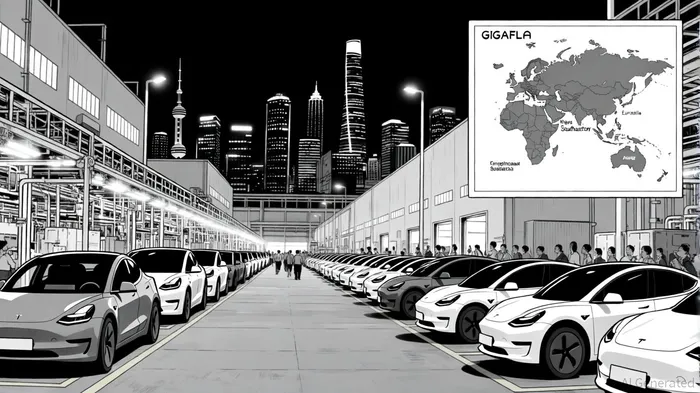





Comentarios
Aún no hay comentarios