
China ETFs, Stocks Slump on Trump Plan to Double Tariffs
Generado por agente de IATheodore Quinn
viernes, 28 de febrero de 2025, 12:34 pm ET2 min de lectura
ANSC--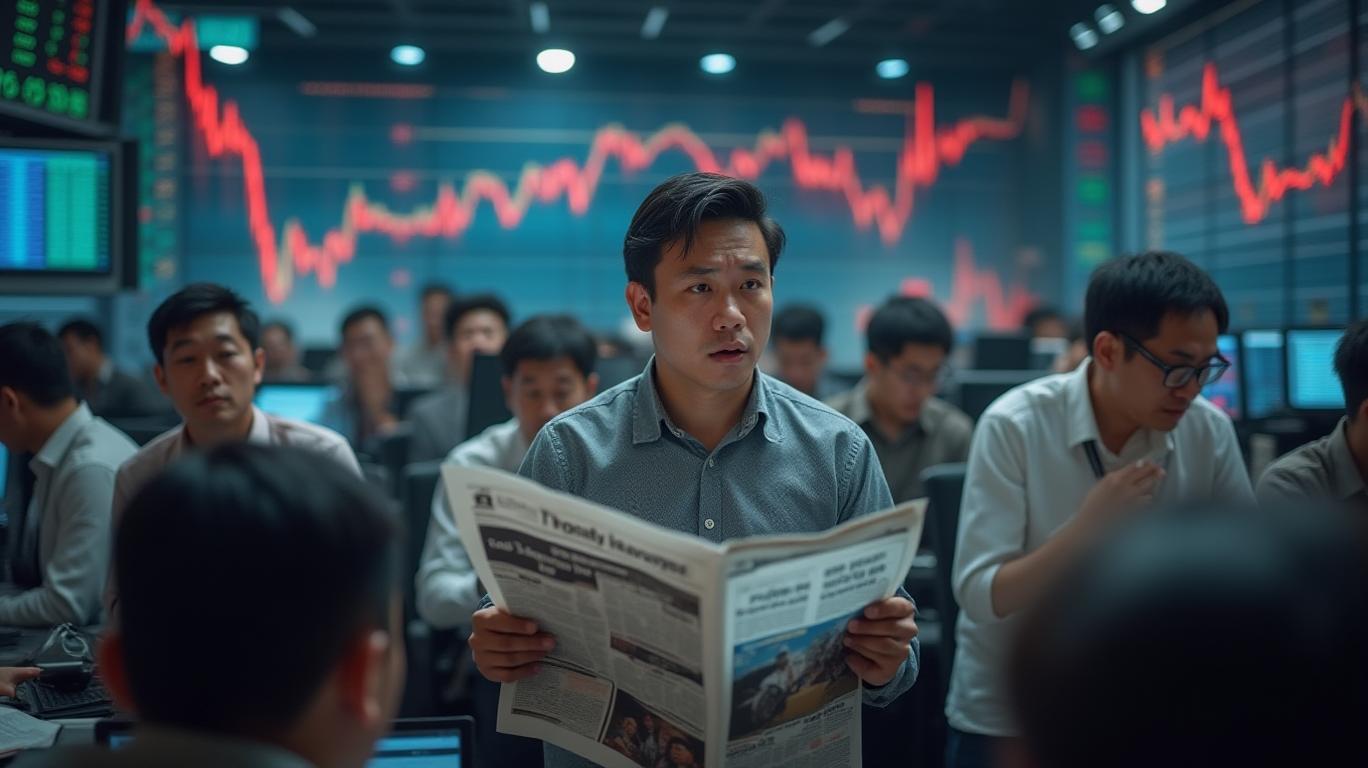
The US-China trade war escalated this week as President Donald Trump announced plans to double tariffs on Chinese goods, sending shockwaves through global markets. Chinese exchange-traded funds (ETFs) and stocks took a significant hit, with investors grappling with the uncertainty and potential fallout from the proposed tariff hikes.
The proposed tariff increases, which would target a wide range of Chinese products, have raised concerns about the potential impact on Chinese exports and economic growth. Experts have warned that the tariffs could prove detrimental to the global economy, with some predicting a significant loss of employment in the US manufacturing and agricultureANSC-- sectors (PIIE, 2024).
The National Retail Federation (NRF) has expressed concern over the potential surge in imports at US ports, with retailers bringing in cargo early to mitigate potential disruptions. Dockworkers at US Northeast and Gulf Coast ports briefly went on strike in October but agreed to suspend the move until January 15. Automation at ports is a key concern for the International Longshoremen's Association (ILA) (NRF, 2024).
Ben HackettHCKT--, the founder of Hackett Associates, has noted that retailers are under pressure to "front-load goods" to mitigate potential disruptions caused by tariffs or strikes. The Global Port Tracker report, released by the NRF and Hackett Associates, projects continued import growth through spring 2025 (Hackett, 2024).
Mary Lovely, a senior fellow at the Peterson Institute for International Economics (PIIE), has warned that Trump's tariffs could cause a "gigantic shock to the system," potentially leading to inflation and job losses in the US. She expects Trump to expand the tariffs on China in the second or third quarter of 2025, which could cause inflation in the US to rise by 1 percent (PIIE, 2024).
Tao Wang, managing director and chief China economist at UBS Investment Bank, has suggested that while a trade war would be harmful to both countries, China may be better positioned to defend against new tariffs. He believes that China's interest lies in staying integrated with the rest of the world (PIIE, 2024).
Sourabh Gupta, a senior fellow at the Washington-based Institute for China-America Studies, has suggested that China could offer to "invest, produce, and sell in the US" as a way to boost domestic manufacturing and employment. He also believes that China could seek alternative markets, such as the European Union, to deepen its relationship (PIIE, 2024).
As the US presidential election approaches, raising tariffs to appear tougher on China may seem a vote-winning choice for politicians in Washington. However, the domestic chorus of opposition indicates that few others are benefiting from them. The United States Trade Representative's Office has again delayed an announcement of its final determination on steep tariff increases on Chinese products, including electric vehicles, batteries, semiconductors, and solar cells (Financial Times, 2021).
In conclusion, the proposed tariff increases by the Trump administration have significant implications for the valuation and performance of Chinese ETFs and stocks in the long term. The uncertainty and potential negative impact of the tariffs on Chinese exports and economic growth have led to increased volatility in the Chinese stock market. The reduced foreign investment, potential devaluation of the yuan, and potential long-term effects on supply chains could further impact the performance of Chinese ETFs and stocks. Foreign institutional investors, particularly those focusing on index investing through ETFs, may be deterred by the increased costs, volatility, and uncertainty associated with the tariffs. As the US-China trade war continues to unfold, investors should closely monitor the situation and consider the potential risks and opportunities that arise from the proposed tariff hikes.
HCKT--
The US-China trade war escalated this week as President Donald Trump announced plans to double tariffs on Chinese goods, sending shockwaves through global markets. Chinese exchange-traded funds (ETFs) and stocks took a significant hit, with investors grappling with the uncertainty and potential fallout from the proposed tariff hikes.
The proposed tariff increases, which would target a wide range of Chinese products, have raised concerns about the potential impact on Chinese exports and economic growth. Experts have warned that the tariffs could prove detrimental to the global economy, with some predicting a significant loss of employment in the US manufacturing and agricultureANSC-- sectors (PIIE, 2024).
The National Retail Federation (NRF) has expressed concern over the potential surge in imports at US ports, with retailers bringing in cargo early to mitigate potential disruptions. Dockworkers at US Northeast and Gulf Coast ports briefly went on strike in October but agreed to suspend the move until January 15. Automation at ports is a key concern for the International Longshoremen's Association (ILA) (NRF, 2024).
Ben HackettHCKT--, the founder of Hackett Associates, has noted that retailers are under pressure to "front-load goods" to mitigate potential disruptions caused by tariffs or strikes. The Global Port Tracker report, released by the NRF and Hackett Associates, projects continued import growth through spring 2025 (Hackett, 2024).
Mary Lovely, a senior fellow at the Peterson Institute for International Economics (PIIE), has warned that Trump's tariffs could cause a "gigantic shock to the system," potentially leading to inflation and job losses in the US. She expects Trump to expand the tariffs on China in the second or third quarter of 2025, which could cause inflation in the US to rise by 1 percent (PIIE, 2024).
Tao Wang, managing director and chief China economist at UBS Investment Bank, has suggested that while a trade war would be harmful to both countries, China may be better positioned to defend against new tariffs. He believes that China's interest lies in staying integrated with the rest of the world (PIIE, 2024).
Sourabh Gupta, a senior fellow at the Washington-based Institute for China-America Studies, has suggested that China could offer to "invest, produce, and sell in the US" as a way to boost domestic manufacturing and employment. He also believes that China could seek alternative markets, such as the European Union, to deepen its relationship (PIIE, 2024).
As the US presidential election approaches, raising tariffs to appear tougher on China may seem a vote-winning choice for politicians in Washington. However, the domestic chorus of opposition indicates that few others are benefiting from them. The United States Trade Representative's Office has again delayed an announcement of its final determination on steep tariff increases on Chinese products, including electric vehicles, batteries, semiconductors, and solar cells (Financial Times, 2021).
In conclusion, the proposed tariff increases by the Trump administration have significant implications for the valuation and performance of Chinese ETFs and stocks in the long term. The uncertainty and potential negative impact of the tariffs on Chinese exports and economic growth have led to increased volatility in the Chinese stock market. The reduced foreign investment, potential devaluation of the yuan, and potential long-term effects on supply chains could further impact the performance of Chinese ETFs and stocks. Foreign institutional investors, particularly those focusing on index investing through ETFs, may be deterred by the increased costs, volatility, and uncertainty associated with the tariffs. As the US-China trade war continues to unfold, investors should closely monitor the situation and consider the potential risks and opportunities that arise from the proposed tariff hikes.

Divulgación editorial y transparencia de la IA: Ainvest News utiliza tecnología avanzada de Modelos de Lenguaje Largo (LLM) para sintetizar y analizar datos de mercado en tiempo real. Para garantizar los más altos estándares de integridad, cada artículo se somete a un riguroso proceso de verificación con participación humana.
Mientras la IA asiste en el procesamiento de datos y la redacción inicial, un miembro editorial profesional de Ainvest revisa, verifica y aprueba de forma independiente todo el contenido para garantizar su precisión y cumplimiento con los estándares editoriales de Ainvest Fintech Inc. Esta supervisión humana está diseñada para mitigar las alucinaciones de la IA y garantizar el contexto financiero.
Advertencia sobre inversiones: Este contenido se proporciona únicamente con fines informativos y no constituye asesoramiento profesional de inversión, legal o financiero. Los mercados conllevan riesgos inherentes. Se recomienda a los usuarios que realicen una investigación independiente o consulten a un asesor financiero certificado antes de tomar cualquier decisión. Ainvest Fintech Inc. se exime de toda responsabilidad por las acciones tomadas con base en esta información. ¿Encontró un error? Reportar un problema




Comentarios
Aún no hay comentarios