
China Energy Engineering's Coal Power Win: A Beacon for Infrastructure Investment in the Renewable Transition Era
The announcement by China Energy Engineering Group (HK:3996) of its landmarkLARK-- 14.6 billion yuan coal power project in Xinjiang's Bingzhun Industrial Park signals a critical inflection point in China's energy strategy. This project, while rooted in traditional energy infrastructure, underscores the government's deliberate balancing act between near-term industrial needs and long-term decarbonization goals. For investors, the deal is a clarion call to reassess opportunities in engineering, procurement, and construction (EPC) firms and related sectors, even as global markets grapple with the urgency of renewable transitions.
Strategic Implications: Coal as a Bridge to Renewables
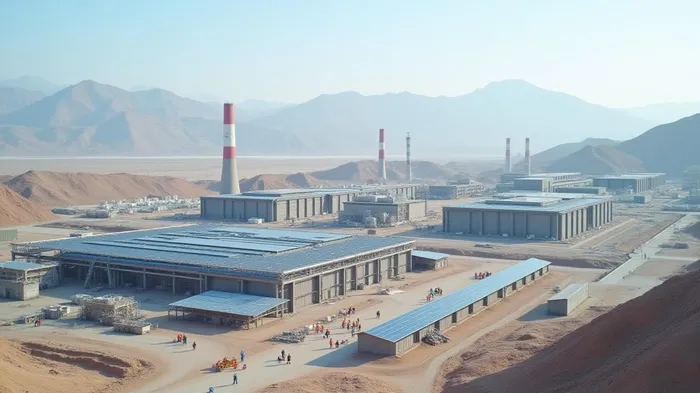
The 6×660MW ultra-supercritical coal-fired plant—set to be built under an EPC contract by a consortium led by China Energy Engineering's subsidiaries—is no throwback to outdated energy models. Ultra-supercritical technology boosts efficiency to 45% or higher, reducing emissions per unit of energy produced. This aligns with China's 2025 three-year action plan to modernize coal plants, which mandates efficiency upgrades and emissions controls.
The project's location in Xinjiang, a region rich in coal reserves and a hub for industrial parks, reflects Beijing's prioritization of energy security. While renewables dominate headlines, coal remains the backbone of China's power mix, supplying 56% of electricity in 2024. The Bingzhun project not only meets immediate demand for reliable baseload power but also positions Xinjiang as a critical node in China's “west-to-east” energy corridor.
Infrastructure Spending: A Tailwind for EPC Firms
The 14.6 billion yuan contract is emblematic of a broader trend: China's infrastructure spending is accelerating in high-priority regions like Xinjiang. With Beijing targeting 300 billion yuan in coal-related projects through 2025, EPC firms like China Energy Engineering stand to benefit from their expertise in large-scale power projects. The company's ranking as the world's 10th-largest engineering contractor (ENR 2024) and its 147-country global footprint amplify its competitive edge.
Investors should note that the Bingzhun project's consortium structure—combining design, procurement, and construction expertise—creates cross-subsidization opportunities. Subsidiaries like Hunan Electric Power Design Institute can leverage this deal to win follow-on contracts, such as grid upgrades or ancillary renewable projects in Xinjiang's industrial parks.
Spillover Effects: Steel and Coking Coal Markets
While global steel markets face headwinds (e.g., weak stainless steel demand in Liaoning), infrastructure-heavy projects like Bingzhun provide a floor for commodity prices. The project's 36.5-month timeline will require sustained steel consumption, particularly for structural components. Meanwhile, coking coal—a key input for metallurgical industries—benefits from the interplay between coal power and steel production.
Risks: Policy Shifts and Overreliance on Fossil Fuels
Critics argue that coal projects conflict with China's 2030 carbon peak targets. However, the government's dual-track approach—simultaneously investing in renewables and upgrading coal infrastructure—acknowledges the scale of energy demand. Risks include stricter emissions caps or accelerated renewable adoption, but the Bingzhun plant's ultra-supercritical design mitigates this exposure.
Investment Case: The EPC Multiplier Effect
The Bingzhun project is a catalyst for three investment themes:
1. EPC Firms: China Energy Engineering's expertise in complex EPC contracts positions it to win further coal, solar, and grid projects.
2. Steel Producers: Companies with exposure to construction-grade steel (e.g., Baowu Steel) gain from infrastructure spending, despite sector-wide oversupply.
3. Coking Coal Miners: Firms like Yankuang Group benefit from steady demand from both power plants and steelmakers.
Conclusion: Navigating the Energy Tightrope
China Energy Engineering's coal power win is not an anachronism but a strategic pivot. It highlights the necessity of traditional energy infrastructure to support industrial growth while renewables scale. Investors ignoring this balance risk missing out on a multi-year opportunity in EPC firms and materials sectors. The Bingzhun project is more than a contract—it's a signal that China's energy transition will be gradual, infrastructure-heavy, and ripe with investment opportunities.
Act now: EPC stocks like HK:3996 and steel/coking coal plays are poised to capture the momentum of this inevitable build-out. The energy transition isn't binary; it's a bridge to be crossed, plank by plank.







Comentarios
Aún no hay comentarios