
China's Economic Slowdown and Its Ripple Effects on Crypto Market Volatility
The ripple effects of China's slowdown are not confined to its borders. Global trade dynamics are shifting as U.S.-China tensions escalate, with President Donald Trump's recent 100% tariff threat on Chinese rare earth minerals sending shockwaves through markets. These tensions, compounded by U.S. Federal Reserve policy uncertainty and regulatory shifts, have created a volatile backdrop for risk assets. The crypto market, in particular, has borne the brunt of this uncertainty. In October 2025, Bitcoin plummeted 13% amid fears of a liquidity crunch, fading hopes for rate cuts, and leveraged trader unwinding. While institutional investors continued to pour $6.4 billion into digital asset ETFs, the selloff highlighted the sector's susceptibility to macroeconomic crosscurrents.
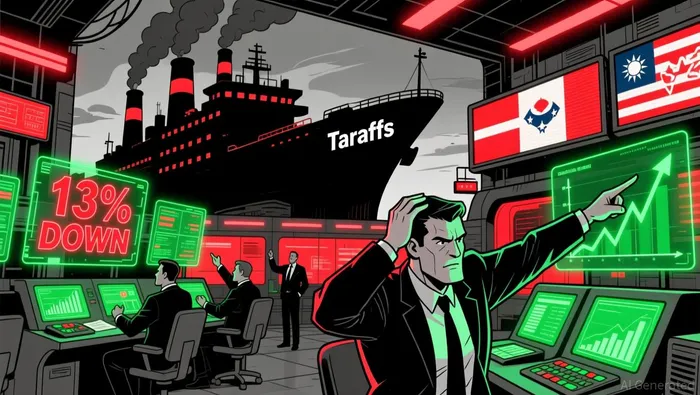
The interplay between China's economic policies and U.S. actions has further complicated the landscape. China's fiscal stimulus, while aimed at domestic stabilization, indirectly influences global risk sentiment. For instance, its focus on high-tech manufacturing and green energy sectors could drive demand for critical minerals, intensifying competition with the U.S. and triggering retaliatory measures. Meanwhile, U.S. policy uncertainty-ranging from erratic tariff announcements to regulatory debates over crypto-has amplified market jitters. A study from 2023–2024 reveals that Bitcoin's volatility is closely tied to the Economic Policy Uncertainty (EPU) index and the VIX, with political events acting as real-time catalysts for price swings. Unlike traditional safe-haven assets, Bitcoin's behavior during periods of high uncertainty leans toward speculative trading, exacerbating volatility rather than dampening it.
For institutional investors, navigating this volatility requires a nuanced approach. The research underscores the importance of aligning crypto allocations with prevailing macroeconomic conditions. During high EPU periods, Bitcoin's inclusion in factor portfolios can enhance risk-adjusted returns, but its utility as a hedge is limited during prolonged geopolitical instability. Altcoin investors, meanwhile, must adopt a balanced strategy, prioritizing risk management amid fragmented regulatory environments and sector-specific vulnerabilities. Diversification across traditional and emerging assets, coupled with dynamic hedging mechanisms, appears critical for resilience.
As China's fiscal stimulus and U.S. policy shifts continue to shape global risk sentiment, the crypto market's response will hinge on its ability to adapt to these crosscurrents. While the current environment lacks the depth of historical bear markets, the path forward demands vigilance. Investors must remain attuned to both the structural strengths-such as China's high-tech manufacturing growth-and the fragilities, including property sector woes and trade war escalations. In this high-volatility landscape, strategic positioning and flexibility will be the cornerstones of long-term resilience.






Comentarios
Aún no hay comentarios