
China's Digital Consumption Expansion: Unveiling High-Growth Sectors in the Digital Economy
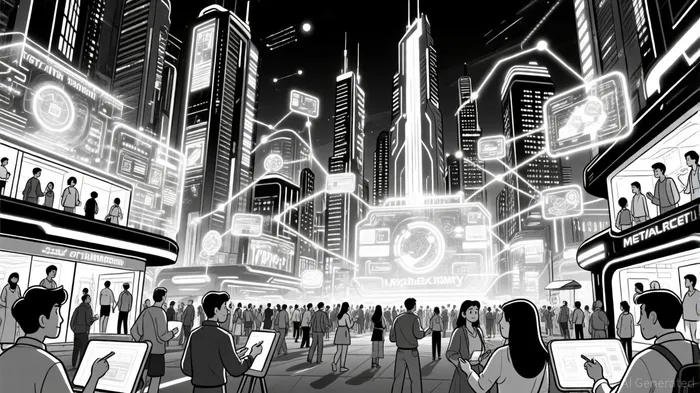
China's digital economy is undergoing a seismic transformation, driven by relentless innovation, government-backed infrastructure, and a consumer base increasingly defined by its appetite for technology-enabled experiences. As the nation's digital consumption sector expands, investors are turning their attention to high-growth areas poised to redefine global markets. From AI-powered personalization to metaverse-driven industrial applications, the opportunities are vast—and the data is compelling.
The Digital Economy's Explosive Trajectory
According to a report by Mordor Intelligence, China's digital transformation market is projected to surge from USD 283.22 billion in 2025 to USD 550.11 billion by 2030, growing at a compound annual growth rate (CAGR) of 14.20% [1]. This expansion is fueled by the government's “Digital China” initiative, which allocates RMB 300 billion in treasury bonds for network upgrades and data infrastructure [1]. Meanwhile, private-sector giants like Tencent and AlibabaBABA-- are accelerating AI and cloud integration, while Industrial Internet and smart manufacturing—bolstered by 10,000 digital workshops leveraging IoT and MES platforms—are boosting productivity [1].
E-Commerce: A Cornerstone of Growth
China's e-commerce sector is a linchpin of this digital revolution. Statista forecasts the market to reach USD 1.01 trillion in 2025, with a CAGR of 7.41% through 2030 [2]. However, Mordor Intelligence projects a more aggressive trajectory, estimating a 2025 market size of USD 1.53 trillion and a CAGR of 10.42% [3]. Rural e-commerce and livestream shopping are democratizing access, while platforms like Alibaba and Pinduoduo are pioneering immersive, AI-enhanced shopping experiences [2].
Fintech: Powering the Digital Economy
Digital payments are the lifeblood of China's digital consumption. The fintech industry is set to grow at a CAGR of 13.8% from 2024 to 2030, with market value surging from USD 4.59 trillion to USD 9.97 trillion [4]. Alipay and WeChat Pay dominate, but the sector is evolving: AI and big data are reshaping personal finance, alternative lending, and insurtech, while government policies prioritize financial inclusion [4].
Beyond E-Commerce: Emerging Sectors
AI-Driven Personalization
AI is no longer a buzzword but a business imperative. Sharon Gai's analysis highlights how Chinese companies use real-time data to create hyper-personalized shopping experiences, moving beyond static profiles to dynamic strategies like the “Golden Triangle” of person, product, and context [5]. This approach drives engagement, conversion, and loyalty in a fiercely competitive market [5].
The Metaverse: A New Frontier
China's metaverse market is set to explode, with Statista projecting a CAGR of 32.92% from 2025 to 2030, reaching USD 87.6 billion by 2030 [6]. Government policies, such as the Three-Year Action Plan for the Metaverse Industry (2023–2025), are accelerating adoption in education, healthcare, and industrial applications like digital twins for manufacturing [7]. Huawei, Alibaba, and Tencent are leading the charge, investing in immersive technologies and global governance frameworks [7].
Smart Home Integration and Green Innovation
The smart home sector is gaining traction, driven by IoT-enabled devices and AI-driven automation. Simultaneously, the green economy is rising as sustainability becomes a consumer priority. Investments in energy-efficient technologies and eco-friendly products are aligning with global trends, offering long-term growth potential [8].
Strategic Implications for Investors
China's digital consumption expansion is not just a domestic phenomenon—it's a global opportunity. For investors, the key lies in identifying sectors with structural tailwinds:
- E-commerce and Fintech: These remain foundational, with rural and AI-driven innovations offering untapped potential.
- Metaverse and AI: These represent the next frontier, with government support and private-sector R&D creating a fertile ground for disruption.
- Sustainability and Smart Living: As consumer preferences shift, green tech and smart home solutions will become critical differentiators.
Conclusion
China's digital economy is a mosaic of innovation, policy, and consumer demand. While challenges like data privacy and regulatory shifts exist, the growth trajectories of e-commerce, fintech, AI, and the metaverse are undeniable. For investors, the imperative is clear: engage early, diversify across sectors, and leverage China's digital momentum to build resilient, future-proof portfolios.





Comentarios
Aún no hay comentarios