
China's Bond Bonanza: A Path to Economic Recovery in 2025
Generado por agente de IAWesley Park
jueves, 2 de enero de 2025, 11:29 pm ET1 min de lectura
FPI--
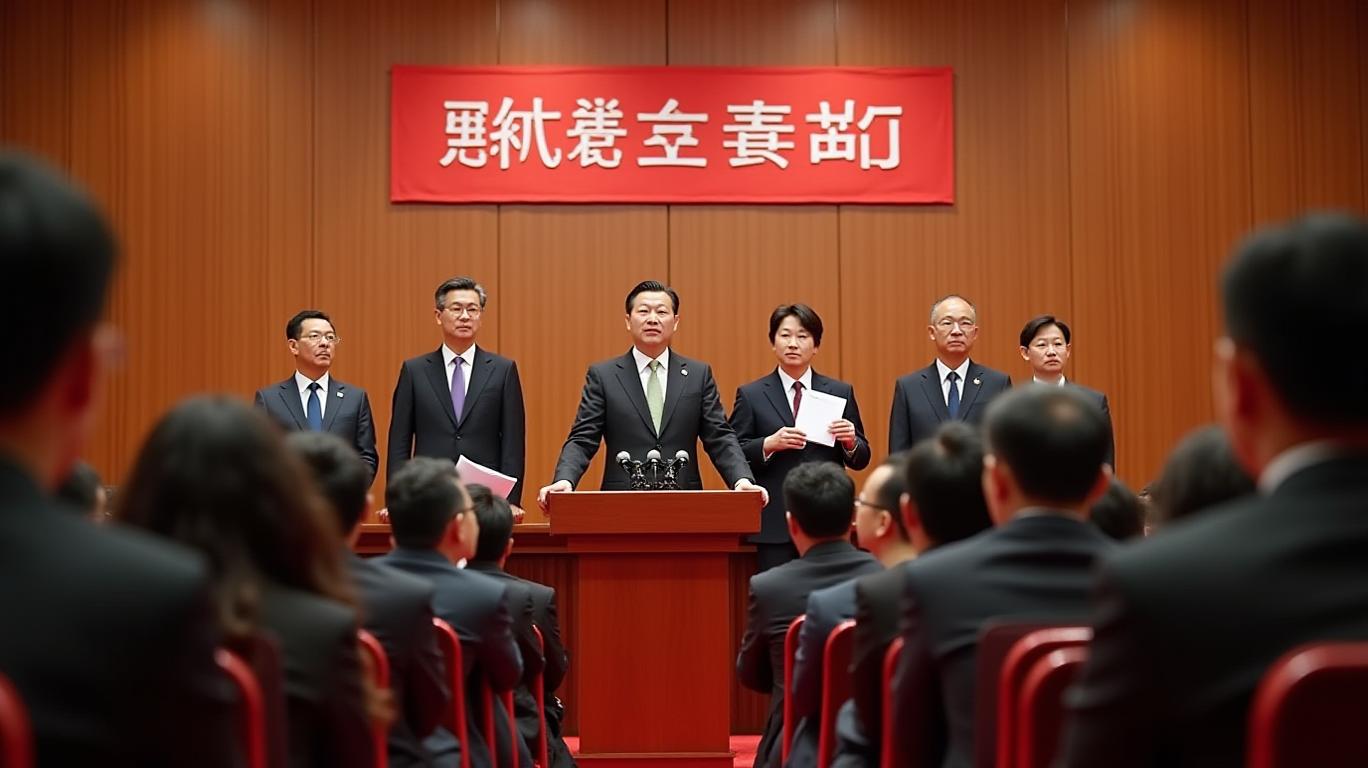
As the world's second-largest economy grapples with headwinds, China is set to sharply increase funding from treasury bonds in 2025 to spur business investment and consumer-boosting initiatives. The National Development and Reform Commission (NDRC) has announced plans to significantly boost bond issuance, with a focus on targeted policy objectives and extraordinary measures to raise proceeds for specific projects and policy goals.
The planned special treasury bond issuance in 2025 would be the largest on record, underscoring Beijing's willingness to go even deeper into debt to counter deflationary forces and maintain economic momentum. The proceeds will be targeted at boosting consumption via subsidy programs, supporting business equipment upgrades, and funding investments in innovation-driven advanced sectors, among other initiatives.
One of the key initiatives is a subsidy program for durable goods, where consumers can trade in old cars or appliances and buy new ones at a discount. This program aims to stimulate consumption and encourage the replacement of old, energy-inefficient products with newer, more efficient ones. Additionally, businesses will receive subsidies for large-scale equipment upgrades, promoting investment in advanced technologies and improving productivity.
Another major focus is infrastructure development, with projects such as the construction of railways, airports, and farmland, as well as building security capacity in key areas. These projects are expected to receive about 70% of the proceeds from the 1 trillion yuan in ultra-long special treasury bonds issued in 2024.
The planned bond issuance in 2025 is expected to have a positive impact on the Chinese economy's overall growth trajectory. The increased funding will help to stimulate the economy and offset some of the challenges it faces, such as a severe property crisis, high local government debt, and weak consumer demand.
However, the increased bond issuance may contribute to a potential fiscal imbalance if not managed properly. To mitigate the risks associated with higher debt levels, China is taking several measures, including targeted bond issuance, fiscal stimulus, structural reforms, monetary policy, and fiscal discipline.
By allocating funds to these initiatives, China aims to stimulate domestic demand, support businesses, and drive innovation, all of which contribute to economic growth. Additionally, the bond issuance represents a manageable 2.4% of the country's 2023 GDP, indicating a commitment to fiscal sustainability.
In conclusion, China's bond bonanza in 2025 is a strategic move to boost economic recovery and maintain growth momentum. By targeting specific initiatives and managing debt levels responsibly, China aims to navigate the challenges it faces and emerge stronger in the long run.
As the world's second-largest economy grapples with headwinds, China is set to sharply increase funding from treasury bonds in 2025 to spur business investment and consumer-boosting initiatives. The National Development and Reform Commission (NDRC) has announced plans to significantly boost bond issuance, with a focus on targeted policy objectives and extraordinary measures to raise proceeds for specific projects and policy goals.
The planned special treasury bond issuance in 2025 would be the largest on record, underscoring Beijing's willingness to go even deeper into debt to counter deflationary forces and maintain economic momentum. The proceeds will be targeted at boosting consumption via subsidy programs, supporting business equipment upgrades, and funding investments in innovation-driven advanced sectors, among other initiatives.
One of the key initiatives is a subsidy program for durable goods, where consumers can trade in old cars or appliances and buy new ones at a discount. This program aims to stimulate consumption and encourage the replacement of old, energy-inefficient products with newer, more efficient ones. Additionally, businesses will receive subsidies for large-scale equipment upgrades, promoting investment in advanced technologies and improving productivity.
Another major focus is infrastructure development, with projects such as the construction of railways, airports, and farmland, as well as building security capacity in key areas. These projects are expected to receive about 70% of the proceeds from the 1 trillion yuan in ultra-long special treasury bonds issued in 2024.
The planned bond issuance in 2025 is expected to have a positive impact on the Chinese economy's overall growth trajectory. The increased funding will help to stimulate the economy and offset some of the challenges it faces, such as a severe property crisis, high local government debt, and weak consumer demand.
However, the increased bond issuance may contribute to a potential fiscal imbalance if not managed properly. To mitigate the risks associated with higher debt levels, China is taking several measures, including targeted bond issuance, fiscal stimulus, structural reforms, monetary policy, and fiscal discipline.
By allocating funds to these initiatives, China aims to stimulate domestic demand, support businesses, and drive innovation, all of which contribute to economic growth. Additionally, the bond issuance represents a manageable 2.4% of the country's 2023 GDP, indicating a commitment to fiscal sustainability.
In conclusion, China's bond bonanza in 2025 is a strategic move to boost economic recovery and maintain growth momentum. By targeting specific initiatives and managing debt levels responsibly, China aims to navigate the challenges it faces and emerge stronger in the long run.

Divulgación editorial y transparencia de la IA: Ainvest News utiliza tecnología avanzada de Modelos de Lenguaje Largo (LLM) para sintetizar y analizar datos de mercado en tiempo real. Para garantizar los más altos estándares de integridad, cada artículo se somete a un riguroso proceso de verificación con participación humana.
Mientras la IA asiste en el procesamiento de datos y la redacción inicial, un miembro editorial profesional de Ainvest revisa, verifica y aprueba de forma independiente todo el contenido para garantizar su precisión y cumplimiento con los estándares editoriales de Ainvest Fintech Inc. Esta supervisión humana está diseñada para mitigar las alucinaciones de la IA y garantizar el contexto financiero.
Advertencia sobre inversiones: Este contenido se proporciona únicamente con fines informativos y no constituye asesoramiento profesional de inversión, legal o financiero. Los mercados conllevan riesgos inherentes. Se recomienda a los usuarios que realicen una investigación independiente o consulten a un asesor financiero certificado antes de tomar cualquier decisión. Ainvest Fintech Inc. se exime de toda responsabilidad por las acciones tomadas con base en esta información. ¿Encontró un error? Reportar un problema


SOBRE NOSOTROS
Nuestra historiaAutores de noticiasBase de conocimientosPolítica de privacidadTérmino de usoDescargo de responsabilidad de corretaje de tercerosTérminos de uso de AIMEDivulgaciones de riesgos de AInvest AICarrerasCONTÁCTENOS
Email: support@ainvest.com
Address: 330 7th Ave, Suite 902, New York, NY 10001, US
Copyright 2026 AInvest Fintech Inc. All rights reserved.


Comentarios
Aún no hay comentarios