
China's Aviation Sector Revival: Strategic Recovery and Regional Trade Reconnection in 2025
China's aviation sector is navigating a pivotal phase of recovery in 2025, marked by a stark contrast between robust domestic growth and a lagging international market. While domestic air traffic has surpassed pre-pandemic levels, international demand remains constrained at approximately 70% of 2019 volumes, driven by lingering health restrictions, weak consumer demand, and regulatory hurdles, according to an Alton Aviation report. This divergence underscores the sector's dual focus: stabilizing domestic operations while recalibrating international strategies to reestablish trade and cultural ties.
Domestic Market Resurgence: A Foundation for Growth
The domestic market has emerged as the cornerstone of China's aviation recovery. By 2024, the sector achieved a transportation turnover of 148.52 billion ton-kilometers, with 730 million passengers transported and 8.982 million tons of cargo and mail handled, according to People's Daily. This momentum is fueled by a rapidly expanding middle class, low-cost carrier proliferation, and infrastructure investments. For 2025, the industry has set ambitious targets: 161 billion ton-kilometers of turnover, 780 million passengers, and 9.5 million tons of cargo, figures that reflect a strategic pivot toward leveraging domestic demand to offset international headwinds (People's Daily).
However, the domestic rebound is not without challenges. Airlines face supply chain delays and labor shortages, which have strained operational efficiency, as noted in the Alton Aviation report. Additionally, economic headwinds, including subdued consumer spending, could temper long-term growth. Yet, the sector's resilience-evidenced by record-breaking passenger numbers during the 2024 Spring Festival holidays-suggests a strong foundation for sustained recovery (People's Daily).
International Recovery: Navigating Structural Barriers
The international market, however, remains a critical bottleneck. Despite a 29.3% year-on-year increase in international cargo and mail transportation, passenger traffic has only reached 84% of pre-pandemic levels, with 6,400 weekly international flights (People's Daily). This gap is exacerbated by restrictive visa policies and lingering consumer caution. For instance, while China has relaxed visa requirements for several countries, the impact on inbound tourism has been muted, with outbound travel rebounding more sharply, according to the Alton Aviation report.
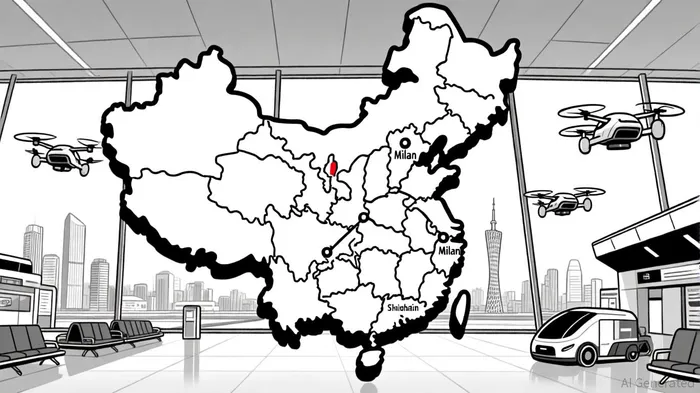
To bridge this gap, airlines are adopting innovative strategies. China Eastern Airlines, for example, has launched a direct route between Milan and Shanghai as part of its "Air Silk Road" initiative, aiming to strengthen trade and cultural links with Europe, according to The Diplomat. Similarly, Cathay Pacific's partnership with Sinopec to expand sustainable aviation fuel (SAF) usage highlights a dual focus on decarbonization and regulatory alignment (The Diplomat). These efforts signal a broader shift toward value-added services and sustainability to regain international trust.
Strategic Partnerships and Regional Trade Reconnection
China's aviation revival is also being driven by strategic regional partnerships. The Commercial Aircraft Corporation of China (COMAC) has engaged in discussions with Vietnam to introduce its C909 jets, signaling a long-term ambition to challenge BoeingBA-- and Airbus in the global market (The Diplomat). While the C919 narrow-body jet has found domestic success, international adoption remains limited due to certification hurdles and reliance on foreign components, according to an ACI perspective. Nevertheless, these negotiations reflect a calculated push to integrate regional trade corridors, particularly in Southeast Asia and South Asia.
Meanwhile, low-altitude urban air mobility (UAM) is emerging as a frontier for innovation. EHang's collaboration with Reignwood Aviation to integrate eVTOL aircraft into tourism and urban transport ecosystems exemplifies China's ambition to lead in next-generation aviation technologies (The Diplomat). Such initiatives not only diversify revenue streams but also position China as a hub for cutting-edge infrastructure development.
Green Aviation and Long-Term Viability
Sustainability is increasingly central to China's aviation strategy. Cathay Pacific's SAF partnership with Sinopec and COMAC's focus on eco-friendly manufacturing underscore a growing alignment with global decarbonization goals (The Diplomat). This shift is critical for attracting international investors, as regulatory pressures on carbon emissions intensify. Moreover, green aviation technologies could serve as a competitive differentiator for Chinese carriers in markets prioritizing environmental, social, and governance (ESG) criteria.
Future Outlook and Investment Considerations
Looking ahead, the Airports Council International forecasts China's passenger traffic to grow at a 7.1% annual rate, reaching 3.5 billion trips by 2041 (ACI). This trajectory aligns with broader economic projections, including the International Monetary Fund's (IMF) 5% GDP growth forecasts for 2023 and 2024 (ACI). For investors, the sector presents a mix of opportunities and risks:
- Opportunities:
- Domestic Infrastructure Expansion: Continued airport modernization and regional connectivity projects.
- Cargo and Logistics Growth: A 29.3% year-on-year increase in international cargo traffic (People's Daily).
Green Aviation Innovation: Leadership in SAF and eVTOL technologies.
Risks:
- Regulatory Hurdles: Certification challenges for COMAC's international expansion (ACI).
- Consumer Demand Volatility: Economic slowdowns could dampen travel and trade.
Conclusion
China's aviation sector is at a crossroads, balancing domestic strength with the need to reestablish global connectivity. While structural challenges persist, strategic initiatives-ranging from regional trade partnerships to green aviation-position the industry for long-term resilience. For investors, the key lies in capitalizing on near-term domestic growth while hedging against international uncertainties through diversified portfolios that include infrastructure, technology, and ESG-aligned ventures.





Comentarios
Aún no hay comentarios