
China's Auto Sector Surges: A New Energy-Driven Growth Spurt
The Chinese automotive market delivered a resounding performance in April 2025, with car sales surging 14.8% year-over-year to 1.78 million units, driven by strong demand for New Energy Vehicles (NEVs) and strategic policy support. This growth underscores a structural shift toward electrification and highlights opportunities for investors in the sector’s leading players.
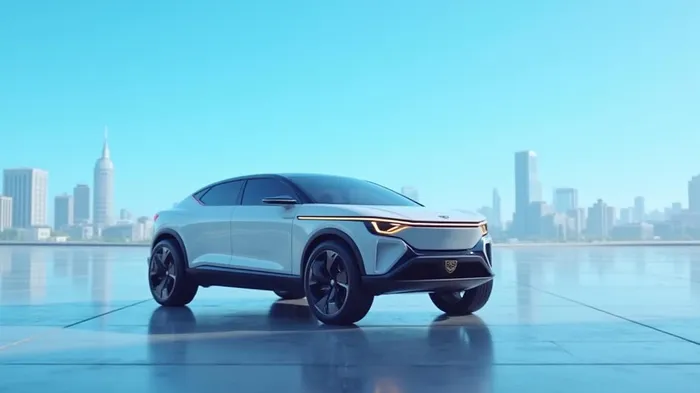
The NEV Revolution Fuels Growth
New Energy Vehicles—Battery Electric Vehicles (BEVs) and Plug-in Hybrids (PHEVs)—were the primary growth engine, with sales soaring 42% year-over-year in April to 850,000 units. This segment now commands nearly 50% of China’s passenger vehicle market, up from 30% in 2024. The rise reflects both government incentives and consumer preference for cost-effective, tech-forward models.
BYD, the undisputed leader, sold 380,089 NEVs in April, a 21% year-over-year increase, accounting for nearly half of all domestic NEV sales. Its aggressive pricing, extensive model lineup, and focus on smart EV features (e.g., the BYDBYD-- Seagull) have solidified its position. Meanwhile, legacy automakers like Geely and Chery have pivoted decisively to NEVs, with Geely’s NEV penetration hitting 54% of domestic sales.
Export Surge: China’s Global Dominance
Chinese automakers are not just thriving domestically—they’re conquering global markets. In April, vehicle exports hit 504,000 units, up 34% year-over-year, with NEVs accounting for 31% of exports. BYD alone exported 78,700 units in April, more than doubling its Q1 2025 exports to 214,000 units. This 116% year-over-year growth reflects BYD’s cost leadership and appeal in emerging markets like Southeast Asia.
While BYD’s stock has surged on this momentum, Tesla’s struggles in China—NEV sales down 34% year-over-year—highlight the challenges foreign brands face in competing with local innovators.
Foreign Brands Retreat as Domestic Players Ascend
Foreign automakers are ceding market share to Chinese rivals. In April 2025:
- Toyota’s sales fell 9% year-over-year, with its ICE-heavy portfolio struggling against NEV competition.
- Honda’s sales dropped 22%, while Nissan declined 10%.
- German brands like BMW and Mercedes saw flat or declining sales, as Chinese consumers prioritize affordability and cutting-edge tech over legacy prestige.
Legacy brands now hold just 32% of China’s passenger vehicle market, down from 60% in 2020.
Policy Tailwinds and Future Outlook
Government policies continue to fuel the shift to NEVs. The “Automobile Trade-in Subsidies” program and preferential loans for NEV purchases have boosted demand, while stricter emissions standards pressure ICE manufacturers. Analysts project NEVs to outnumber ICE vehicles in China’s passenger market by 2025, a historic milestone.
Exports are also poised for further expansion. With BYD targeting 5.5 million global sales by 2025 (already 25% achieved in April), and competitors like Chery and Great Wall ramping up overseas production, China’s auto sector is transitioning from a domestic powerhouse to a global leader.
Investment Takeaways
- Bet on NEV Leaders: BYD (0728.HK) and Geely (0999.HK) are core holdings, with BYD’s scale and export prowess making it a top pick.
- Monitor Export Dynamics: Automakers with strong global distribution (e.g., Chery, SAIC Motor) will benefit as NEV exports hit $100 billion annually by 2030, per McKinsey.
- Avoid Foreign Laggards: Investors should steer clear of foreign brands without robust NEV strategies, as their market share erosion will accelerate.
Conclusion
China’s 14.8% April sales growth is not a fluke but a reflection of a sector in transformation. With NEVs driving 42% year-over-year growth, exports surging 34%, and domestic brands displacing foreign competitors, the outlook is bullish. BYD’s dominance, policy support, and global ambitions position China’s automotive industry for sustained leadership. Investors ignoring this shift risk missing a once-in-a-decade opportunity to capitalize on the world’s fastest-growing and most innovative auto market.
The data is clear: the future of driving is electric—and it’s being written in China.







Comentarios
Aún no hay comentarios