
China's "Artificial Sun" Paves Way for Nuclear Fusion Power by 2050
Generado por agente de IACyrus Cole
domingo, 2 de marzo de 2025, 10:23 pm ET1 min de lectura
CVX--
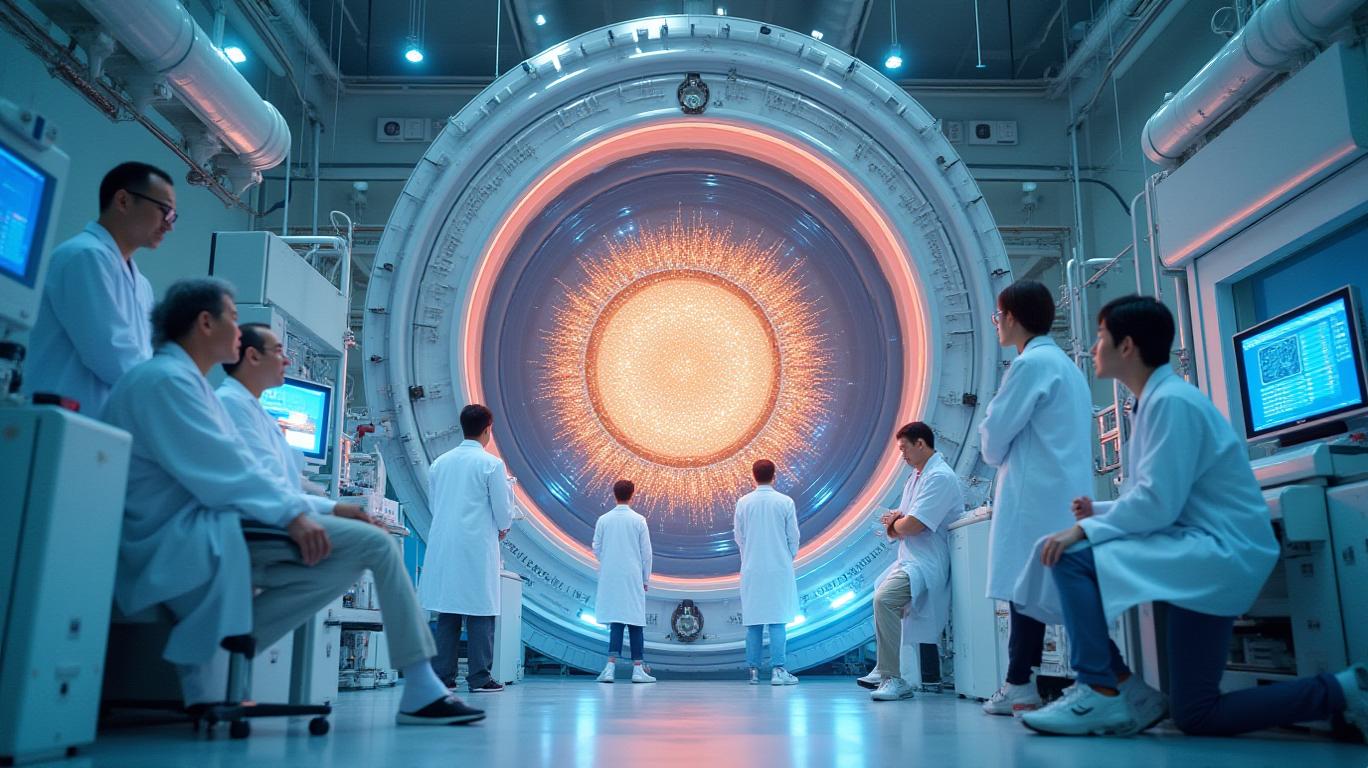
China's ambitious nuclear fusionHTOO-- research program, dubbed the "artificial sun," has taken a significant step forward with the successful operation of the Experimental Advanced Superconducting Tokamak (EAST). The EAST, also known as China's "artificial sun," has achieved a remarkable scientific milestone by maintaining steady-state high-confinement plasma operation for an impressive 1,066 seconds. This breakthrough sets a new world record and marks a significant advancement in the pursuit of fusion power generation.
The EAST's achievement is a testament to China's commitment to and progress in nuclear fusion research. The device, designed to replicate the nuclear fusion processes that occur in the sun, has the potential to provide humanity with a limitless and clean energy source. The recent record-breaking performance demonstrates China's mastery of key technologies in the design, construction, and operation of self-developed fusion devices.
China's fusion technology development plan aims to build an experimental reactor as early as this year and an industrial prototype by 2035. The country's ultimate goal is to allow fusion energy to enter large-scale commercial use by 2050. This ambitious plan aligns with China's broader energy strategy and climate change mitigation goals, as nuclear fusion offers a clean, abundant, and low-carbon energy source.
However, China faces several primary challenges in scaling up nuclear fusion technology. These include maintaining high temperatures and stable long-term operation, precise control of the fusion process, international collaboration and knowledge sharing, and ensuring safety and limiting proliferation risks. To address these obstacles, China is investing in research and development, upgrading its fusion devices, and fostering international cooperation.
The successful operation of the EAST and the progress made in China's nuclear fusion research program have attracted the attention of global investors. Companies such as ChevronCVX-- and AlphabetGOOG-- have already started betting on the potential of nuclear fusion. As the technology continues to advance, more investments are expected to flow into the sector, further accelerating the development of commercial fusion energy.
In conclusion, China's "artificial sun" project has taken a significant step forward with the EAST's record-breaking performance. As the country continues to invest in nuclear fusion research and development, it is poised to become a global leader in this cutting-edge technology. With the potential to provide clean, abundant, and low-carbon energy, nuclear fusion could play a crucial role in China's energy strategy and climate change mitigation efforts. As the technology matures, global investors are expected to increasingly recognize the value of nuclear fusion, further driving its commercialization.
GOOG--
HTOO--
China's ambitious nuclear fusionHTOO-- research program, dubbed the "artificial sun," has taken a significant step forward with the successful operation of the Experimental Advanced Superconducting Tokamak (EAST). The EAST, also known as China's "artificial sun," has achieved a remarkable scientific milestone by maintaining steady-state high-confinement plasma operation for an impressive 1,066 seconds. This breakthrough sets a new world record and marks a significant advancement in the pursuit of fusion power generation.
The EAST's achievement is a testament to China's commitment to and progress in nuclear fusion research. The device, designed to replicate the nuclear fusion processes that occur in the sun, has the potential to provide humanity with a limitless and clean energy source. The recent record-breaking performance demonstrates China's mastery of key technologies in the design, construction, and operation of self-developed fusion devices.
China's fusion technology development plan aims to build an experimental reactor as early as this year and an industrial prototype by 2035. The country's ultimate goal is to allow fusion energy to enter large-scale commercial use by 2050. This ambitious plan aligns with China's broader energy strategy and climate change mitigation goals, as nuclear fusion offers a clean, abundant, and low-carbon energy source.
However, China faces several primary challenges in scaling up nuclear fusion technology. These include maintaining high temperatures and stable long-term operation, precise control of the fusion process, international collaboration and knowledge sharing, and ensuring safety and limiting proliferation risks. To address these obstacles, China is investing in research and development, upgrading its fusion devices, and fostering international cooperation.
The successful operation of the EAST and the progress made in China's nuclear fusion research program have attracted the attention of global investors. Companies such as ChevronCVX-- and AlphabetGOOG-- have already started betting on the potential of nuclear fusion. As the technology continues to advance, more investments are expected to flow into the sector, further accelerating the development of commercial fusion energy.
In conclusion, China's "artificial sun" project has taken a significant step forward with the EAST's record-breaking performance. As the country continues to invest in nuclear fusion research and development, it is poised to become a global leader in this cutting-edge technology. With the potential to provide clean, abundant, and low-carbon energy, nuclear fusion could play a crucial role in China's energy strategy and climate change mitigation efforts. As the technology matures, global investors are expected to increasingly recognize the value of nuclear fusion, further driving its commercialization.



Divulgación editorial y transparencia de la IA: Ainvest News utiliza tecnología avanzada de Modelos de Lenguaje Largo (LLM) para sintetizar y analizar datos de mercado en tiempo real. Para garantizar los más altos estándares de integridad, cada artículo se somete a un riguroso proceso de verificación con participación humana.
Mientras la IA asiste en el procesamiento de datos y la redacción inicial, un miembro editorial profesional de Ainvest revisa, verifica y aprueba de forma independiente todo el contenido para garantizar su precisión y cumplimiento con los estándares editoriales de Ainvest Fintech Inc. Esta supervisión humana está diseñada para mitigar las alucinaciones de la IA y garantizar el contexto financiero.
Advertencia sobre inversiones: Este contenido se proporciona únicamente con fines informativos y no constituye asesoramiento profesional de inversión, legal o financiero. Los mercados conllevan riesgos inherentes. Se recomienda a los usuarios que realicen una investigación independiente o consulten a un asesor financiero certificado antes de tomar cualquier decisión. Ainvest Fintech Inc. se exime de toda responsabilidad por las acciones tomadas con base en esta información. ¿Encontró un error? Reportar un problema


SOBRE NOSOTROS
Nuestra historiaAutores de noticiasBase de conocimientosPolítica de privacidadTérmino de usoDescargo de responsabilidad de corretaje de tercerosTérminos de uso de AIMEDivulgaciones de riesgos de AInvest AICarrerasCONTÁCTENOS
Email: support@ainvest.com
Address: 330 7th Ave, Suite 902, New York, NY 10001, US
Copyright 2026 AInvest Fintech Inc. All rights reserved.


Comentarios
Aún no hay comentarios