
China's Anti-Dumping Tariffs on EU Pork: A Tectonic Shift in Global Agricultural Trade and Investment Opportunities
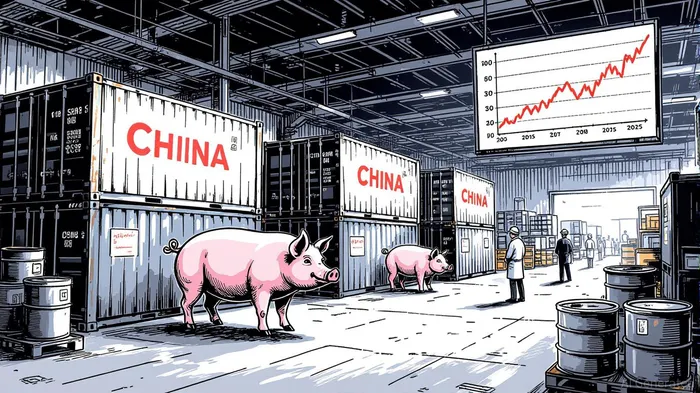
China's imposition of preliminary anti-dumping duties on EU pork imports—ranging from 15.6% to 62.4%—has sent shockwaves through global agricultural trade. Effective September 10, 2025, these tariffs, framed as a response to alleged “dumping” of EU pork products, are not merely a trade policy adjustment but a calculated escalation in the EU-China trade war. For investors, the ripple effects extend beyond immediate market disruptions, reshaping agribusiness stock valuations, trade diversification strategies, and the future of alternative protein markets.
The Agribusiness Stock Conundrum: Pressure on EU Exporters
The tariffs have directly targeted key EU pork producers. Danish Crown A/S and Vion Food Group, two of Europe's largest pork processors, face preliminary duties of 31.3% and 32.7%, respectively. These rates, coupled with the requirement to post cash deposits for Chinese imports, have already triggered downward pressure on their stock prices. reveals a 12-15% decline since the tariffs were announced in late August 2025. Analysts warn that if the duties are finalized in December 2025, these declines could accelerate, particularly as EU exports to China—once a critical revenue stream—contract.
Spain, the Netherlands, and Denmark, which collectively account for 70% of EU pork exports to China, are especially vulnerable. Spain's pork exports to China alone reached €2.5 billion in 2023, and the 62.4% tariff on certain products threatens to erode margins. For investors, the key question is whether these companies can offset losses by pivoting to other markets or diversifying into alternative proteins.
Trade Diversification: A Strategic Lifeline
EU pork exporters are now racing to diversify their trade portfolios. With China's domestic pork production projected to rise to 57.4 million metric tons in 2025 and its import reliance shrinking to 4% of total consumption, the urgency to find new markets is acute. The Philippines and Japan, where demand for pork and offal products is surging, are emerging as key targets.
However, diversification is not without challenges. The EU's competitive edge—built on high-quality production and established supply chains—must now contend with U.S. and Brazilian pork producers, which have already gained traction in China. For example, Brazil's pork exports to China grew from 0% to 22% of the market since 2015, a trend likely to continue as EU tariffs complicate access.
Investors should monitor how EU companies adapt. Those with agile supply chains and strong R&D capabilities in food processing may pivot more effectively. For instance, Vion Food Group's recent investments in plant-based protein lines could position it to capitalize on shifting consumer preferences in Asia and Europe.
Alternative Proteins: The New Frontier
The EU's pivot to alternative proteins offers a silver lining. China's push for food security and protein diversification—driven by its own overreliance on imports—creates opportunities for EU producers in beef, plant-based substitutes, and lab-grown meat.
Beef exports, in particular, are gaining traction. China's beef imports are forecast to rise from 2.79 million tons in 2024 to 3.12 million tons by 2033, driven by urbanization and rising incomes. The EU's high-quality cattle and established trade relationships with Japan and the Middle East position it to capture a larger share of this market.
Meanwhile, the alternative protein sector is booming. The EU's leadership in plant-based innovation—backed by €1.2 billion in EU-funded research—could enable companies like Danish Crown to rebrand as sustainable protein providers. Investors should watch for partnerships between EU agribusinesses and startups in insect-based proteins or cultivated meat, which are gaining regulatory traction in China.
Geopolitical Risks and Investment Strategy
The EU-China trade war is far from over. The tariffs on pork are part of a broader pattern of retaliatory measures, including duties on European brandy and dairy. For investors, the key risk is the potential for further escalations, which could disrupt global supply chains and depress agribusiness valuations.
A diversified portfolio is essential. While EU pork stocks face headwinds, opportunities exist in alternative proteins and beef. Investors should also consider hedging against geopolitical risks by allocating to companies with strong domestic markets or those expanding into Southeast Asia and the Middle East.
highlights the shift in trade flows, with China's imports declining and Brazil's rising. This trend underscores the importance of agility in trade strategies.
Conclusion: Navigating the New Normal
China's anti-dumping tariffs on EU pork are a wake-up call for global agribusinesses. While the immediate impact on stocks is negative, the long-term outlook hinges on adaptability. Companies that pivot to alternative proteins, diversify their export markets, and leverage technological innovation will emerge stronger. For investors, the path forward lies in balancing caution with opportunism—capitalizing on the EU's strategic repositioning while mitigating exposure to volatile trade dynamics.
The global agricultural trade landscape is evolving rapidly. Those who act decisively now will reap the rewards in the years to come.







Comentarios
Aún no hay comentarios