
China's AI-Driven Tech Sector and Its Global Implications in 2026
The global AI race is no longer a binary contest between Silicon Valley and Beijing-it's a multi-layered, high-stakes innovation war where underappreciated Chinese startups and chipmakers are emerging as formidable contenders. In 2026, China's AI sector is being reshaped by a confluence of policy tailwinds, U.S. export restrictions, and breakthroughs in cost-efficient model development. For investors, this represents a rare window to capitalize on a redefining industry before global market dynamics shift permanently.
The Policy Engine: Subsidies, Tax Breaks, and IPO Reforms
China's 14th Five-Year Plan (2021–2025) has laid the groundwork for a self-reliant AI ecosystem. The government's $70 billion chip sector incentive package, announced in late 2025, is a cornerstone of this strategy. This funding, separate from existing initiatives like the $50 billion Big Fund III, targets R&D subsidies, tax breaks including 10% corporate income tax for key chip design firms, and streamlined IPO processes for unprofitable but high-potential startups. For example, Shanghai Biren Technology, a GPU designer, surged 76% on its Hong Kong IPO debut in January 2026, raising HK$5.58 billion and signaling investor confidence in domestic alternatives to U.S. chips.
The policy push extends beyond hardware. Open-source models like DeepSeek-R1 and Alibaba's Qwen have been incentivized to attract global developers, with Qwen's 400 million downloads and 140,000 derivative models creating a de facto standard for AI applications. This ecosystem-building strategy is critical for China's long-term goal of reducing reliance on foreign semiconductors.
Underappreciated Innovators: DeepSeek, Moonshot AI, and Zhipu AI
While global attention often focuses on U.S. giants like NVIDIA, China's underappreciated startups are outpacing expectations.
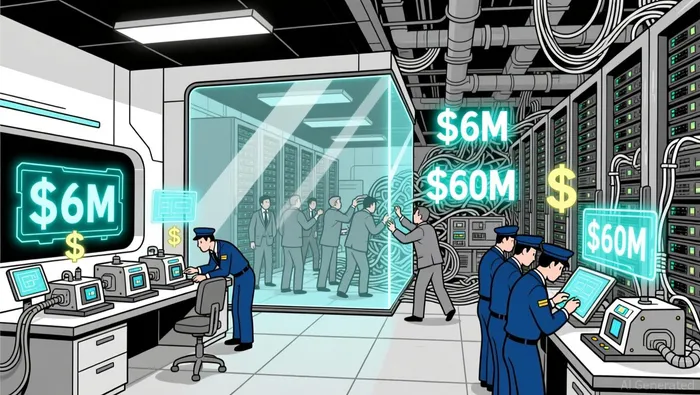
DeepSeek has redefined efficiency in AI model training. Its DeepSeek-R1 model achieved GPT-4o-level performance with a training cost of under $6 million-less than 10% of what U.S. counterparts spend according to analysis. This cost advantage, driven by algorithmic innovations like "manifold-constrained hyper-connections," positions DeepSeek to dominate the open-source LLM market.
Moonshot AI, valued at $4.3 billion after a $500 million Series C raise, is leveraging its Kimi chatbot's long-context capabilities to capture enterprise and consumer markets. Kimi K2's agentic AI features have outperformed GPT-5 and Claude 4.5 in specific benchmarks, while its 20 million user base in three months underscores its scalability.
Zhipu AI, with its GLM series of LLMs and Ying video-generation tool, is preparing for an IPO that could value it at over $2 billion according to market analysis. Its strategic pivot from foundational model training to consumer-facing applications mirrors the playbook of successful U.S. AI startups like Anthropic.
U.S. Export Controls: A Double-Edged Sword
The U.S. has long sought to stifle China's AI ambitions through export restrictions on advanced chips and manufacturing equipment. However, these measures have inadvertently accelerated innovation in China. For instance, DeepSeek's efficiency gains-achieved with a fraction of the computing power used by U.S. models-highlight how resource constraints can drive algorithmic creativity according to Brookings research.
While the Trump administration's 2026 policies allow limited U.S. chip sales to China (e.g., NVIDIA's H200 with a 25% fee), Beijing is prioritizing self-sufficiency. State-backed projects now mandate the use of domestic chips, and companies like Huawei and Cambricon are scaling production to meet demand. This "whole-nation" approach ensures that even if U.S. export rules tighten again, China's AI sector will remain resilient.
The Investment Case: Timing the Next Wave
The key to profiting from China's AI ascent lies in early entry. Several factors make 2026 a pivotal year:
1. IPO Momentum: Chinese AI startups are bypassing Silicon Valley's valuation benchmarks. Moore Threads, dubbed "China's answer to NVIDIA," surged 425% on its debut in 2025, while Zhipu AI and Iluvatar CoreX are expected to follow according to market analysis.
2. Global Market Shifts: The Hang Seng Index's 26.7% gain in 2025, driven by AI-themed stocks, suggests that Hong Kong is becoming the new hub for AI capitalization.
3. Geopolitical Resilience: U.S. export restrictions are creating a "firewall" effect, insulating Chinese firms from global market volatility while they scale.
Risks and Mitigations
Critics argue that Chinese AI firms still lag in raw performance compared to NVIDIA's H100 and AMD's MI300. However, the gap is narrowing rapidly. For example, Biren's BR100 GPU is already competing with NVIDIA's A100 in certain workloads. Moreover, the $70 billion incentive package and state-backed R&D spending are addressing technical bottlenecks.
Conclusion: A Defining Moment in the AI Era
China's AI sector is no longer a shadow of its U.S. counterpart-it's a parallel force reshaping the industry. For investors, the underappreciated players in this ecosystem-DeepSeek, Moonshot AI, Zhipu AI, and Biren-offer a unique opportunity to ride the next wave of innovation. With policy tailwinds, algorithmic breakthroughs, and a geopolitical landscape favoring self-reliance, the time to act is now.







Comentarios
Aún no hay comentarios