
China's $1 Trillion Trade Surplus: A Double-Edged Sword
Generado por agente de IAWesley Park
viernes, 17 de enero de 2025, 8:59 am ET2 min de lectura
UBS--

In 2024, China's trade surplus hit an all-time high of $1 trillion, driven by record exports of $3.6 trillion. This staggering figure has sparked concerns about a new wave of global trade tensions, particularly as Donald Trump prepares to re-enter the White House with promises of steep tariffs on Chinese goods. But what does this trade surplus mean for China, and how can it navigate the challenges posed by U.S. tariffs?
The Impact of U.S. Tariffs on China's Exports
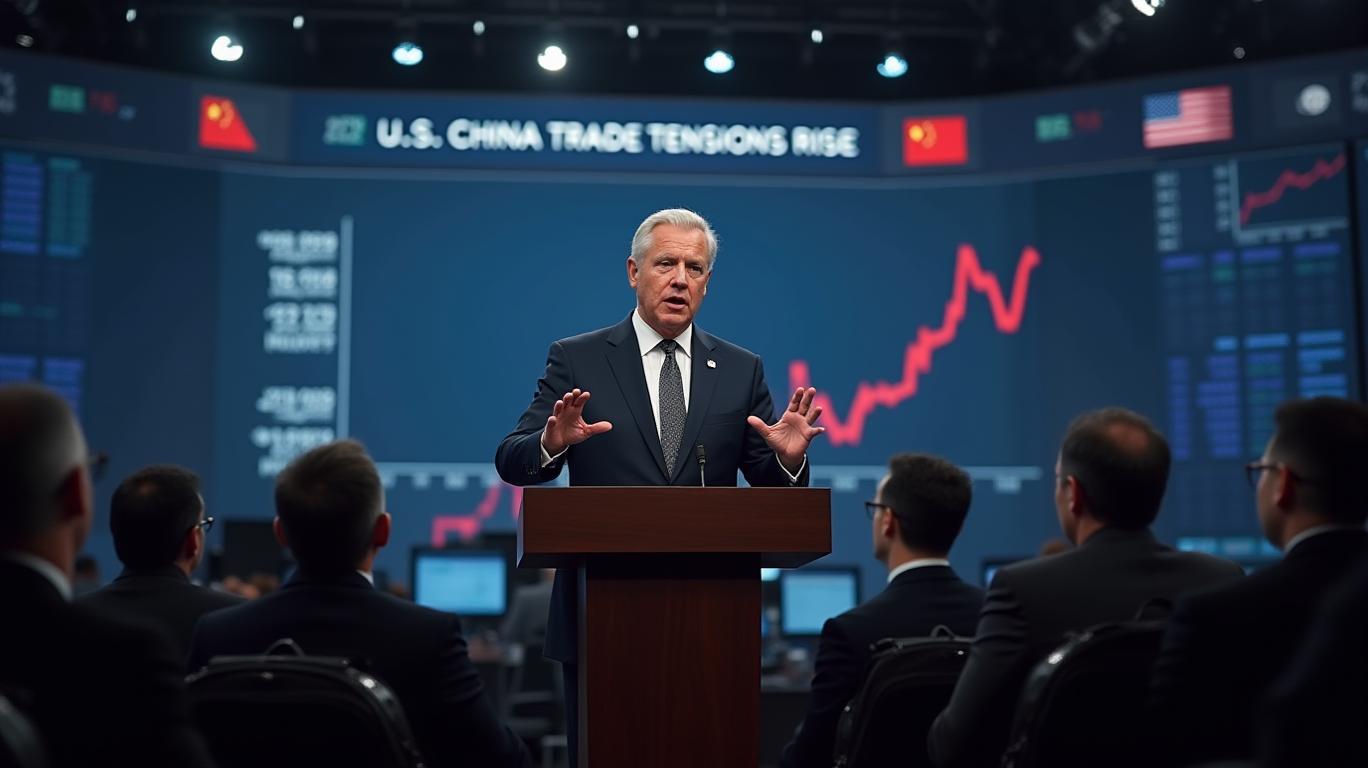
The U.S. is China's largest trading partner, with exports to the U.S. reaching $525 billion in 2024. However, the U.S. has proposed raising tariffs on imports from China, which could significantly impact China's exports. A 60% tariff on Chinese imports would lower China's GDP growth by 2.5 percentage points over the following 12 months, according to estimates by Swiss bank UBS.
China's Export Strategy: Front-loading and Market Diversification
To mitigate the impact of U.S. tariffs, China has employed two key strategies: front-loading and market diversification.
1. Front-loading: Companies rushed to complete shipments before Trump's anticipated tariffs, leading to a surge in exports in December 2024. This strategy allowed businesses to avoid higher tariffs and save money in the short term. For instance, China's exports to the U.S. peaked in December at $48.8 billion, a 16% year-over-year increase.
2. Market diversification: China has diversified its export markets, reducing its reliance on the U.S. market. This strategy has limits, but it has helped China maintain strong export growth. For example, exports to ASEAN countries grew by 12% in 2024, nearly double the overall export growth rate.
The Future of China's Trade Surplus
China's trade surplus is a double-edged sword. On one hand, it reflects the country's strong export competitiveness and the global demand for its products. On the other hand, it exposes deep vulnerabilities in China's economic model and its heavy reliance on exports to compensate for weak domestic demand.
As the U.S. and China engage in a potential trade war, China must navigate the challenges posed by U.S. tariffs while addressing the structural issues within its economy. By diversifying its export markets and upgrading its export basket, China can maintain its export competitiveness and mitigate the impact of U.S. tariffs. However, the effectiveness of these strategies is limited, and the impact of U.S. tariffs on China's exports is still significant.
In conclusion, China's $1 trillion trade surplus is a testament to the country's export prowess but also a reminder of the challenges it faces in the face of U.S. tariffs. By employing strategies such as front-loading and market diversification, China can mitigate the impact of U.S. tariffs and maintain its export competitiveness. However, addressing the structural issues within its economy is crucial for China to sustain its economic growth in the long run.
In 2024, China's trade surplus hit an all-time high of $1 trillion, driven by record exports of $3.6 trillion. This staggering figure has sparked concerns about a new wave of global trade tensions, particularly as Donald Trump prepares to re-enter the White House with promises of steep tariffs on Chinese goods. But what does this trade surplus mean for China, and how can it navigate the challenges posed by U.S. tariffs?
The Impact of U.S. Tariffs on China's Exports
The U.S. is China's largest trading partner, with exports to the U.S. reaching $525 billion in 2024. However, the U.S. has proposed raising tariffs on imports from China, which could significantly impact China's exports. A 60% tariff on Chinese imports would lower China's GDP growth by 2.5 percentage points over the following 12 months, according to estimates by Swiss bank UBS.
China's Export Strategy: Front-loading and Market Diversification
To mitigate the impact of U.S. tariffs, China has employed two key strategies: front-loading and market diversification.
1. Front-loading: Companies rushed to complete shipments before Trump's anticipated tariffs, leading to a surge in exports in December 2024. This strategy allowed businesses to avoid higher tariffs and save money in the short term. For instance, China's exports to the U.S. peaked in December at $48.8 billion, a 16% year-over-year increase.
2. Market diversification: China has diversified its export markets, reducing its reliance on the U.S. market. This strategy has limits, but it has helped China maintain strong export growth. For example, exports to ASEAN countries grew by 12% in 2024, nearly double the overall export growth rate.
The Future of China's Trade Surplus
China's trade surplus is a double-edged sword. On one hand, it reflects the country's strong export competitiveness and the global demand for its products. On the other hand, it exposes deep vulnerabilities in China's economic model and its heavy reliance on exports to compensate for weak domestic demand.
As the U.S. and China engage in a potential trade war, China must navigate the challenges posed by U.S. tariffs while addressing the structural issues within its economy. By diversifying its export markets and upgrading its export basket, China can maintain its export competitiveness and mitigate the impact of U.S. tariffs. However, the effectiveness of these strategies is limited, and the impact of U.S. tariffs on China's exports is still significant.
In conclusion, China's $1 trillion trade surplus is a testament to the country's export prowess but also a reminder of the challenges it faces in the face of U.S. tariffs. By employing strategies such as front-loading and market diversification, China can mitigate the impact of U.S. tariffs and maintain its export competitiveness. However, addressing the structural issues within its economy is crucial for China to sustain its economic growth in the long run.

Divulgación editorial y transparencia de la IA: Ainvest News utiliza tecnología avanzada de Modelos de Lenguaje Largo (LLM) para sintetizar y analizar datos de mercado en tiempo real. Para garantizar los más altos estándares de integridad, cada artículo se somete a un riguroso proceso de verificación con participación humana.
Mientras la IA asiste en el procesamiento de datos y la redacción inicial, un miembro editorial profesional de Ainvest revisa, verifica y aprueba de forma independiente todo el contenido para garantizar su precisión y cumplimiento con los estándares editoriales de Ainvest Fintech Inc. Esta supervisión humana está diseñada para mitigar las alucinaciones de la IA y garantizar el contexto financiero.
Advertencia sobre inversiones: Este contenido se proporciona únicamente con fines informativos y no constituye asesoramiento profesional de inversión, legal o financiero. Los mercados conllevan riesgos inherentes. Se recomienda a los usuarios que realicen una investigación independiente o consulten a un asesor financiero certificado antes de tomar cualquier decisión. Ainvest Fintech Inc. se exime de toda responsabilidad por las acciones tomadas con base en esta información. ¿Encontró un error? Reportar un problema




Comentarios
Aún no hay comentarios