
Chimney Hollow Dam Nears Completion Amid Uranium Concerns, Securing Water for Northern Colorado's Growth
After decades of planning and years of construction, Northern Colorado's Chimney Hollow Dam is nearly complete. Recently, construction crews topped off the 350-foot structure and commenced preparations to pave a roadway across its crest, which will remain inaccessible to the public. Located west of Loveland, the dam spans more than 1,000 feet in width and features a thin asphalt layer designed to prevent water seepage through the rock foundations supporting the edifice.
Chimney Hollow Reservoir and its accompanying dam have been long in the making as Northern Water sought to secure additional drinking water sources aligned with Northern Colorado's projected population growth. The region has already seen significant expansion and is expected to double its population size over the next 20 years, intensifying the need for a reliable water supply. Jeff Drager, Director of Engineering for Northern Water, reflected on the project's journey. Having joined the initiative over three decades ago, Drager has watched the concept evolve into a tangible reality. "I was hired 30 years ago for preliminary studies for this project. So, yeah, it has been a long-time career-building thing for me," he noted.
The culmination of relentless efforts from crews operating under a 24-hour construction mandate has finally brought Drager's vision to fruition. The operation involved continuously transporting rock from a local quarry to the dam site, with trucks dumping rock loads every two to three minutes for two and a half years. This rigorous process, initially deemed excessive, proved successful in achieving its objectives.
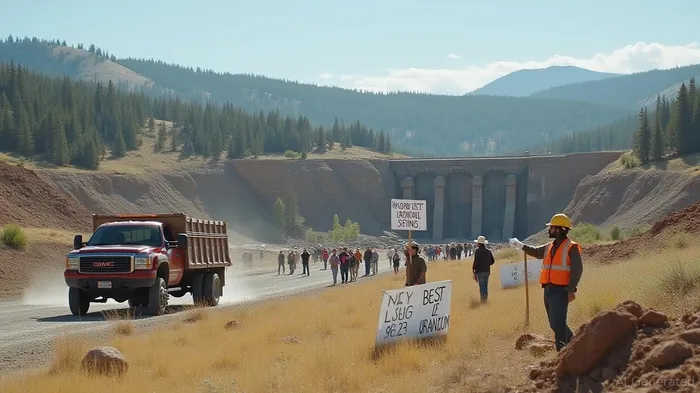
Nonetheless, challenges persist, primarily concerning the discovery of heightened uranium levels in the rocks used to construct the dam. This issue has necessitated further deliberation by Northern Water regarding strategies to manage or reduce the uranium concentration in the water intended to fill the reservoir. Engineers like Drager express optimism that filling the reservoir could help mitigate the detected uranium levels. However, definitiveDH-- action plans remain under discussion, with considerations including diluting the water by a 20-to-one ratio through blending with water from nearby sources such as lakes and rivers.
Among the solutions Northern Water may explore is the establishment of on-site treatment plants or dispersing the water for purification by the project’s participating water providers. Drager mentioned that reservoir filling could commence within the next two months. Yet, downstream distribution to providers might experience delays ranging from six months to several years as they work to address the issues around safe uranium levels.
The Environmental Protection Agency does allow the presence of uranium in drinking water but within strict limits. Current concerns suggest that the Chimney Hollow water could surpass these permissible levels unless adequately treated, potentially affecting the water quality over the next five to ten years. Despite these hurdles, Drager remains optimistic that the issues related to uranium contamination will not derail the project. The Chimney Hollow Dam and Reservoir are poised to serve as significant long-term resources for Northern Colorado residents.
"This project is a long-term reliable source of water for about 800,000 people on the Front Range. From Broomfield out to Loveland and Greeley, and all the towns between them. All of them will rely on this for a reliable source of water going into the future," Drager affirmed.
While uranium presence has triggered a distraction from the core benefits offered by Chimney Hollow, the region is set for a promising advancement in its water infrastructure. As municipalities in Northern Colorado, including places like Windsor, Johnstown, and Frederick, tackle growth pressures responsibly, the reservoir delivers essential predictability and stability in water supply, vital for accommodating critical housing development needs. Despite noise surrounding the uranium findings, the reservoir remains a beacon of regional resilience, bridging gaps created by drought and facilitating new housing supply—a generational investment in Northern Colorado's future.







Comentarios
Aún no hay comentarios