
Chile Keeps Faith in Lithium Expansion Despite Worsening Glut
Generado por agente de IACyrus Cole
jueves, 23 de enero de 2025, 10:56 am ET1 min de lectura
ALB--
Chile, the world's second-largest lithium producer, is pressing ahead with its plans to expand lithium production, despite a worsening global glut that has seen prices plummet. The country's National Lithium Strategy, announced in April 2023, aims to double production by 2025 and attract significant investment in the sector. However, the current oversupply and low prices have raised concerns about the viability of new projects.
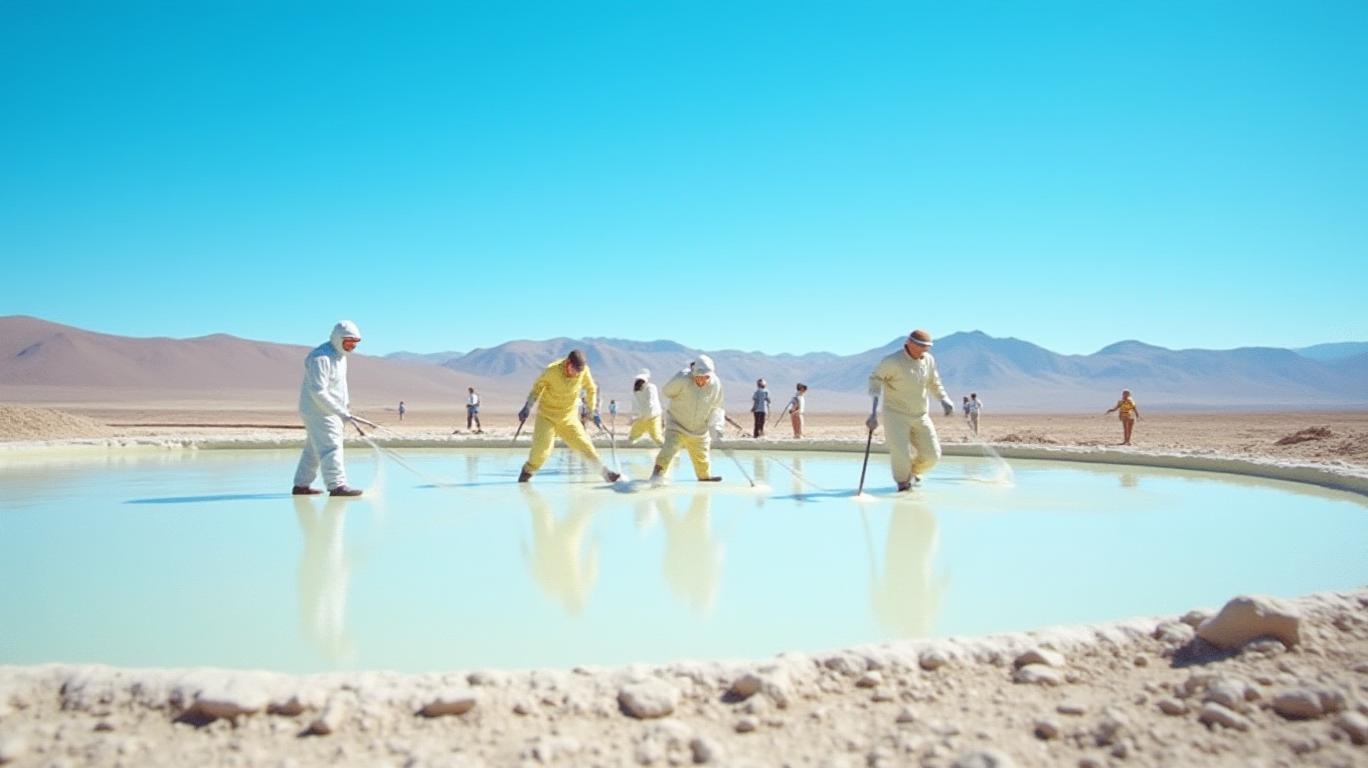
The global lithium market is expected to post a surplus of 89,000 tons in 2024 and 141,000 tons in 2025, according to Chile's government agency for mining studies, Cochilco. This surplus has led to a significant decrease in lithium prices, with some analysts suggesting that prices may have reached a floor. Despite these challenges, Chile remains committed to its expansion plans.
Chile's finance minister, Mario Marcel, recently stated that the country is aiming to double its lithium production, arguing that the risk of renewed shortages and price spikes is more dangerous for the industry than a prolonged oversupply. The country's lithium production is concentrated in just two companies, SQM and Albemarle, in only one salt flat region: Atacama. The challenge is to expand production both in Atacama and in other areas, and to attract more players to deploy investment and technology to increase production in a sustainable way.
The National Lithium Strategy aims to balance the interests of private investors, the state, and environmental concerns. The strategy encourages private investment by offering partnerships with state-owned companies like Codelco, CORFO, and ENAMI. It allows private companies to retain a 49.99% stake in lithium projects, with the state taking a majority stake of 50.01%. This approach aims to attract investment while ensuring state control over the strategic mineral.
However, the strategy has faced criticism and misunderstandings, with some international newspapers headlining Chile's new "nationalization" of lithium. The market reaction to the new law missed a central fact: lithium has always been nationalized in Chile, with the Chilean constitution defining lithium as a strategic, state-owned mineral. The strategy's requirement for state ownership has been misinterpreted as nationalization, causing concern among investors.
Despite these challenges, Chile remains committed to its lithium expansion plans. The country's significant lithium reserves and strategic importance in the global lithium market make it a crucial player in the energy transition. By capitalizing on its resources and implementing a balanced approach that addresses the interests of private investors, the state, and environmental concerns, Chile can secure a stable and profitable future in the lithium industry.
CORO--
SQM--
Chile, the world's second-largest lithium producer, is pressing ahead with its plans to expand lithium production, despite a worsening global glut that has seen prices plummet. The country's National Lithium Strategy, announced in April 2023, aims to double production by 2025 and attract significant investment in the sector. However, the current oversupply and low prices have raised concerns about the viability of new projects.
The global lithium market is expected to post a surplus of 89,000 tons in 2024 and 141,000 tons in 2025, according to Chile's government agency for mining studies, Cochilco. This surplus has led to a significant decrease in lithium prices, with some analysts suggesting that prices may have reached a floor. Despite these challenges, Chile remains committed to its expansion plans.
Chile's finance minister, Mario Marcel, recently stated that the country is aiming to double its lithium production, arguing that the risk of renewed shortages and price spikes is more dangerous for the industry than a prolonged oversupply. The country's lithium production is concentrated in just two companies, SQM and Albemarle, in only one salt flat region: Atacama. The challenge is to expand production both in Atacama and in other areas, and to attract more players to deploy investment and technology to increase production in a sustainable way.
The National Lithium Strategy aims to balance the interests of private investors, the state, and environmental concerns. The strategy encourages private investment by offering partnerships with state-owned companies like Codelco, CORFO, and ENAMI. It allows private companies to retain a 49.99% stake in lithium projects, with the state taking a majority stake of 50.01%. This approach aims to attract investment while ensuring state control over the strategic mineral.
However, the strategy has faced criticism and misunderstandings, with some international newspapers headlining Chile's new "nationalization" of lithium. The market reaction to the new law missed a central fact: lithium has always been nationalized in Chile, with the Chilean constitution defining lithium as a strategic, state-owned mineral. The strategy's requirement for state ownership has been misinterpreted as nationalization, causing concern among investors.
Despite these challenges, Chile remains committed to its lithium expansion plans. The country's significant lithium reserves and strategic importance in the global lithium market make it a crucial player in the energy transition. By capitalizing on its resources and implementing a balanced approach that addresses the interests of private investors, the state, and environmental concerns, Chile can secure a stable and profitable future in the lithium industry.

Divulgación editorial y transparencia de la IA: Ainvest News utiliza tecnología avanzada de Modelos de Lenguaje Largo (LLM) para sintetizar y analizar datos de mercado en tiempo real. Para garantizar los más altos estándares de integridad, cada artículo se somete a un riguroso proceso de verificación con participación humana.
Mientras la IA asiste en el procesamiento de datos y la redacción inicial, un miembro editorial profesional de Ainvest revisa, verifica y aprueba de forma independiente todo el contenido para garantizar su precisión y cumplimiento con los estándares editoriales de Ainvest Fintech Inc. Esta supervisión humana está diseñada para mitigar las alucinaciones de la IA y garantizar el contexto financiero.
Advertencia sobre inversiones: Este contenido se proporciona únicamente con fines informativos y no constituye asesoramiento profesional de inversión, legal o financiero. Los mercados conllevan riesgos inherentes. Se recomienda a los usuarios que realicen una investigación independiente o consulten a un asesor financiero certificado antes de tomar cualquier decisión. Ainvest Fintech Inc. se exime de toda responsabilidad por las acciones tomadas con base en esta información. ¿Encontró un error? Reportar un problema


SOBRE NOSOTROS
Nuestra historiaAutores de noticiasBase de conocimientosPolítica de privacidadTérmino de usoDescargo de responsabilidad de corretaje de tercerosTérminos de uso de AIMEDivulgaciones de riesgos de AInvest AICarrerasCONTÁCTENOS
Email: support@ainvest.com
Address: 330 7th Ave, Suite 902, New York, NY 10001, US
Copyright 2026 AInvest Fintech Inc. All rights reserved.


Comentarios
Aún no hay comentarios