
Chicago's Fiscal Crossroads: Municipal Credit Risk and the Contrasting Paths of CPS and JPMorgan Chase
The fiscal health of urban school districts like Chicago Public Schools (CPS) has become a critical barometer for municipal credit risk. With a $734 million budget deficit for the 2025–26 school year, a Chalkbeat report says, and $9.1 billion in outstanding debt, CPS exemplifies the challenges of balancing infrastructure needs with fiscal sustainability. Meanwhile, JPMorganJPM-- Chase's $200 million commitment to Chicago's South and West Sides-particularly its $10 million low-interest loan to the Chicago Community Loan Fund (CCLF)-offers a contrasting model of strategic, long-term financing. This analysis explores how divergent borrowing strategies shape municipal credit risk and infrastructure outcomes.
CPS: A Debt-Driven Fiscal Crisis
Chicago Public Schools' financial struggles are rooted in structural underfunding, aging infrastructure, and high-cost debt. The district's capital portfolio includes 522 campuses, 803 buildings, and $3 billion in critical repair needs, the Chalkbeat report says. To address these challenges, CPS relies on a mix of Tax Increment Financing (TIF), property tax increases, and General Obligation (GO) bonds. However, its debt management strategy has been criticized for exacerbating financial instability. Between 2016 and 2018, during a budget standoff with the state, CPS took out six high-interest loans, costing the district $194 million in annual interest alone, according to reporting by ScheerPost. These loans, coupled with a $9.3 billion debt load reported by Fox32, have pushed CPS to the brink of a "junk bond" rating, with credit agencies warning of default risks, as previously reported.
The district's reliance on short-term borrowing and its declining enrollment-down 21% since 2010, Fox32 reports-further strain its finances. With only three days of cash on hand, Fox32 notes, CPS's liquidity crisis underscores the dangers of high-cost debt. For instance, its 2025 capital budget of $611.1 million, the Chalkbeat report explains, is partially funded by TIF surplus revenue, which remains uncertain and subject to City Council approval. This volatility highlights the fragility of CPS's fiscal model.
JPMorgan Chase: A Low-Cost, Long-Term Alternative
In contrast, JPMorgan Chase's $200 million initiative for Chicago's South and West Sides demonstrates a different approach to infrastructure financing. A key component is a $10 million loan to CCLF, structured with below-market interest rates (several hundred basis points lower than typical rates, Chicago Business reports) and a 10-year term. This loan supports CCLF's Communities of Color Loan Program, which provides affordable capital to developers in low-to-moderate-income neighborhoods. By prioritizing long-term, low-cost financing, JPMorgan ChaseJPM-- mitigates credit risk while fostering economic revitalization.
The bank's strategy also includes philanthropic capital, such as a $275,000 grant to CCLF to expand staffing and project deployment, Chicago Business notes. This hybrid model-combining grants, low-interest loans, and community partnerships-creates a sustainable pipeline for infrastructure development without the burden of high debt service costs. For example, the CCLF loan enables up to $40 million in leveraged financing for affordable housing projects, amplifying its impact.
Implications for Municipal Credit Risk
The contrast between CPS's high-cost debt and JPMorgan Chase's low-interest loans reveals critical lessons for municipal credit risk management. CPS's reliance on short-term, high-interest borrowing has created a debt spiral, with interest payments consuming a significant portion of its budget. In contrast, JPMorgan's long-term, low-cost financing reduces financial strain while aligning with broader economic development goals.
For underfunded school districts, the lesson is clear: high-cost debt exacerbates fiscal instability, whereas strategic, community-focused financing can build resilience. CPS's experience also underscores the importance of diversifying revenue streams. While TIF and property taxes remain vital, districts must explore innovative partnerships with institutions like CCLF to access affordable capital.
Conclusion
Chicago's fiscal challenges and JPMorgan Chase's community investments illustrate two paths for municipal credit risk management. CPS's debt-driven model highlights the perils of short-term borrowing, while JPMorgan's low-cost, long-term approach offers a blueprint for sustainable infrastructure financing. As cities grapple with aging infrastructure and fiscal constraints, the choice between these models will shape their long-term viability. For investors, the takeaway is equally clear: municipalities that prioritize strategic, low-cost financing will outperform those trapped in high-debt cycles.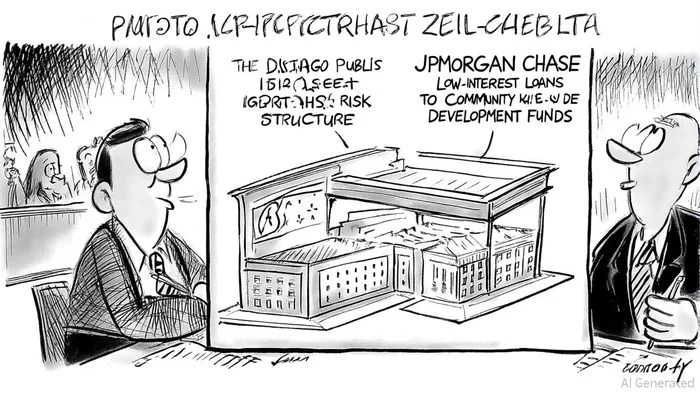





Comentarios
Aún no hay comentarios