
Chicago Ags Climb Amid Trade Hopes and Favorable Midwest Planting
Investors in agricultural commodities are watching two critical factors this May: the resumption of U.S.-China trade talks and the weather patterns shaping Midwest planting progress. Soybeans, corn, and wheat futures have all edged higher this month, with traders weighing the potential for renewed export demand against the risks of uneven crop development.
Trade Talks Offer a Fragile Optimism
The Treasury Secretary’s upcoming meeting with Chinese officials has injected a bullish tone into grain markets. Soybean futures rose sharply last week as traders speculated that tariff reductions could revive U.S. shipments to China, the world’s largest buyer. Yet the path forward remains fraught: China’s insistence on U.S. tariff rollbacks clashes with Washington’s demands for structural economic changes.
Current export data hints at both promise and peril. U.S. corn sales to Mexico surged to 636,000 tons last week, while soybeans found buyers in China despite Brazilian competition. However, Brazil’s record 2024 soy harvest—projected at 6.21 billion bushels—has undercut U.S. pricing power. “The U.S. still holds an edge in corn, but soybeans are fighting a losing battle unless China steps up,” said one grain trader.
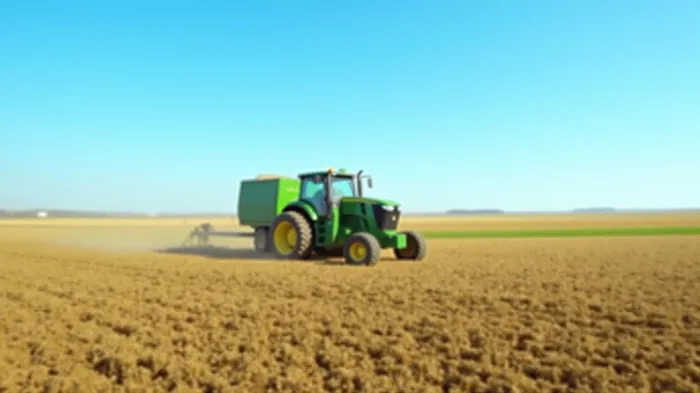
Weather: A Double-Edged Sword for Planting
The Midwest’s dry spell has created a “clear planting window” for corn and soybeans, with USDA data showing 43% of U.S. corn planted by May 15—slightly behind last year’s pace but well within range. The western Corn Belt (Kansas, Nebraska) is seeing ideal conditions, while scattered showers in eastern states have kept soil moist without delaying work.
Yet risks linger. The western Midwest faces drought threats, with Nebraska’s soil moisture at critical levels. “Prolonged dryness here could delay planting and reduce yields,” warned NOAA’s May outlook. Meanwhile, the southern Mississippi River basin remains flooded, slowing fieldwork for soybean planting in states like Missouri.
Synergy Between Trade and Weather
The interplay between these factors is critical. A smooth Midwest planting season could boost U.S. export competitiveness, especially if trade talks succeed. Conversely, a dry spell or delayed harvest in Brazil (which supplies 40% of global soy) might still create demand for U.S. supplies.
Wheat offers a mixed picture. Hard red winter wheat prices are down as Gulf prices trail Russian rivals, but spring wheat areas in North Dakota face ideal planting conditions. The Syria tender’s failure to secure wheat highlights global supply chain fragility, with Russian port attacks and Ukraine’s unresolved grain deal adding to uncertainty.
The Bottom Line: Buy the Dip, but Watch the Weather
The case for U.S. agAG-- commodities rests on two pillars: trade resolution and timely rains. With China’s soy demand volatile and Brazil’s output surging, only a strong planting season—and a shift in trade dynamics—can sustain gains.
Data supports cautious optimism:
- U.S. corn exports to Mexico are up 18% year-to-date despite peso weakness.
- Midwest corn planting is 90% complete by May 25 historically, suggesting time remains to catch up.
- Weather forecasts now predict a wetter pattern by late May, which could ease drought risks in Kansas and Nebraska.
For investors, the key is to differentiate between short-term weather premiums and long-term fundamentals. A break in trade talks or a prolonged dry spell could reverse gains quickly. But for now, the market is pricing in a “best-case” scenario—planting goes smoothly, China buys, and global disruptions keep alternatives off the table.
In short, Chicago ags are worth a position—but keep an eye on the skies and the telegrams from Beijing.







Comentarios
Aún no hay comentarios