
Chevron's Return to Venezuela: A Strategic Energy Play with Geopolitical Implications
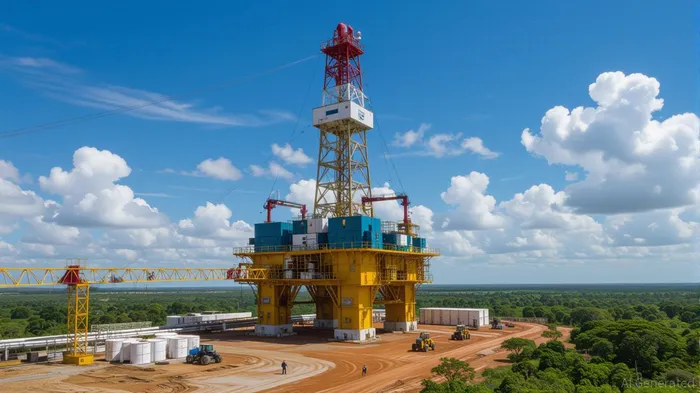
In 2025, Chevron's restricted license to resume operations in Venezuela marks a pivotal moment for U.S. energy firms navigating the volatile intersection of geopolitics and resource extraction. The decision, brokered through the Trump administration's July 2025 prisoner swap and a recalibrated U.S. policy toward Venezuela, underscores a shift from ideological confrontation to pragmatic energy diplomacy. For investors, this move raises critical questions: Can Chevron's return to Venezuela translate into long-term value amid political uncertainty? How do U.S. energy firms balance geopolitical risks with the rewards of untapped hydrocarbon assets? And what does this signal about the future of energy investments in Latin America's politically sensitive markets?
Chevron's Strategic Reentry: A Calculated Gambit
Chevron's renewed access to Venezuela's oil sector, albeit under strict conditions, reflects a calculated alignment with U.S. strategic interests. The restricted license allows the company to operate joint ventures, manage procurement, and export oil to the U.S., but prohibits direct financial transfers to President Nicolás Maduro's regime. This structure aims to prevent the regime from profiting while ensuring U.S. refiners gain access to heavy crude, easing supply chain pressures in PADD 3. For ChevronCVX--, the move stabilizes its operations after a near-complete shutdown in 2024 and leverages its 100-year history in Venezuela, including its recent $53 billion acquisition of Hess Corporation. The company's Guyana assets, now bolstered by Hess's offshore fields, provide a financial cushion to absorb Venezuela's operational risks.
The geopolitical calculus is equally compelling. By resuming production, Chevron helps reduce Venezuela's reliance on Chinese oil buyers—a critical vulnerability for the U.S. as it seeks to counter Beijing's growing influence in Latin America. The U.S. has imposed tariffs and trade pressures on Latin American countries to limit Chinese infrastructure investments, but Chevron's operations offer a tangible alternative. This aligns with broader U.S. efforts to reassert economic dominance in the region, particularly as China's Belt and Road Initiative (BRI) expands into energy and critical mineral projects.
Risks and Rewards: Navigating Venezuela's Oil Quagmire
Investing in Venezuela's oil sector is inherently fraught. The country's production has collapsed to less than 900,000 barrels per day—a fraction of its pre-2014 peak—and PDVSA's state-run operations are plagued by corruption and underinvestment. Chevron's ability to scale production depends on PDVSA's cooperation, which remains uncertain given the regime's historical resistance to foreign oversight. Moreover, the prohibition on oil revenue transfers to Maduro's government could limit Chevron's flexibility in negotiating contracts or securing crude cargoes for export.
Yet the rewards are substantial. Venezuela holds 300 billion barrels of proven oil reserves, the largest in the world. A return to 1 million barrels per day by late 2025 would not only stabilize Chevron's revenue but also reduce U.S. dependence on Canadian heavy crude, which faces its own supply challenges. For investors, this scenario could drive Chevron's stock higher, particularly if the company successfully leverages its Guyana assets to offset Venezuela's risks.
The geopolitical risks extend beyond Venezuela. U.S. energy firms operating in Latin America must contend with China's deepening investments in lithium, cobalt, and renewable energy projects. While Chevron's focus remains on traditional hydrocarbons, its return to Venezuela signals a broader trend: U.S. firms are increasingly prioritizing energy security over ideological purity, a strategy that could redefine the region's energy landscape.
A Blueprint for Geopolitical Resilience
Chevron's approach mirrors the strategies of its peers, such as ExxonMobil and BPBP--, which have adopted capital discipline, low-cost production, and energy transition investments to weather geopolitical turbulence. However, Chevron's unique position in Venezuela—coupled with its recent acquisition of Hess—positions it to outperform in a market where resilience is paramountPARA--. The company's focus on high-margin assets in Guyana, combined with its ability to pivot between conventional and low-carbon technologies, offers a balanced portfolio for long-term investors.
For energy stocks with geopolitical resilience to thrive, three factors must align:
1. Strategic Alliances: Partnerships with governments and regional allies to navigate regulatory and security risks.
2. Operational Flexibility: Diversified asset bases that buffer against sector-specific disruptions.
3. Policy Alignment: Investments that align with U.S. national interests, such as countering Chinese influence or securing critical minerals.
Chevron's Venezuela operations exemplify this alignment. By operating within U.S. sanctions while supporting American energy security, the company navigates a narrow but lucrative path. This model could serve as a blueprint for other energy firms seeking to balance profitability with geopolitical imperatives.
Conclusion: Prioritizing Geopolitical Resilience in a Volatile Era
As global energy markets face escalating geopolitical tensions and climate transitions, energy stocks with geopolitical resilience will outperform. Chevron's return to Venezuela is not merely a corporate maneuver—it is a microcosm of the U.S. energy strategy in Latin America. By embracing pragmatism over ideology, Chevron demonstrates how energy firms can secure long-term value in politically sensitive markets. For investors, this underscores the importance of prioritizing companies that align with U.S. strategic goals while maintaining operational discipline. In a world where energy and geopolitics are inextricably linked, Chevron's Venezuela gamble may well be the harbinger of a new era in energy investing.





Comentarios
Aún no hay comentarios