
Chevron's Industrial Risk Resilience: Navigating Operational Vulnerabilities and Investor Implications in a Shifting Energy Landscape
In the evolving energy sector, where the transition to lower-carbon operations collides with the realities of industrial risk, ChevronCVX-- stands at a crossroads. The company's operational vulnerabilities-geographic concentration, aging infrastructure, and regulatory uncertainty-pose significant challenges to its long-term resilience. Yet, its strategic recalibration, including a $2 billion reduction in 2025 capital expenditures and a pivot toward high-return, lower-carbon projects, offers a glimpse of how traditional energy giants might adapt. For investors, the question is whether Chevron's current trajectory balances short-term pragmatism with the durability required to thrive in a decarbonizing world.
Operational Vulnerabilities: A House Built on Shifting Ground
Chevron's reliance on the Permian Basin, where 60% of its production is concentrated, remains a double-edged sword. While the region's low production costs have historically bolstered margins, this geographic concentration amplifies exposure to localized disruptions, from supply chain bottlenecks to climate-related events like droughts or wildfires, according to a K&L Gates analysis. Moreover, the aging infrastructure in Chevron's refining segment demands substantial capital to meet environmental standards, a burden compounded by the company's slower progress on reducing Scope 3 emissions compared to European peers, as the K&L Gates analysis also observes.
Physical climate risks further complicate the calculus. Extreme weather events, from hurricanes threatening Gulf of Mexico operations to heatwaves stressing refining facilities, could disrupt output and inflate adaptation costs. According to Financial Content, Chevron's 2025 capex budget allocates significant resources to modernizing infrastructure, but the scale of these investments may lag behind the accelerating pace of climate impacts.
Strategic Shifts: Cost-Cutting and Carbon Intensity
Chevron's 2025 capital expenditure plan-$14.5 to $15.5 billion for consolidated subsidiaries and $1.7 to $2.0 billion for affiliates-reflects a deliberate pivot toward cost discipline and free cash flow generation. This $2 billion year-over-year reduction is part of a broader strategy to achieve $2 to $3 billion in structural cost savings by 2026, with restructuring charges expected in Q4 2024, as previously noted by K&L Gates. While such measures enhance near-term profitability, they raise questions about the trade-offs between efficiency and long-term resilience.
A critical component of Chevron's strategy is its $1.5 billion investment in reducing carbon intensity, including partnerships for carbon capture and utilization technologies, according to Chevron's disclosures. However, these efforts face headwinds from recent regulatory shifts. The U.S. Supreme Court's Loper Bright Enterprises v. Raimondo decision, which overturned the Chevron deference precedent, has emboldened legal challenges to environmental regulations. As K&L Gates has pointed out, this ruling could undermine the EPA's authority to enforce emissions standards, creating uncertainty for Chevron's compliance timelines and technological investments.
Investor Implications: Balancing Risks and Opportunities
For long-term investors, Chevron's vulnerabilities and strategic choices present a nuanced picture. On one hand, the company's focus on high-return projects and cost-cutting could stabilize cash flows in a volatile market. Its investments in the Permian Basin and Gulf of Mexico, for instance, are poised to deliver 300,000 barrels of oil equivalent per day in offshore production by 2026, per Chevron's 2025 disclosures. On the other, the interplay of regulatory uncertainty, climate risks, and investor pressure for faster decarbonization could strain its ability to meet evolving expectations.
The regulatory landscape, in particular, demands vigilance. With the loss of Chevron deference, the company may face protracted legal battles over its emissions strategies, potentially delaying projects or inflating compliance costs. Meanwhile, European peers' more aggressive decarbonization timelines could widen competitive gaps, especially as investors increasingly prioritize ESG metrics-a point underscored in the K&L Gates analysis.
Conclusion: A Test of Resilience
Chevron's path forward hinges on its ability to reconcile short-term profitability with long-term resilience. While its 2025 capex strategy and carbon capture initiatives signal a commitment to adaptation, the company must navigate a thorny mix of geographic, regulatory, and climate risks. For investors, the key will be monitoring how effectively Chevron balances these pressures-whether it can transform vulnerabilities into strengths or if they will erode its competitive edge in an energy landscape defined by rapid change.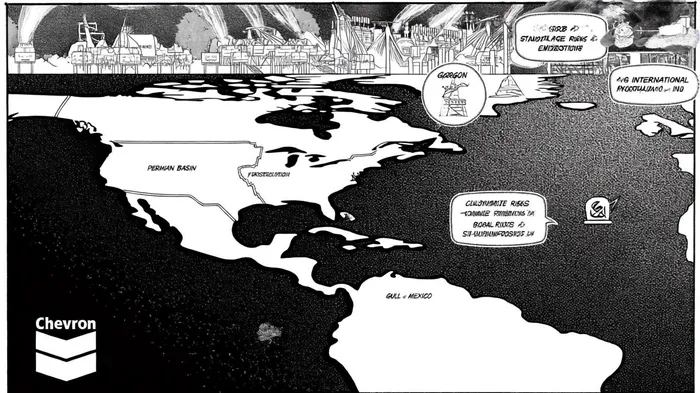





Comentarios
Aún no hay comentarios