
Chery's Hong Kong IPO: A Strategic Entry Point for Investors in China's Fast-Maturing EV Export Sector
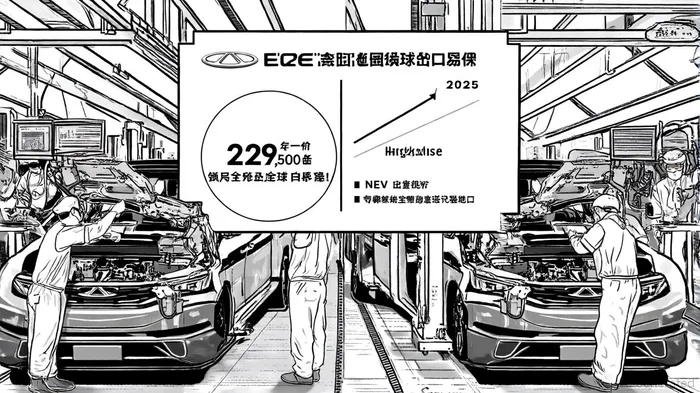
China's electric vehicle (EV) export sector is no longer a nascent experiment but a full-blown global force. As the world grapples with energy transitions and decarbonization mandates, Chinese automakers have seized the opportunity to redefine the automotive landscape. At the forefront of this revolution is Chery Group, whose Hong Kong IPO has ignited investor speculation about its potential to capitalize on the surging demand for electrified vehicles abroad. For investors, the question is not whether China's EV export sector will grow—but how quickly and which players will dominate the next phase of this expansion.
Market Potential: A Policy-Driven Powerhouse
China's EV export boom is underpinned by a combination of state-backed incentives and private-sector innovation. According to a report by AP News, the Chinese government has implemented subsidies for manufacturers and buyers, invested heavily in charging infrastructure, and created regulatory frameworks that favor domestic EV producers [1]. These policies have not only accelerated domestic adoption but also positioned Chinese automakers to flood international markets with cost-competitive, technologically advanced vehicles.
Chery, in particular, has leveraged this ecosystem to become China's top automotive exporter for 21 consecutive years [4]. In the first half of 2025 alone, the company sold 1.26 million units globally, with 550,270 of those exported overseas [5]. Its hybrid and new energy vehicle (NEV) sales surged 98.6% year-on-year, driven by its proprietary Chery Super Hybrid (CSH) technology [5]. This performance underscores a critical trend: while pure EVs dominate headlines, hybrid systems are proving to be a pragmatic bridge for markets unprepared for full electrification.
Investor Sentiment: A Bullish Narrative Takes Shape
The enthusiasm surrounding Chery's Hong Kong IPO is not unfounded. In August 2025, the company achieved record-breaking sales of 243,000 units, with exports hitting 129,500 units—a figure that reflects its sustained momentum in emerging markets [1]. Investors are particularly drawn to Chery's dual strengths: its ability to scale production efficiently and its focus on localization. For instance, the company has tailored its product offerings to European and Southeast Asian markets, ensuring compliance with regional regulations and consumer preferences [5].
Moreover, Chery's recognition as the top automotive brand in the Kantar Brandz Top 50 Chinese Brand Builders 2024 report signals growing global brand equity [4]. This is no small feat for a company that has historically been perceived as a budget-oriented exporter. Its recent launch of the LEPAS series—a luxury-oriented product line—further signals its ambition to capture premium segments .
Long-Term Catalysts: Innovation and Geopolitical Tailwinds
Chery's long-term appeal lies in its ability to adapt to shifting global dynamics. Its CSH technology, which combines internal combustion engines with electric propulsion, addresses range anxiety and charging infrastructure gaps in markets like Southeast Asia and Africa [5]. Meanwhile, its rigorous testing protocols—subjecting vehicles to extreme conditions—have bolstered perceptions of quality in regions skeptical of Chinese-made cars [5].
Geopolitical factors also play a role. As Western automakers struggle with supply chain bottlenecks and regulatory hurdles, Chery's low-cost, high-volume model offers an attractive alternative. Its expansion into over 100 countries, including strategic partnerships in Europe and Southeast Asia, positions it to benefit from the fragmentation of global automotive supply chains [1].
Risks and Realities
No investment is without risk. Chery's reliance on hybrid technology, while currently a strength, could become a liability if global markets pivot abruptly toward pure EVs. Additionally, its exposure to emerging markets—while a growth engine—introduces volatility from currency fluctuations and political instability. However, these risks are mitigated by the company's diversified export strategy and its ability to pivot quickly, as evidenced by its rapid adoption of CSH technology.
Conclusion: A Strategic Bet on the Future of Mobility
Chery's Hong Kong IPO represents more than a financing event—it is a signal of China's growing influence in the global automotive industry. For investors, the company's combination of policy tailwinds, technological agility, and export prowess makes it a compelling candidate in a sector poised for decades of growth. While the EV export race is crowded, Chery's track record of execution and its focus on hybrid solutions position it as a unique player capable of navigating the complexities of a rapidly evolving market.







Comentarios
Aún no hay comentarios