
Chernobyl Radiation Containment Breach: Geopolitical Risks and Energy Market Volatility in 2025
Geopolitical Risks to Critical Infrastructure
The February 2025 drone strike, attributed by Ukraine to Russia and denied by Moscow, has rendered the NSC incapable of confining radiation, according to the IAEA. This breach not only heightens fears of a renewed environmental catastrophe but also exemplifies the weaponization of energy infrastructure in modern warfare. Ukraine's systematic targeting of Russian oil refineries-reducing refining capacity by 20%-has mirrored the strategic logic of destabilizing adversaries through energy disruption. Such tactics have transformed energy infrastructure into a frontline asset in geopolitical conflicts, with both sides leveraging drone strikes to cripple economic and military capabilities.
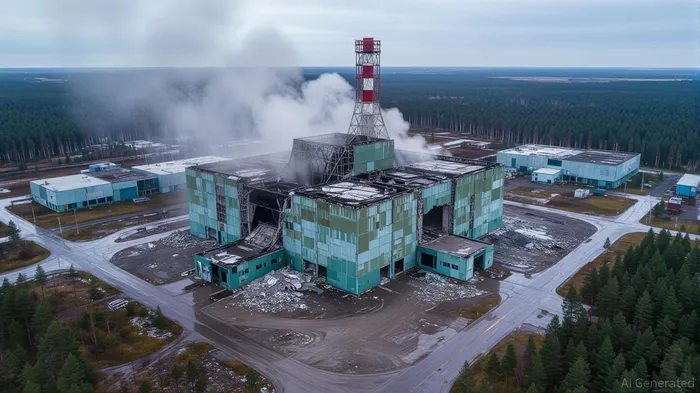 The IAEA has emphasized that restoring the NSC requires urgent, comprehensive repairs to prevent further degradation according to the Times of Israel. However, the political impasse between Russia and Ukraine, compounded by Western sanctions, complicates international cooperation on nuclear safety. This incident has also amplified concerns about the potential for cyberattacks or kinetic strikes on other nuclear facilities, such as Zaporizhzhia, further elevating the risk of cascading crises.
Energy Market Volatility and Economic Impacts
The geopolitical tensions have directly influenced global energy markets. Ukrainian drone strikes on Russian refineries and the Caspian Pipeline Consortium have disrupted crude oil exports, reducing Russia's refining capacity by 1.1 million barrels per day and triggering localized fuel shortages. These disruptions, coupled with international sanctions, have created a dual dynamic: upward pressure on oil prices due to supply constraints and downward pressure from a global oil surplus driven by U.S. production and OPEC+ output according to Sprague Energy.
OPEC+ has responded by pausing production increases in Q1 2026 to stabilize markets, yet volatility persists. For instance, the temporary closure of the Novorossiisk terminal caused a short-term spike in crude prices as traders anticipated prolonged supply risks. Analysts warn that the cumulative damage to Russia's refining infrastructure-its third-largest globally-could take years to manifest fully, with long-term implications for its war economy and oil export revenues according to Russia Matters.
Policy Responses and Investment Implications
International coalitions have intensified sanctions against Russia's energy sector, with the EU's 15th sanctions package targeting military-industrial assets and third-party intermediaries. Meanwhile, the UK and allies have condemned Russia's attacks on Ukrainian energy infrastructure as violations of international law, emphasizing the need to protect civilian infrastructure. These measures reflect a broader shift toward integrating energy security into geopolitical risk frameworks, with governments prioritizing resilience against hybrid threats.
For investors, the Chernobyl breach and associated energy disruptions highlight the growing importance of geopolitical risk assessment. BlackRock's Geopolitical Risk Dashboard, for example, tracks how conflicts and infrastructure vulnerabilities influence market sentiment. Sectors such as defense and cybersecurity have emerged as hedges against uncertainty, while energy and critical raw materials face heightened exposure to external shocks according to a 2025 PMC article.
Academic analyses further underscore the need for corporate governance to proactively address geopolitical risks. As Aon notes, boards must integrate scenario planning for infrastructure attacks and nuclear safety breaches, which could trigger regulatory, reputational, and financial cascades. In the nuclear energy sector, investor caution persists despite its low-carbon appeal, as the Chernobyl incident reinforces perceptions of systemic risks according to Meyka.
Conclusion
The 2025 Chernobyl radiation containment breach is a stark reminder of how geopolitical conflicts can destabilize critical infrastructure and energy markets. As drone warfare and sanctions reshape the global energy landscape, investors must navigate a complex interplay of supply-side disruptions, policy responses, and long-term environmental risks. The incident also underscores the urgency of international cooperation on nuclear safety and the need for robust contingency planning in an era where energy infrastructure is increasingly weaponized.







Comentarios
Aún no hay comentarios