
Chemours' Strategic Turnaround and PFAS Risk Resolution: A Path to Sustainable Growth
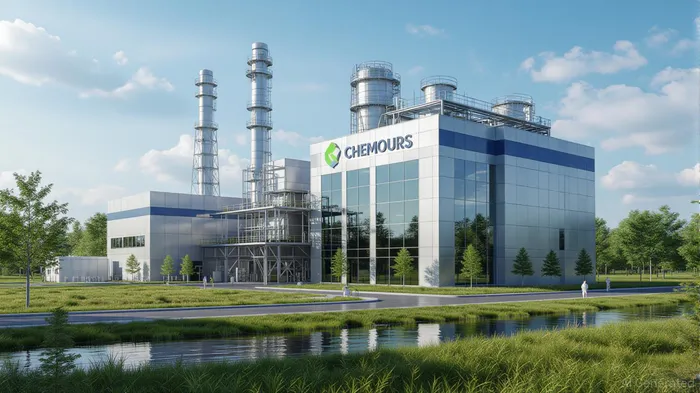
The chemical industry's long-standing challenges with legacy liabilities and regulatory scrutiny have often overshadowed its innovation-driven growth potential. For ChemoursCC-- (NYSE: CC), the resolution of its New Jersey PFAS settlement and recent operational improvements in its Thermal & Specialized Solutions (TSS) segment represent a pivotal inflection pointIPCX--. This analysis examines how the company's strategic de-risking of environmental liabilities, coupled with robust demand for its Opteon refrigerants, positions it for a sustainable rebound—and why investors might view its current valuation as an attractive entry point.
PFAS Settlement: A Catalyst for Financial Clarity
Chemours' $875 million, 25-year settlement with New Jersey to resolve PFAS-related claims marks a critical step in unshackling the company from decades of litigation. By spreading payments over a quarter-century and leveraging insurance proceeds and restricted cash, the settlement avoids an immediate cash flow crunch. The pre-tax net present value of $500 million, with Chemours bearing 50% ($250 million), is a manageable burden given its $1.5 billion liquidity position as of June 2025.
The settlement's structure—featuring a Remediation Funding Source (RFS) and a Reserve Fund—ensures long-term environmental compliance without exposing the company to open-ended costs. This clarity is vital for investors, as PFAS litigation has historically been a drag on earnings and balance sheets. For context, the settlement's $257 million litigation charge in Q2 2025 contributed to a net loss of $381 million, but adjusted EBITDA remained resilient at $253 million, underscoring the strength of core operations.
Operational Momentum in TSS: A Growth Engine Unleashed
The TSSTSSI-- segment, which includes Opteon refrigerants, has become the cornerstone of Chemours' turnaround. In Q2 2025, Opteon demand surged 65% year-over-year, driven by the U.S. AIM Act's mandate for low-global-warming-potential refrigerants. This segment now accounts for 75% of total refrigerant revenue, up from 57% in the prior year. The 35% adjusted EBITDA margin in TSS highlights its profitability, outpacing many peers in the specialty chemicals sector.
The expansion of Opteon YF production at the Corpus Christi site, ahead of schedule, further solidifies this momentum. With half of the project expected to be completed by year-end 2025, the company is well-positioned to meet rising demand in residential and commercial HVAC markets. Analysts project TSS to drive $775–825 million in full-year adjusted EBITDA, a 30% increase from 2024.
Valuation Metrics: Undervalued Amid High Debt?
Chemours' stock has fallen 55.8% over the past year, trading at $10.53 as of August 2025. While its P/E ratio of 57.4x appears elevated compared to the industry average of 9.0x, this reflects investor anticipation of future earnings growth rather than current profitability. The company's P/B ratio of 2.8x and P/S ratio of 0.3x suggest a mixed valuation profile—expensive relative to book value but in line with sales multiples.
The high debt-to-equity ratio of 700.7% remains a concern, but the settlement's structured payments and $450 million cost-cutting initiative by 2027 aim to address this. Analysts have assigned a 12-month price target of $14.94, implying a 41.92% upside, while noting the stock trades at 58.3% below its estimated fair value. For risk-tolerant investors, this disconnect between fundamentals and valuation could represent an opportunity.
Risks and Rewards: A Calculated Bet
The path forward is not without risks. Chemours' high leverage and weak net margin of 0.53% underscore its vulnerability to economic downturns or regulatory shifts. However, the PFAS settlement removes a major overhang, and the TSS segment's growth trajectory—bolstered by regulatory tailwinds—offers a clear path to earnings improvement.
Investors should also consider the dividend yield of 3.26%, albeit with a payout ratio of 535%, which is unsustainable in the long term. For now, the focus should remain on operational execution and the company's ability to maintain its cost-cutting momentum.
Conclusion: A Bullish Case for Strategic Investors
Chemours' strategic resolution of PFAS liabilities and the explosive growth in Opteon demand create a compelling case for a sustainable rebound. While the stock's valuation metrics appear stretched, the company's liquidity, operational improvements, and alignment with regulatory trends justify a bullish outlook. For investors seeking undervalued exposure to the specialty chemicals sector, Chemours offers a high-risk, high-reward opportunity—one where the rewards of long-term growth may outweigh the near-term uncertainties.





Comentarios
Aún no hay comentarios