
Charter Communications' S&P 100 Exclusion: Strategic and Financial Implications for Investors
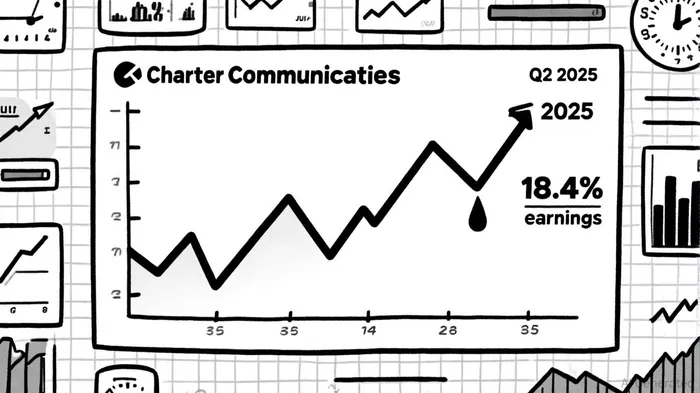
The recent removal of Charter CommunicationsCHTR-- (CHTR) from the S&P 100 index, effective September 22, 2025, marks a pivotal moment for the broadband and mobile services provider. Replaced by Uber TechnologiesUBER-- Inc. as part of the index's quarterly rebalancing, the shift reflects evolving market dynamics rather than a direct indictment of Charter's fundamentals. However, for investors, the exclusion raises critical questions about liquidity, investor sentiment, and the company's strategic trajectory.
Index Rebalancing and Market Context
Index reconstitution is a routine process designed to ensure indices like the S&P 100 remain representative of the largest and most influential U.S. companies. Charter's removal to accommodate UberUBER-- underscores a broader trend of tech-driven growth stocks gaining prominence in benchmark indices. According to a report by Zacks Investment Research, such changes are driven by market capitalization shifts and sector rotation, not necessarily declining performance by exiting companies [1]. Charter's market cap of $35.86 billion as of September 2025 [2] places it comfortably within the S&P 500, but its exclusion from the more elite S&P 100 signals a relative decline in its ranking among the nation's top firms.
Financial Performance: Strengths and Vulnerabilities
Charter's Q2 2025 results reveal a mixed financial picture. While revenue reached $13.8 billion—a 0.6% year-over-year increase—and net income attributable to common shareholders hit $1.3 billion, the company faced subscriber declines in its video and residential internet segments [3]. Free cash flow contracted to $1.0 billion from $1.3 billion in 2024, driven by working capital adjustments and higher cash taxes [3]. These trends highlight structural challenges in the cable industry, including cord-cutting pressures and competitive pricing wars.
Compounding these issues is Charter's leveraged balance sheet. A debt-to-equity ratio of 5.88 [4] suggests significant financial risk, particularly as interest rates remain elevated. For context, the company's recent $34.5 billion merger with Cox Communications—aimed at creating a stronger competitor in broadband and mobile services—will likely increase borrowing costs and strain liquidity in the short term [5].
Strategic Moves and Investor Sentiment
Charter's strategic response to these challenges includes aggressive pricing adjustments and a focus on customer retention. The merger with Cox, expected to close by late 2025, is designed to enhance operational efficiency and expand its mobile network. However, the timing of these moves coincides with reputational damage from the termination of the Affordable Connectivity Program (ACP) in June 2024. This led to a 117,000 subscriber loss in Q2 2025 and a 18.4% stock price plunge after the company was accused of downplaying the ACP's ongoing impact [6]. A subsequent securities class-action lawsuit further eroded investor confidence [6].
Analyst sentiment remains divided. As of September 2025, 20 Wall Street analysts rate CHTRCHTR-- as a “Hold,” with four sell ratings and eight buy ratings. The average price target of $394.61 implies a 49.54% upside from its current price of $263.88 [7]. This optimism is tempered by concerns over debt management and subscriber attrition, with some analysts cautioning that the S&P 100 exclusion could amplify short-term volatility as institutional investors rebalance portfolios [8].
Broader Implications of Index Exclusion
Historically, companies removed from major indices often experience immediate stock price declines due to the selling pressure from index-tracking funds. For example, Tesla's exit from the S&P 500 ESG index in 2023 triggered a temporary 8% drop in its shares [9]. While Charter's exclusion from the S&P 100—a smaller index—may not have as dramatic an effect, it could still reduce institutional ownership and liquidity. A study by LGT Wealth Management notes that such exclusions often lead to reduced analyst coverage and a narrower investor base, particularly among passive funds [10].
Long-term, however, the impact of index changes tends to fade as markets focus on fundamentals. Charter's robust operating income of $3.279 billion in Q3 2025 [11] and its leading position in the broadband market suggest resilience. The key question for investors is whether the company can stabilize its subscriber base and delever its balance sheet post-merger.
Conclusion: A Calculated Risk for Investors
Charter Communications' removal from the S&P 100 is a symptom of broader industry and market shifts rather than a terminal event. For investors, the decision to hold or divest CHTR depends on their risk tolerance for a leveraged company navigating a competitive landscape. The merger with Cox and strategic pricing reforms offer a path to long-term stability, but near-term volatility—driven by debt burdens and regulatory scrutiny—remains a headwind. As always, fundamentals will ultimately dictate Charter's trajectory, but the S&P 100 exclusion serves as a timely reminder of the importance of active due diligence in an era of rapid market reconfigurations.





Comentarios
Aún no hay comentarios