
CHARBONE Hydrogen's Strategic Shift and Its Implications for the Canadian Hydrogen Economy
CHARBONE Hydrogen's 2025 strategic shift marks a pivotal moment in the Canadian hydrogen economy, as the company repositions its operations and optimizes its geographic footprint to capitalize on the nation's growing clean energy infrastructure. By securing Harnois Energies' hydrogen assets in Sorel-Tracy, Quebec, CHARBONE has accelerated its transition to ultra-high purity green hydrogen production, a move that aligns with Canada's broader net-zero goals and positions the firm as a key player in both domestic and international markets [2]. This operational repositioning, combined with geographic optimization strategies, underscores a disciplined approach to scaling production while mitigating risks in a rapidly evolving sector.
Operational Repositioning: From Assets to Agility
CHARBONE's acquisition of Harnois Energies' Sorel-Tracy facility is a cornerstone of its operational repositioning. With construction already underway and Hydro-Québec completing electrical interconnections, the site is poised to begin production by fall 2025 [2]. This strategic move not only enhances CHARBONE's green hydrogen capacity but also leverages existing infrastructure to reduce capital expenditures-a critical advantage in an industry where upfront costs remain a barrier to entry.
Complementing this is CHARBONE's development of a modular network of green hydrogen production facilities. By partnering with industry players to supply helium and specialty gases, the company avoids the need for costly new plants while maintaining flexibility in its value chain [2]. This approach mirrors Canada's national strategy, which emphasizes modular and scalable solutions to align hydrogen supply with regional demand [1]. For investors, this signals a focus on operational agility-a trait that could insulate CHARBONE from market volatility and regulatory shifts.
Geographic Optimization: Anchoring Canada's Hydrogen Hubs
Geographic optimization is central to CHARBONE's strategy, with Sorel-Tracy serving as a linchpin in Quebec's hydrogen corridor. The region's access to renewable energy and existing industrial infrastructure positions it as a strategic hub for both domestic consumption and export [2]. This aligns with Canada's emerging hydrogen clusters in Edmonton, Vancouver, and Southern Ontario, where supply and demand are being synchronized to create localized ecosystems [1].
The Canadian government's Clean Hydrogen Investment Tax Credit (ITC), which allocates $17.7 billion for clean hydrogen production, further amplifies the significance of geographic optimization [1]. By situating its operations in regions with strong policy support and infrastructure development, CHARBONE is not only reducing costs but also securing long-term viability in a sector where regulatory alignment is as critical as technological innovation.
Implications for the Canadian Hydrogen Economy
CHARBONE's strategic shift reflects and reinforces Canada's broader hydrogen ambitions. With over 80 low-carbon hydrogen projects announced and $100 billion in potential investment, the country is fast becoming a global leader in clean hydrogen production [1]. CHARBONE's modular network and partnerships contribute to this momentum, particularly in sectors like transportation and industrial decarbonization, where hydrogen blends are already being deployed in Ontario and Alberta [1].
Moreover, the company's focus on international markets-particularly in Europe and Asia-aligns with Canada's export-oriented hydrogen strategy. As global demand for low-carbon hydrogen surges, CHARBONE's geographic positioning in North America provides a logistical and cost advantage over competitors in regions with less mature infrastructure [2]. This is further supported by federal programs like the Canada Growth Fund and Clean Fuels Fund, which are accelerating the development of hydrogen storage and transportation networks [1].
Investment Outlook: A Sector in Motion
For investors, CHARBONE Hydrogen's strategic shift represents a compelling case study in operational and geographic agility. The company's disciplined approach to scaling production, coupled with its alignment with Canada's national hydrogen strategy, positions it to benefit from both domestic policy tailwinds and international demand. As the Canadian hydrogen economy matures-projected to account for 3%–18% of the country's energy demand by 2050 [1]-CHARBONE's role in optimizing the value chain will likely become increasingly critical.
However, risks remain, including the pace of technological advancements and the volatility of renewable energy markets. Yet, CHARBONE's focus on modular infrastructure and strategic partnerships suggests a proactive stance toward mitigating these challenges. In a sector where adaptability is key, the company's 2025 repositioning may well serve as a blueprint for sustainable growth.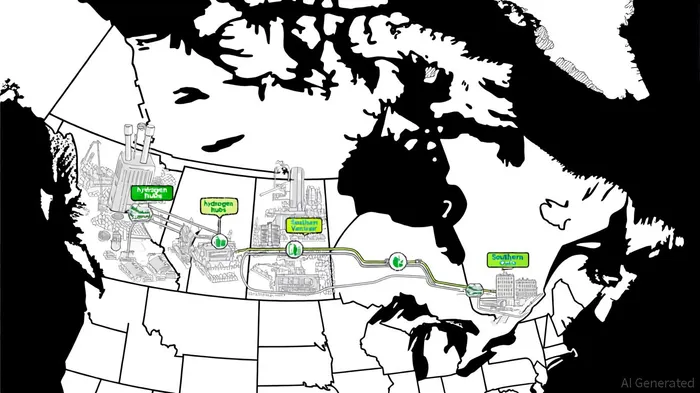







Comentarios
Aún no hay comentarios