
Chaos on Wall Street: Trump Tariffs Continue to Rattle Markets
Generado por agente de IATheodore Quinn
lunes, 7 de abril de 2025, 10:55 am ET2 min de lectura
AAPL--
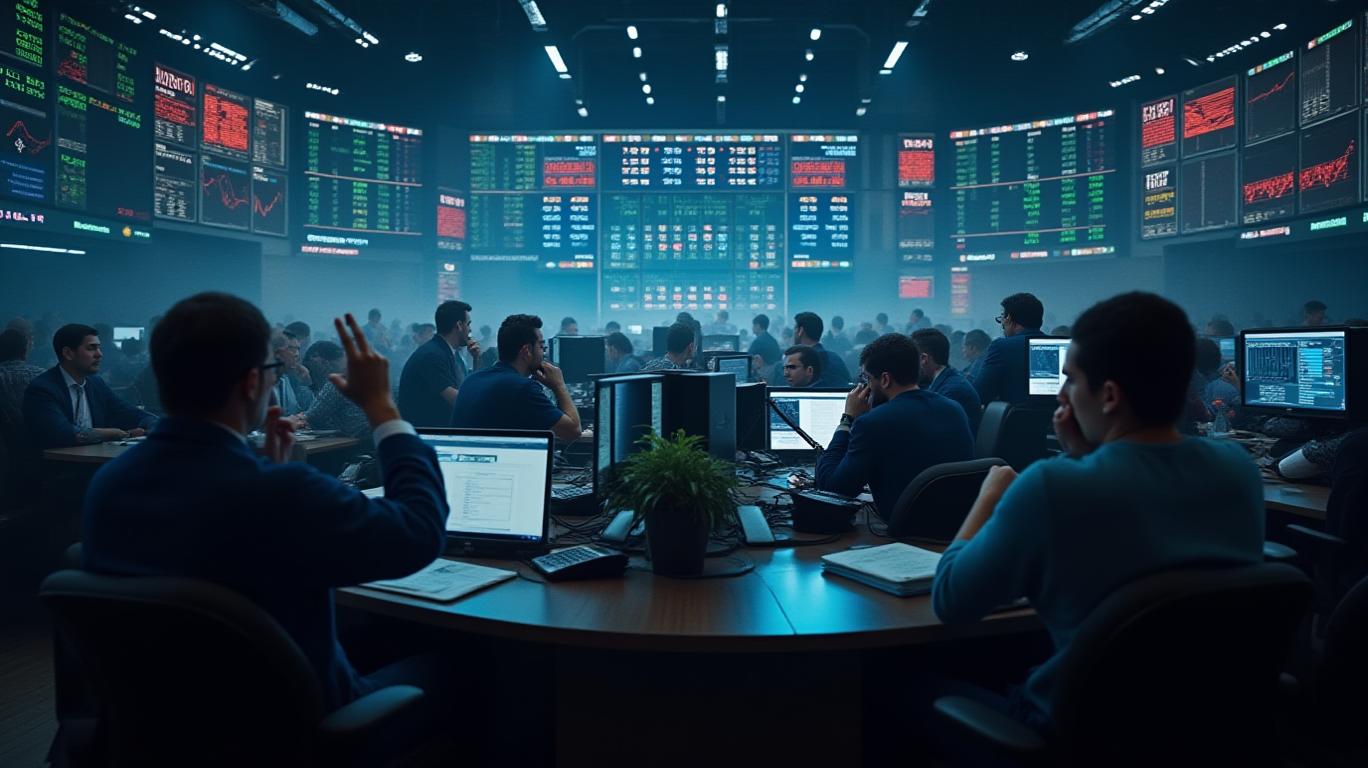
The stock market today is a whirlwind of chaos as the fallout from Trump's tariff policies continues to rattle investors. The volatility, which has been a persistent feature since the onset of the U.S.-China trade war, shows no signs of abating. The VIX, often referred to as the "fear gauge," has been on a rollercoaster ride, reflecting the heightened uncertainty and anxiety among market participants.
The impact of these tariffs has been far-reaching, affecting sectors such as manufacturing, technology, and commodities. The manufacturing sector, in particular, has been hit hard by the tariffs on steel and aluminum, leading to price hikes and supply chain disruptions. The technology sector, which relies heavily on global supply chains, has also felt the pinch, with companies like AppleAAPL-- and TeslaTSLA-- facing increased costs and delays in production.
The insurance sector is another casualty of the tariff war. Non-life premiums grew by 3.9% in real terms in 2023, partly due to insurers raising rates to offset the rising claims costs driven by tariff-induced inflation and supply chain delays. In the United Kingdom and Australia, for example, auto and property insurers have increased premiums beyond inflation, reflecting the tariff-driven volatility in claims severity.
The long-term implications of these tariffs are equally concerning. Companies are beginning to relocate manufacturing to regions like Southeast Asia or nearshoring to North America to avoid tariffs. This reshaping of global supply chains is a structural shift that will have lasting effects on the economy. China, for instance, has expanded its equity investment pilot program to 18 cities and extended M&A loan coverage to 80% of deals, signaling a long-term strategy to bolster domestic tech sectors and reduce vulnerability to U.S. trade measures.
Investors are left wondering how to navigate this chaos. One strategy is to monitor sentiment indices like the VIX and CNN’s Fear & Greed Index to distinguish between temporary emotional reactions and structural changes. For example, during the US-China trade war, the VIX spiked due to heightened uncertainty, but the eventual resolution of trade tensions showed this was short-term noise.
Another strategy is to focus on structural policy and regulatory shifts as fundamental drivers. China’s initiatives to channelCHRO-- funds into tech and R&D, for instance, signal durable economic shifts. The materials note that China’s non-performing loan ratio dropped to 1.52% in 2024, reflecting systemic stability. Such metrics validate that policy-driven shifts are structural, not temporary.
Leveraging technical analysis with fundamental backstops is also crucial. Models like GARCH can analyze volatility clustering while cross-referencing with macroeconomic fundamentals. The study found that sentiment significantly impacts volatility asymmetry, but during the post-pandemic recovery, falling inflation drove sustained improvements in US non-life insurers’ ROE.
Allocating to emerging sectors with sustained growth trajectories is another prudent strategy. AI-related insurance and embedded insurance, for example, are projected to grow exponentially. Deloitte predicts AI-related insurance premiums could reach $4.7 billion annually by 2032, driven by liability risks from AI adoption. Similarly, embedded insurance is expected to hit $722 billion by 2030.
In conclusion, while the current market chaos is unsettling, investors can navigate these turbulent watersWAT-- by differentiating between short-term noise and fundamental shifts. By combining sentiment analysis, policy tracking, and sector-specific growth metrics, investors can make informed decisions and weather the storm.
TSLA--
The stock market today is a whirlwind of chaos as the fallout from Trump's tariff policies continues to rattle investors. The volatility, which has been a persistent feature since the onset of the U.S.-China trade war, shows no signs of abating. The VIX, often referred to as the "fear gauge," has been on a rollercoaster ride, reflecting the heightened uncertainty and anxiety among market participants.
The impact of these tariffs has been far-reaching, affecting sectors such as manufacturing, technology, and commodities. The manufacturing sector, in particular, has been hit hard by the tariffs on steel and aluminum, leading to price hikes and supply chain disruptions. The technology sector, which relies heavily on global supply chains, has also felt the pinch, with companies like AppleAAPL-- and TeslaTSLA-- facing increased costs and delays in production.
The insurance sector is another casualty of the tariff war. Non-life premiums grew by 3.9% in real terms in 2023, partly due to insurers raising rates to offset the rising claims costs driven by tariff-induced inflation and supply chain delays. In the United Kingdom and Australia, for example, auto and property insurers have increased premiums beyond inflation, reflecting the tariff-driven volatility in claims severity.
The long-term implications of these tariffs are equally concerning. Companies are beginning to relocate manufacturing to regions like Southeast Asia or nearshoring to North America to avoid tariffs. This reshaping of global supply chains is a structural shift that will have lasting effects on the economy. China, for instance, has expanded its equity investment pilot program to 18 cities and extended M&A loan coverage to 80% of deals, signaling a long-term strategy to bolster domestic tech sectors and reduce vulnerability to U.S. trade measures.
Investors are left wondering how to navigate this chaos. One strategy is to monitor sentiment indices like the VIX and CNN’s Fear & Greed Index to distinguish between temporary emotional reactions and structural changes. For example, during the US-China trade war, the VIX spiked due to heightened uncertainty, but the eventual resolution of trade tensions showed this was short-term noise.
Another strategy is to focus on structural policy and regulatory shifts as fundamental drivers. China’s initiatives to channelCHRO-- funds into tech and R&D, for instance, signal durable economic shifts. The materials note that China’s non-performing loan ratio dropped to 1.52% in 2024, reflecting systemic stability. Such metrics validate that policy-driven shifts are structural, not temporary.
Leveraging technical analysis with fundamental backstops is also crucial. Models like GARCH can analyze volatility clustering while cross-referencing with macroeconomic fundamentals. The study found that sentiment significantly impacts volatility asymmetry, but during the post-pandemic recovery, falling inflation drove sustained improvements in US non-life insurers’ ROE.
Allocating to emerging sectors with sustained growth trajectories is another prudent strategy. AI-related insurance and embedded insurance, for example, are projected to grow exponentially. Deloitte predicts AI-related insurance premiums could reach $4.7 billion annually by 2032, driven by liability risks from AI adoption. Similarly, embedded insurance is expected to hit $722 billion by 2030.
In conclusion, while the current market chaos is unsettling, investors can navigate these turbulent watersWAT-- by differentiating between short-term noise and fundamental shifts. By combining sentiment analysis, policy tracking, and sector-specific growth metrics, investors can make informed decisions and weather the storm.

Divulgación editorial y transparencia de la IA: Ainvest News utiliza tecnología avanzada de Modelos de Lenguaje Largo (LLM) para sintetizar y analizar datos de mercado en tiempo real. Para garantizar los más altos estándares de integridad, cada artículo se somete a un riguroso proceso de verificación con participación humana.
Mientras la IA asiste en el procesamiento de datos y la redacción inicial, un miembro editorial profesional de Ainvest revisa, verifica y aprueba de forma independiente todo el contenido para garantizar su precisión y cumplimiento con los estándares editoriales de Ainvest Fintech Inc. Esta supervisión humana está diseñada para mitigar las alucinaciones de la IA y garantizar el contexto financiero.
Advertencia sobre inversiones: Este contenido se proporciona únicamente con fines informativos y no constituye asesoramiento profesional de inversión, legal o financiero. Los mercados conllevan riesgos inherentes. Se recomienda a los usuarios que realicen una investigación independiente o consulten a un asesor financiero certificado antes de tomar cualquier decisión. Ainvest Fintech Inc. se exime de toda responsabilidad por las acciones tomadas con base en esta información. ¿Encontró un error? Reportar un problema


SOBRE NOSOTROS
Nuestra historiaAutores de noticiasBase de conocimientosPolítica de privacidadTérmino de usoDescargo de responsabilidad de corretaje de tercerosTérminos de uso de AIMEDivulgaciones de riesgos de AInvest AICarrerasCONTÁCTENOS
Email: support@ainvest.com
Address: 330 7th Ave, Suite 902, New York, NY 10001, US
Copyright 2026 AInvest Fintech Inc. All rights reserved.


Comentarios
Aún no hay comentarios