
Champion Iron's Resilience and Operational Recovery Post-Derailment: Assessing Long-Term Impacts in a Volatile Iron Ore Sector
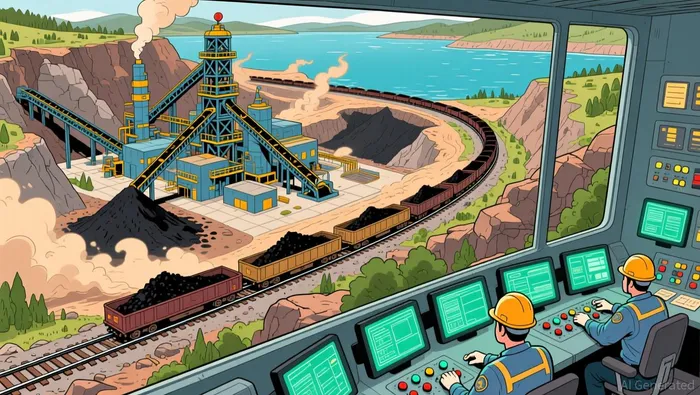
The recent derailment on the Quebec North Shore and Labrador Railway on December 28, 2025, has drawn attention to the vulnerabilities of supply chains in the iron ore sector. While the incident temporarily disrupted Champion Iron's shipments of high-purity iron ore concentrate from the Bloom Lake mine to the port of Sept-Îles, the company's swift response and historical resilience suggest minimal long-term operational or financial impact. This analysis evaluates Champion Iron's recovery trajectory, contextualized within broader industry trends of supply chain fragility and market oversupply.
Immediate Impact and Mitigation Strategies
The derailment, which occurred during a critical shipping window, initially raised concerns about inventory bottlenecks and revenue stability. However, Champion Iron swiftly mobilized contingency plans, leveraging its existing liquidity and operational flexibility. According to a company report, rail services were expected to resume within seven to ten days, with no injuries reported. This rapid response aligns with the company's track record of managing logistical disruptions. For instance, in late 2024, a breakage at the Bloom Lake mine's train load-out facility led to temporary stockpiling, but Champion Iron reduced its inventory by 341,000 wet metric tons by March 2025 through improved rail capacity and record sales volumes.
The company's financial resilience is underscored by its robust liquidity position. As of March 31, 2025, Champion Iron held $117.5 million in cash and $605.9 million in available liquidity, enabling continued investment in growth initiatives such as the Direct Reduced Iron Pellet Feed (DRPF) project. This project, set to commission in December 2025, is designed to upgrade half of Bloom Lake's capacity, enhancing production efficiency and shifting output toward higher-grade iron ore concentrate. Such strategic upgrades position the company to capitalize on premium markets in North Africa, the Middle East, and Europe.
Industry-Wide Context: Supply Chain Vulnerabilities and Market Oversupply
Champion Iron's experience mirrors broader challenges in the iron ore sector, where supply chain disruptions and market oversupply have pressured profitability. A Bloomberg report highlights that major producers like BHP GroupBHP--, Rio Tinto, and ValeVALE-- have seen EBITDA declines of 19–22% in 2024 due to falling prices, driven by weak demand from Chinese steel mills and inventory overhangs. Additionally, the introduction of high-grade iron ore from Guinea's Simandou project is expected to intensify competition, further depressing prices.
Railway incidents, such as CN's 2024 labor stoppage, also illustrate the sector's susceptibility to operational shocks. While CN managed to recover operations, it revised its 2024 financial guidance downward, citing lingering effects of disruptions and weaker demand in metals and forest products. These examples underscore the importance of operational agility and capital discipline in mitigating long-term financial risks.
Long-Term Financial and Operational Resilience
Champion Iron's historical response to supply chain challenges demonstrates its capacity to adapt. For example, during FY2025's fourth quarter, the company navigated seasonal logistical hurdles and semi-annual maintenance while achieving record sales of 3.5 million dry metric tons (dmt)-a 6% increase from the prior quarter. Its cash cost of $80/dmt and strong liquidity position further highlight its ability to maintain profitability despite external headwinds.
The DRPF project represents a pivotal long-term strategy. By December 2025, its completion is expected to enhance production efficiency and align Champion Iron's output with premium markets, potentially boosting margins. This aligns with industry trends where companies are prioritizing cost discipline and high-grade product differentiation to counteract oversupply pressures.
Conclusion: A Positioned for Recovery
While the December 2025 derailment temporarily disrupted Champion Iron's operations, the company's proactive mitigation strategies, robust liquidity, and strategic investments in capacity upgrades suggest a swift recovery. In a sector grappling with supply chain fragility and market oversupply, Champion Iron's historical resilience and focus on operational efficiency position it as a resilient player. Investors should monitor the DRPF project's progress and the company's ability to maintain cost discipline amid evolving market dynamics.





Comentarios
Aún no hay comentarios