
Chaince Digital (CD): Institutional Inflows Amid Index-Driven Mechanics-Opportunity or Mirage?
Institutional Inflows and Index-Driven Mechanics
Chaince Digital has seen a notable rise in institutional ownership, according to SEC Form 13F filings. BlackRock, Inc., State Street CorporationSTT--, and UBS Group AGUBS--, among others, have either increased existing positions or newly reported holdings in CD. However, the company itself has emphasized that these moves are likely driven by index-related or passive investment activity rather than active strategic endorsements according to SEC filings. For instance, Mirae Asset Global ETFs Holdings Ltd. and Northern Trust CorporationNTRS-- have also entered the fray, suggesting a broader trend of mechanical inflows tied to ETF structures or index rebalancing.
This dynamic raises critical questions about the sustainability of the inflows. If the institutional interest is index-driven, it could reverse just as quickly if CD is excluded from an index or if ETF structures shift. The company's rebranding to Chaince Digital Holdings Inc.CD-- and its ticker change to "CD" on November 13, 2025, may have triggered short-term liquidity effects, but it remains unclear whether this rebranding has secured long-term institutional commitment as stated in Nasdaq's press release.
Passive vs. Active Investment: A Key Dilemma
The distinction between passive and active investment strategies is pivotal. Passive strategies, such as those tied to index funds or ETFs, often result in mechanical buying or selling based on predefined rules. For example, if CD were included in a financial index like the Nasdaq or S&P, institutional investors tracking that index would be compelled to buy its shares, regardless of the company's fundamentals. However, no explicit confirmation of CD's inclusion in major indices has been provided in the sources. Instead, the inflows appear to stem from broader market trends, such as the growing appetite for digital-asset infrastructure platforms according to recent reports.
This ambiguity complicates assessments of CD's value proposition. While the company touts its transformation into a "tokenization and on-chain innovation" platform, its financials tell a different story. Chaince Digital reported negative profitability margins in Q3 2025, and insider selling activity has raised concerns about management's confidence in the stock as noted in financial reports. These red flags suggest that even if institutional inflows persist, they may not offset underlying operational challenges.
Rebranding and Market Perception
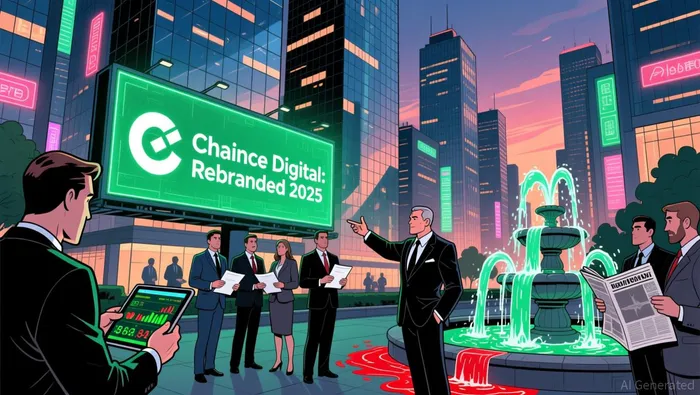
The rebranding from Mercurity Fintech Holding Inc. to Chaince Digital Holdings Inc. was a calculated move to align with the company's pivot toward digital finance. As stated by Nasdaq in its press release, the rebranding was approved by shareholders in September 2025 and aims to position CD as a leader in regulated capital markets solutions as reported in Nasdaq's official announcement. While rebranding can enhance visibility, it does not inherently improve a company's financial health. The real test lies in whether the rebranding translates into sustained institutional interest or merely a cosmetic shift.
Sustainability and Risks
The sustainability of CD's institutional inflows hinges on two factors: index inclusion and active investment decisions. If CD is added to a major index or ETF, the inflows could become self-reinforcing, as passive investors are compelled to follow the index. However, the absence of an official index inclusion announcement as of November 2025 means this remains speculative. Conversely, if the inflows are purely passive, they could reverse abruptly if index mechanics change-a risk the company has explicitly acknowledged according to recent filings.
Moreover, CD's financial vulnerabilities cannot be ignored. Negative profitability margins and insider selling activity signal operational instability. Even with increased institutional ownership, these factors could undermine long-term confidence. As one analyst noted, "Institutional interest is a positive signal, but it's not a substitute for sound fundamentals" as reported in financial analysis.
Conclusion: Mirage or Opportunity?
Chaince Digital's institutional inflows reflect a mix of index-driven mechanics and rebranding-driven visibility. While the participation of global asset managers like BlackRock and UBS is encouraging, it is not a guarantee of sustainable growth. Investors must remain cautious, as the inflows could reverse if index eligibility or ETF structures shift. The company's rebranding may have bought time, but it does not address core financial challenges.
For now, CD remains a speculative bet. The coming quarters will be critical: Future SEC filings and potential index inclusion notices will determine whether this institutional interest is a mirage-or a genuine opportunity.







Comentarios
Aún no hay comentarios