
Chagee's Strategic Re-Entry into Vietnam's EV Market: Assessing Consumer Sentiment and Long-Term Resilience
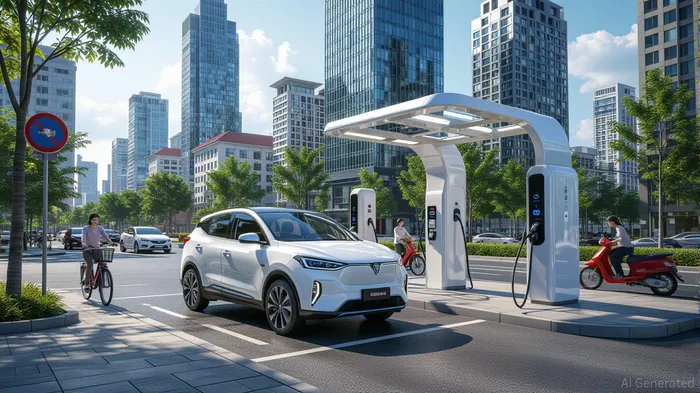
Vietnam's electric vehicle (EV) market is a high-growth arena, projected to expand from USD 3.12 billion in 2025 to USD 7.41 billion by 2030, driven by aggressive policy support and a rapidly urbanizing middle class. For Chagee, a company poised to re-enter this market, the challenge is not just about competing with established players like VinFast or BYD but about aligning with a shifting consumer landscape and building long-term brand resilience. This article examines how Chagee's re-entry strategy could capitalize on recovering consumer sentiment and structural market tailwinds.
Market Context: A Policy-Driven Boom
Vietnam's EV sector is underpinned by a suite of government incentives designed to accelerate adoption. Registration fee waivers for EVs extend through February 2027, while preferential charging tariffs (2,204 VND/kWh) and zero import duties on ASEAN-built EVs reduce ownership costs. These policies have catalyzed a 18.88% CAGR in market growth, with battery electric vehicles (BEVs) dominating 71.36% of the market in 2024.
The government's 2030 targets—30% of four-wheeler sales being EVs and 22% for two-wheelers—underscore a clear commitment to electrification. However, infrastructure gaps, particularly in rural areas, and supply chain dependencies (Vietnam imports 70% of vehicle components) remain hurdles. For Chagee, success hinges on navigating these challenges while leveraging localized production and partnerships.
Consumer Sentiment: From Skepticism to Acceptance
Vietnam's urban middle class, now 33% of the population, is a pivotal demographic. By 2024, 70% of consumers expressed openness to EVs, driven by environmental awareness and cost savings (EVs operate at 50% lower costs than gasoline vehicles). This shift is amplified by rising gasoline prices and a cultural pivot toward sustainability.
Chagee's re-entry must align with this evolving mindset. Affordable, high-range models—particularly sub-200 km variants for urban use—are critical. VinFast's VF3, priced at USD 9,200, has already captured first-time buyers, but Chagee could differentiate through localized design and financing options. Battery-lease programs or flexible payment plans could further reduce upfront costs, addressing price sensitivity.
Brand Resilience: Localization and Ecosystem Partnerships
Vietnam's Decree 51/2025 mandates 40% local content for foreign automakers to qualify for tax breaks. Chagee's re-entry strategy must prioritize partnerships with local suppliers or establish joint ventures to meet these requirements. VinFast's vertical integration (battery production, charging infrastructure) sets a high bar, but collaborations with charging networks like V-Green or Petrolimex could level the playing field.
Moreover, Chagee must invest in post-sales infrastructure. VinFast's V-Green initiative plans 2,000 charging stations by 2025, but rural coverage remains sparse. By co-developing charging hubs or offering home-charging solutions, Chagee can address range anxiety and build trust.
Investment Considerations: Balancing Risks and Opportunities
While the market is ripe, risks persist. Supply chain bottlenecks and infrastructure lags could delay adoption. However, Vietnam's 18 free trade agreements (including ASEAN) provide export diversification opportunities. Chagee's ability to scale locally while exporting to regional markets could mitigate these risks.
The EV sector's volatility is evident globally. Tesla's stock, for instance, has seen a 30% decline in 2025 amid macroeconomic pressures, highlighting the need for diversified strategies. For Chagee, a hybrid approach—combining affordable models with premium variants—could stabilize revenue streams.
Conclusion: A Strategic Path Forward
Chagee's re-entry into Vietnam's EV market is not just a commercial opportunity but a test of strategic agility. By aligning with government incentives, prioritizing localization, and addressing consumer pain points through innovative financing and infrastructure, Chagee can build a resilient brand in a competitive landscape. Investors should monitor the company's partnerships with local charging networks and its ability to scale production while maintaining cost efficiency.
In a market where policy and consumer sentiment are moving in lockstep, Chagee's success will depend on its ability to adapt to Vietnam's unique dynamics—and to position itself as a partner in the country's green transition.







Comentarios
Aún no hay comentarios