
U.S. CFTC Natural Gas Speculative Net Positions Hit -128,000, Signaling Deepening Market Skepticism
The latest Commitments of Traders (COT) report from the Commodity Futures Trading Commission (CFTC) has sent shockwaves through the energy sector. As of December 2025, speculative net positions in U.S. natural gas futures hit a record -128,000 contracts, a net short position that underscores a profound shift in market sentiment. This bearish stance, driven by non-commercial traders like hedge funds and institutional speculators, signals more than just a short-term correction—it reflects a structural reevaluation of energy markets amid the accelerating energy transition.
The Bear Case: Oversupply, Regulatory Pressures, and Transition Fatigue
The -128,000 net short position is not an anomaly. It builds on a three-quarter trend of speculative traders reducing long exposure while aggressively scaling short positions. Swap dealers and managed money accounts, which dominate speculative activity, now hold concentrated short bets, with the largest four traders controlling over 30% of the net short. This concentration amplifies the risk of a self-fulfilling price decline, as even minor shifts in positioning could trigger cascading liquidations.
For energy producers, this bearishness is a double-edged sword. Natural gas prices, already pressured by record U.S. production and tepid winter demand forecasts, face further downward momentum. Companies like Cheniere Energy (LNG) and Kinder Morgan (KMI), which rely on stable pricing for cash flow, are particularly vulnerable. A prolonged slump could force asset sales or dividend cuts, eroding investor confidence in the sector.
Sector Rotation: From Fossil Fuels to Decarbonization
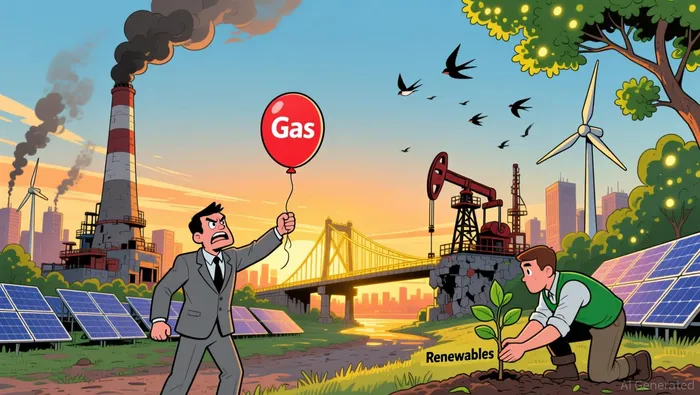
The bearish natural gas market is a bellwether for a broader sector rotation. As speculative capital flees energy producers, it's flowing into sectors aligned with decarbonization. Renewable energy, energy storage, and grid modernization are outperforming, with solar and wind infrastructure stocks like NextEra Energy (NEE) and Vestas Wind Systems (ENR.CO) gaining traction.
The energy transition isn't just a moral imperative—it's a financial one. With global regulators tightening emissions rules and investors demanding ESG compliance, the cost of capital for fossil fuels is rising. Meanwhile, green energy projects are attracting record inflows. For example, Plug Power (PLUG) and Bloom Energy (BE) have seen their valuations surge as hydrogen and fuel cell technologies gain mainstream adoption.
Asymmetric Opportunities in Energy Efficiency
The bearish natural gas market also highlights asymmetric opportunities in energy-efficient technologies. As gas prices remain volatile, industries are prioritizing efficiency to hedge costs. This has boosted demand for smart grid solutions, industrial automation, and energy management software. Companies like Schneider Electric (SU) and Honeywell (HON) are benefiting from this trend, with their shares outperforming broader markets.
Moreover, the push for decarbonization is creating tailwinds for battery storage and hydrogen infrastructure. Tesla (TSLA)'s recent foray into grid-scale batteries and Air Products (APD)'s hydrogen projects exemplify how capital is reallocating to sectors that address both energy security and climate goals.
Risks and Rebalancing: Navigating the Transition
While the energy transition offers compelling opportunities, it's not without risks. A sudden rebound in natural gas prices—driven by geopolitical tensions or a cold winter—could temporarily disrupt the bearish narrative. Additionally, regulatory overreach or technological bottlenecks in renewables could delay the transition, creating volatility in both energy and clean-tech sectors.
Investors should adopt a hedged approach. Short-term positioning in natural gas producers with strong balance sheets (e.g., ExxonMobil (XOM)) could provide downside protection if prices rebound. Meanwhile, long-term capital should target decarbonization leaders with recurring revenue models and strong ESG metrics.
Conclusion: A Tipping Point for Energy Markets
The -128,000 net short in natural gas is more than a number—it's a signal of a market in flux. As speculative capital shifts from fossil fuels to clean energy, investors must adapt their portfolios to reflect this new reality. The energy transition isn't a distant horizon; it's a present-day force reshaping industries, valuations, and risk profiles. For those who act decisively, the bearish natural gas market isn't a crisis—it's an opportunity to position for a greener, more resilient future.





Comentarios
Aún no hay comentarios