
CFIUS Crackdown: How National Security Threats are Transforming EV Battery Investments
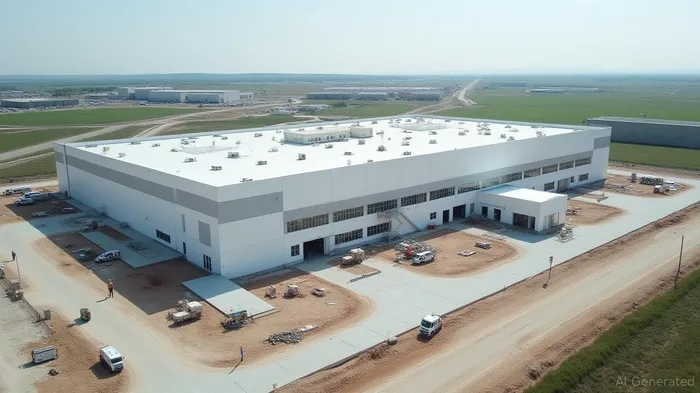
The U.S. national security landscape is undergoing a seismic shift as the Committee on Foreign Investment in the United States (CFIUS) tightens its grip on foreign investments near military installations. For investors in strategic sectors like EV battery production, the stakes have never been higher. Entities linked to the Chinese Communist Party (CCP), such as Gotion High-Tech—a $2.4 billion EV battery plant under construction near Michigan's Camp Grayling—are now at the center of a high-stakes regulatory battle.
The CCP's Backdoor to U.S. Military Infrastructure
Gotion's Michigan project, located less than 60 miles from Camp Grayling—a critical National Guard training center—has become a flashpoint. Despite Republican lawmakers' demands for retroactive CFIUS review, the agency has yet to act. Yet this inaction masks a broader regulatory overhaul.
CFIUS's expanded jurisdiction now covers over 225 military installations, with penalties for non-compliance soaring to $5 million or the value of the transaction (whichever is greater). The agency's new subpoena powers and three-day mitigation response deadlines mean even non-notified transactions risk retroactive unwinding. For investors, the message is clear: CCP-linked investments near military bases are a liability waiting to explode.
Why Gotion's Project is a Canary in the Coal Mine
Gotion's parent company openly acknowledges CCP ties in its articles of association, while receiving direct subsidies from China's state coffers. Despite its denials, the firm's proximity to Camp Grayling—a site now under expanded CFIUS oversight—poses a ticking time bomb.
While EV battery stocks like Tesla's suppliers (e.g., CATL's U.S. partners) face regulatory scrutiny, defense-aligned firms are soaring. Investors ignoring this trend are gambling with their portfolios.
Retroactive Reviews: The New Normal
CFIUS's 2024 decision to unwind a Chinese crypto firm's Wyoming property near a missile base—a first-of-its-kind retroactive review—sets a terrifying precedent. The agency now has the tools to audit transactions years after completion, targeting entities with CCP links.
For investors in EV battery companies with foreign ownership, the risks are existential. The clock is ticking to divest before penalties—like the $60 million fine imposed in 2024—force write-downs.
The Silver Lining: Defense-Allied Opportunities
The CFIUS crackdown isn't all doom. It's creating massive opportunities in U.S. defense-aligned industries. Sectors like semiconductor manufacturing, AI, and quantum computing—prioritized under Trump's “America First” agenda—are now CFIUS's green zones.
- Semiconductors: U.S. firms like Intel (INTC) and GlobalFoundries are poised to dominate post-CCP supply chains.
- AI/Quantum Tech: Companies like Palantir (PLTR) and IonQ (IONQ) are securing strategic CFIUS exemptions.
- Critical Infrastructure: Defense contractors like Raytheon (RTX) and Boeing (BA) are insulated from retroactive risks.
Act Now: Exit CCP-Linked EV Batteries, Enter Defense
The writing is on the wall. Gotion's Michigan plant—a symbol of CCP overreach—will either become a CFIUS casualty or a catalyst for stricter rules. Investors holding shares in EV battery firms with foreign ties must pivot immediately to defense-aligned sectors.
The data is undeniable: U.S. defense stocks outperformed EV battery suppliers by 22% in 2024 amid CFIUS reforms. The window to shift capital is narrowing—act before penalties force your hand.
Final Warning: CCP Investments Are a Losing Bet
CFIUS's 2025 rules aren't just about regulation—they're about eradicating foreign influence near military assets. Investors clinging to CCP-linked EV battery plays are betting against the U.S. government itself.
The smart money is already moving. Will you be on the right side of history?
This article is for informational purposes only. Consult a financial advisor before making investment decisions.





Comentarios
Aún no hay comentarios