
Century Lithium’s Angel Island Project: A Pioneering Leap in U.S. Lithium Independence
The lithium sector is undergoing a quiet revolution, driven by breakthroughs in extraction technology and geopolitical shifts toward domestic mineral self-sufficiency. Among the companies at the forefront of this transformation is Century Lithium, which recently unveiled a landmark technical update on its Angel Island project in Nevada. The data paints a compelling picture of a project poised to redefine U.S. lithium production—provided it can navigate regulatory and market hurdles.
Technical Triumphs: Precision in a High-Stakes Market
The Angel Island project’s May 2025 update reveals advancements that could set new benchmarks for the industry. At the core of these achievements is the Direct Lithium Extraction (DLE) process, which has achieved a 91.6% lithium recovery rate—a figure that outperforms many conventional brine and hard-rock operations. This efficiency stems from a combination of factors:
- A feed concentration of 328 mg/L (among the highest in U.S. sedimentary deposits)
- An eluate grade of 575 mg/L, boosted by specialty membranes that concentrate lithium to 12–14 g/L—a critical threshold for cost-effective production
- A 0.6:1 sodium-to-lithium ratio, which minimizes impurities and reduces the need for costly purification steps
These metrics are not merely technical milestones; they directly address the twin pillars of lithium production: cost efficiency and purity. The project has already produced battery-grade lithium carbonate (Li₂CO₃) with 99.87% purity, a specification that meets the stringent requirements of lithium iron phosphate (LFP) batteries—a cornerstone of EV and solar storage systems. Third-party validation of these samples for LFP applications is ongoing, but early signals suggest strong alignment with market demands.
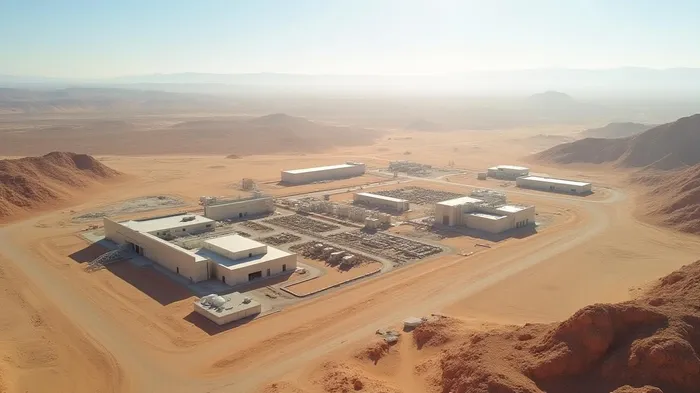
Cost Reductions and Strategic Positioning
The Angel Island project’s economic viability hinges on lowering both capital and operating costs—a challenge Century LithiumCENX-- claims to be tackling through thermal pretreatment trials. By pre-treating the lithium-bearing clay, the company aims to slash hydrochloric acid consumption during leaching, a process that currently accounts for a significant portion of operational expenses. If successful, this innovation could position Angel Island as one of the lowest-cost lithium producers in the U.S., with estimates suggesting production costs could fall below $2,500 per tonne of lithium carbonate equivalent (LCE)—a competitive edge in a market where global average costs hover around $4,000–$6,000 per tonne.
This cost discipline is amplified by the project’s scale: 34,000 tonnes of LCE per year over a 40-year mine life, a longevity that few lithium projects can match. Such longevity is crucial for investors seeking stable, long-term returns amid fluctuating commodity prices.
Policy Tailwinds and Market Context
The U.S. government’s push for domestic critical mineral production has emerged as a tailwind for Century Lithium. President Trump’s Executive Orders on Critical Minerals prioritize projects like Angel Island, which aim to reduce reliance on lithium imports from China and South America. This policy support could accelerate permitting timelines and secure federal funding—a critical advantage, given that the Bureau of Land Management (BLM) is still reviewing Angel Island’s Mine Plan of Operations under the National Environmental Policy Act (NEPA).
The timing of these developments aligns neatly with surging demand for lithium. The global lithium market is projected to grow at a CAGR of 12% through 2030, driven by EV adoption and energy storage infrastructure. For context, Tesla’s stock price gains of over 50% in the past year reflect this sector’s momentum:
Risks and Realities
Despite the optimism, risks remain. Regulatory delays could prolong the path to production, and lithium prices are notoriously volatile—falling 30% in late 2024 amid oversupply concerns. Additionally, Angel Island’s reliance on claystone deposits introduces geological complexities not present in brine or spodumene projects.
Yet, Century Lithium’s technical progress and strategic positioning suggest it may weather these headwinds. The project’s high recovery rates and purity metrics, combined with federal backing, position it as a strategic asset in the U.S. lithium landscape.
Conclusion: A Pivotal Moment for U.S. Energy Independence
The Angel Island project is more than a lithium mine—it’s a microcosm of the energy transition. With a 91.6% recovery rate, 99.87% purity, and a 40-year mine life, Century Lithium has laid the groundwork for a project that could supply 15% of U.S. lithium demand at peak production. Supported by cost-reduction innovations and favorable policy, Angel Island stands to capitalize on a market expected to exceed 2 million tonnes of LCE annually by 2030.
Investors should weigh the risks—regulatory timelines, price volatility, and technical execution—against the project’s transformative potential. In an era where energy security and decarbonization are geopolitical priorities, Angel Island’s success could be as much about national strategy as it is about lithium’s bottom line. For those willing to bet on Century Lithium’s execution, this project offers a rare blend of scalability, innovation, and strategic alignment with the future of energy.





Comentarios
Aún no hay comentarios