
Centrus Energy: A Strategic Pillar in the U.S. Nuclear Renaissance and Global Energy Security
In an era where energy security and geopolitical stability are inextricably linked, Centrus EnergyLEU-- stands at the forefront of a transformative shift in the U.S. nuclear fuel supply chain. As the sole U.S.-owned uranium enrichment company, CentrusLEU-- is not merely a corporate entity but a linchpin in the Biden administration's strategy to decouple from Russian nuclear dominance and accelerate the deployment of advanced reactor technologies. With its recent delivery of 900 kilograms of High-Assay Low-Enriched Uranium (HALEU) to the Department of Energy (DOE) and a multi-billion-dollar expansion underway, Centrus is poised to redefine the global nuclear landscape.
The Strategic Imperative: HALEU and U.S. Energy Security
HALEU, with its uranium concentration of 5–20%, is the lifeblood of next-generation nuclear reactors, including small modular reactors (SMRs) and advanced designs that promise enhanced safety and efficiency. According to the Atlantic Council, Centrus's completion of Phase II HALEU deliveries to the DOE in 2025 marks a critical milestone in domestic production, reducing reliance on Russian imports that once supplied 35% of U.S. nuclear fuel. This achievement aligns with the 2024 bipartisan law banning Russian uranium imports, a policy designed to insulate the U.S. from geopolitical volatility, as outlined by the Department of Energy.
The DOE's $2.72 billion investment in domestic enrichment, coupled with Centrus's $1.58 billion expansion of its Piketon, Ohio facility, underscores the urgency of this transition. By 2026, the expanded plant aims to produce 1,800 kilograms of HALEU annually, a capacity that could meet 70% of the U.S. demand for advanced reactors by 2030, according to NucNet. This infrastructure not only secures the fuel supply for domestic reactors but also positions the U.S. as a global exporter of HALEU, countering Russia's historical 44% share of the enrichment market.
Geopolitical Tailwinds: Centrus and the Sapporo 5 Alliance
The geopolitical implications of Centrus's growth extend beyond U.S. borders. The Sapporo 5 partnership-comprising the U.S., Canada, France, Japan, and the U.K.-has mobilized $4.2 billion in public and private funding to create a resilient, non-Russian nuclear supply chain, according to Power Technology. Centrus's collaboration with Korean firms like Korea Hydro & Nuclear Power and POSCO International exemplifies this alliance's commercial viability, blending American technology with Asian demand for clean energy, as discussed in ArmR Investing.
This international pivot is not merely economic. As noted by the Atlantic Council, the U.S. is leveraging its nuclear renaissance to weaken Russia's influence in Europe and Asia. Bulgaria's decision to build Westinghouse AP-1000 reactors at Kozloduy and Armenia's exploration of U.S.-sourced SMRs illustrate how Centrus's HALEU production indirectly supports U.S. foreign policy goals. By supplying fuel for reactors in allied nations, Centrus becomes a silent architect of energy independence for countries previously reliant on Russian infrastructure.
Financial Resilience and Market Dynamics
Centrus's financial trajectory reflects its strategic value. The company has secured $2 billion in purchase commitments from utilities and raised $1.2 billion via convertible notes, signaling strong investor confidence, as previously reported by NucNet. Despite uncertainties around DOE funding and government efficiency reviews, Centrus's expansion is backed by a bipartisan consensus on energy security. The Piketon project alone is projected to create 1,000 construction jobs and 300 permanent roles, aligning with the administration's economic and environmental priorities, according to NucNet.
Risks and the Road Ahead
While Centrus's trajectory is promising, challenges remain. The DOE's delayed efficiency reviews and potential funding gaps could slow Phase III of its HALEU contract, as noted by NucNet. Additionally, global competition from Russian and Chinese enrichment firms may pressure pricing and margins. However, the U.S. government's commitment to ending Russian uranium imports by 2028 and the Sapporo 5's collective investment in supply chain resilience provide a robust tailwind.
Conclusion: A Cornerstone of the Nuclear Future
Centrus Energy is more than a supplier of enriched uranium; it is a catalyst for U.S. energy sovereignty and a geopolitical counterweight to Russian influence. Its strategic alignment with DOE priorities, international partnerships, and the Sapporo 5 alliance positions it as a critical player in the global shift toward advanced nuclear energy. For investors, Centrus represents a unique confluence of policy-driven growth, geopolitical necessity, and long-term energy security-a rare trifecta in today's volatile markets.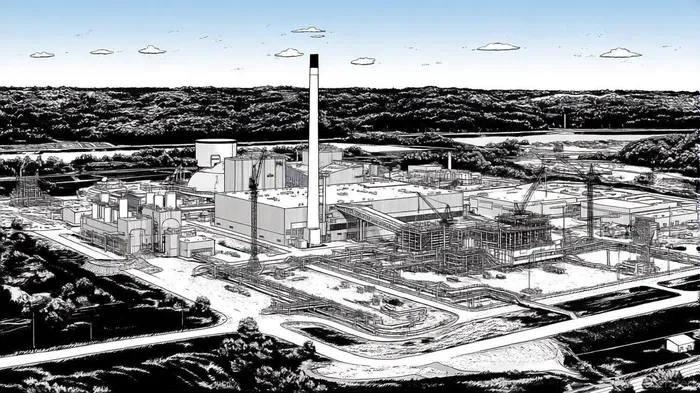





Comentarios
Aún no hay comentarios