
Centrus Energy's Strategic Expansion in Southern Ohio: A Catalyst for Regional Growth and Investment Opportunity
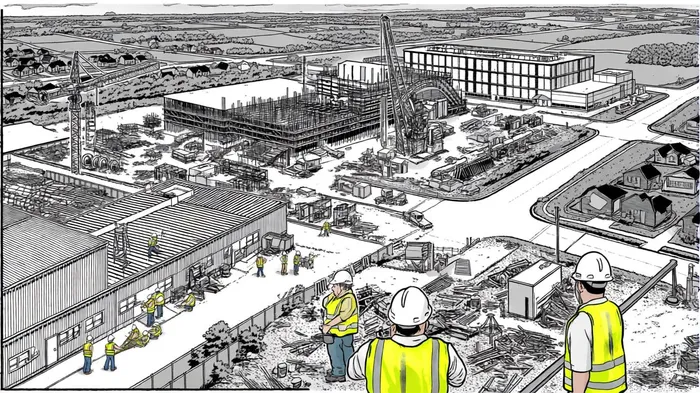
The recent announcement of Centrus Energy's $1.58 billion expansion in southern Ohio marks a pivotal moment for the U.S. nuclear energy sector and regional economic development. By scaling up its uranium enrichment capabilities at the American Centrifuge Plant in Piketon, Centrus is not only addressing critical gaps in domestic energy security but also catalyzing a wave of economic activity that could redefine the industrial landscape of the region. This analysis evaluates the long-term economic and investment ripple effects of the project, emphasizing its potential to drive GDP growth, tax revenue, and supply chain innovation.
A Multi-Billion-Dollar Bet on Energy Independence
Centrus's expansion is anchored in its role as the sole U.S. producer of high-assay low-enriched uranium (HALEU), a fuel essential for advanced nuclear reactors. The project, which hinges on federal funding from the Department of Energy (DOE), aims to increase production of both HALEU and low-enriched uranium (LEU) to meet surging demand from domestic utilities and emerging nuclear technologies[1]. According to a report by The Ohio State University's Energy Policy Institute, the expansion could inject over $3.4 billion into the regional economy through direct and indirect investments, including centrifuge manufacturing in Tennessee and supply chain activities[2].
The scale of the investment is underscored by Centrus's recent financial performance. In Q2 2025, the company reported a net income of $28.9 million on $154.5 million in revenue, driven by its HALEU production milestones and long-term contracts with U.S. utilities[3]. This financial stability positions Centrus to leverage public-private partnerships, such as its collaboration with Korea Hydro & Nuclear Power and POSCO International, which could unlock additional capital and global market access[4].
Job Creation and Regional Economic Resilience
The expansion is projected to create 300 permanent operational jobs and up to 1,000 construction jobs at its peak, while retaining 127 existing positions at the Piketon facility[5]. These jobs, coupled with Centrus's partnerships with JobsOhio and Ohio Southeast Economic Development, are expected to reduce local unemployment—Pike County's rate stood at 7.2% in August 2025—and stimulate ancillary industries such as housing, retail, and professional services[6].
The economic ripple effects extend beyond employment. A study by the Piketon Economic Development Corporation estimates that the project could generate $120 million annually in local tax revenues through payroll taxes, property taxes on expanded infrastructure, and increased business activity[7]. These funds could be reinvested in education, transportation, and healthcare, further enhancing the region's attractiveness for future investments.
Strategic Partnerships and Supply Chain Synergies
Centrus's expansion is not an isolated project but a linchpin in a broader domestic supply chain. The company's centrifuge manufacturing in Oak Ridge, Tennessee, and its reliance on U.S.-based suppliers for materials and technology highlight the project's potential to spur industrial clusters across multiple states[8]. For instance, the Tennessee Valley Authority has already flagged opportunities for small and medium enterprises (SMEs) to participate in Centrus's procurement processes, potentially creating thousands of indirect jobs[9].
Moreover, the DOE's extension of Centrus's HALEU production contract through June 2026—valued at $110 million—signals sustained federal support for the project[10]. This stability is critical for attracting long-term investors, as it mitigates risks associated with regulatory shifts or market volatility.
Investment Risks and Mitigation Strategies
While the expansion presents compelling opportunities, challenges remain. The project's success depends on securing additional federal funding for LEU production capacity, which faces competition from other energy initiatives. Additionally, geopolitical tensions—such as U.S.-Russia relations—could influence demand for domestically produced uranium.
However, Centrus's diversified funding strategy, including $1.2 billion in convertible notes and $2 billion in contingent purchase commitments, provides a buffer against such uncertainties[11]. The company's recent tax credit allocation of $62.4 million for its Tennessee operations further strengthens its financial resilience[12].
Conclusion: A Blueprint for Industrial Revival
Centrus Energy's expansion in southern Ohio exemplifies how strategic industrial investments can align national security objectives with regional economic growth. By reducing reliance on foreign enrichment enterprises and fostering a domestic supply chain, the project not only secures the U.S. nuclear fuel supply but also lays the groundwork for a new era of industrial innovation. For investors, the combination of government-backed contracts, robust financials, and scalable job creation makes Centrus a compelling long-term opportunity—one that could redefine the economics of clean energy in the 21st century.





Comentarios
Aún no hay comentarios