
Centrica's Strategic LNG Expansion: A Pathway to Energy Security and Profitability?
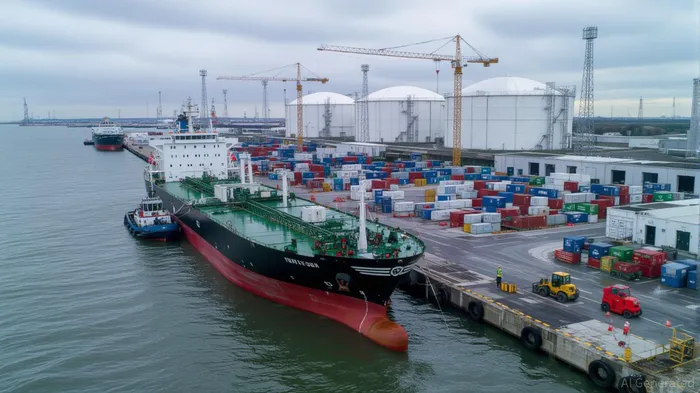
In the ever-shifting landscape of global energy markets, the acquisition of National Grid's Isle of Grain LNG terminal by Centrica and Energy Capital Partners (ECP) represents a calculated bet on the UK's energy future. For investors, this £1.5 billion deal is more than a transaction—it is a signal of how traditional energy infrastructure is being repositioned to align with the dual imperatives of decarbonization and energy security. As the UK grapples with the realities of a post-Russia-Ukraine conflict energy environment and a net-zero transition, Centrica's move underscores the growing importance of LNG as a bridge fuel and a strategic asset.
Strategic Rationale: Bridging the GapGAP-- Between Transition and Security
The Isle of Grain terminal, one of Europe's largest LNG import facilities, is not just a physical asset but a linchpin in the UK's energy system. With 100% of its capacity contracted until 2029 and over 70% until 2038, the terminal offers Centrica a stable, inflation-linked revenue stream. This is critical in an era where energy prices are volatile and regulatory frameworks are rapidly evolving. By acquiring a 50% stake in the terminal, Centrica gains exposure to long-term contracts with high-quality counterparties like Qatar Energy, TotalEnergiesTTE--, and ShellSHEL--, ensuring predictable cash flows that align with its £1.6 billion EBITDA target by 2028.
Moreover, the terminal's expansion—adding 5.3 bcm of regasification capacity—positions it to meet 30% of the UK's gas demand by 2030. This is not just about today's energy needs but about future-proofing against the intermittency of renewables and the phased retirement of coal. For investors, the asset's dual role as a transitional pillar and a decarbonization enabler is compelling. Centrica's partnership with ECP, a U.S. infrastructure investor with expertise in grid reliability, further enhances operational efficiency and opens avenues for innovation, such as hydrogen and ammonia integration.
Financial Metrics: A High-Yield Play on Infrastructure Resilience
The financials of the deal are equally striking. Centrica's £200 million equity investment, backed by £1.1 billion in non-recourse debt, yields an unlevered IRR of 9% and an equity IRR of 14% or higher. These returns are bolstered by the terminal's EBITDA contribution of £100 million annually and cash distributions of £20 million per year for 2026–2028. For a company that has historically faced headwinds in its retail energy business, this acquisition provides a much-needed anchor of stability.
Investors should also consider the broader context: National Grid's £30 billion decarbonization plan and Centrica's £3 billion commitment to Sizewell C nuclear power. These moves signal a strategic pivot toward infrastructure assets that offer both resilience and alignment with policy goals. The UK government's support for LNG as a transitional fuel—given its role in diversifying supply chains and reducing reliance on Russian gas—adds a layer of regulatory tailwind.
Market Context: LNG's Role in the Energy Transition
The UK's energy transition is not a linear path but a mosaic of competing priorities. While renewables dominate the headlines, the reality is that gas will remain a critical component of the energy mix for decades. The UK's reliance on LNG is projected to rise from 15% of gas demand in 2024 to 60% by 2050, making infrastructure like the Isle of Grain indispensable. Centrica's acquisition is a hedge against this reality, ensuring it remains relevant in a market where energy security and decarbonization are no longer mutually exclusive.
However, risks persist. Regulatory scrutiny under the National Security and Investment Act could delay the deal's closure, and geopolitical shifts—such as a surge in U.S. LNG exports or a slowdown in European demand—could pressure margins. Investors must also weigh the long-term viability of gas in a net-zero world, though the terminal's potential for hydrogen and ammonia storage offers a mitigation strategy.
Investment Implications: Balancing Transition and Transition Risks
For investors seeking exposure to the energy transition, Centrica's move is a nuanced opportunity. The company is not abandoning its green ambitions but rather building a bridge to them. The Isle of Grain terminal's long-term contracts provide a buffer against the volatility of retail energy markets, while its expansion aligns with the UK's need for flexible, low-carbon infrastructure.
Yet, this is not a pure-play clean energy investment. Centrica's stake in the terminal exposes it to fossil fuel price swings and the eventual decline of gas demand. Diversification is key: investors should pair this with exposure to renewables, nuclear, and grid modernization projects to balance transition risks.
Conclusion: A Calculated Bet on the UK's Energy Future
Centrica's acquisition of the Isle of Grain LNG terminal is a masterclass in strategic infrastructure investing. It leverages long-term contracts, regulatory tailwinds, and a clear path to decarbonization to create value in an uncertain market. For investors, the deal offers a rare combination of stable cash flows, inflation protection, and alignment with national energy priorities.
As the UK charts its path to net zero, the question is not whether LNG will remain relevant but how it will evolve. Centrica's bet is that the Isle of Grain will be a cornerstone of that evolution. For those willing to bet alongside it, the rewards could be substantial—but only if they remain vigilant to the shifting tides of policy and technology.





Comentarios
Aún no hay comentarios