
Centralized Vulnerabilities in DeFi: The Strategic Imperative to Abandon Web2 Infrastructure
The DNS Attacks: A Case Study in Centralized Weakness
In November 2023, Aerodrome and Velodrome suffered a DNS hijack that redirected users to phishing sites, resulting in estimated losses exceeding $100,000 according to Coinglass. A similar attack reoccurred in late 2025, with both platforms urging users to abandon their main domains and access decentralized mirrors instead. The attacks were traced to vulnerabilities in Porkbun, a centralized domain registrar, which allowed attackers to manipulate DNS records and compromise user trust.
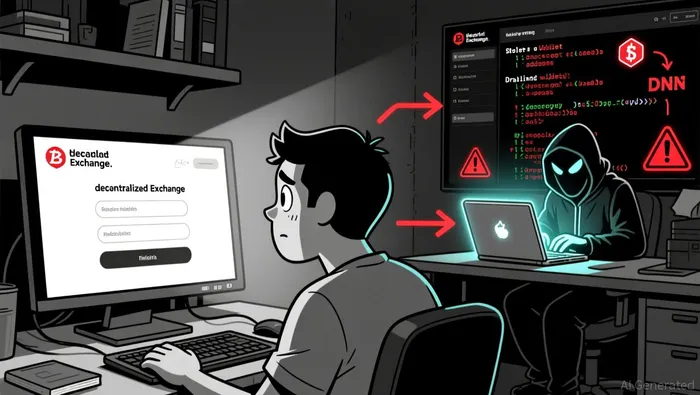
This pattern reveals a systemic flaw: DeFi protocols, despite their decentralized core logic, remain dependent on centralized DNS providers-a single point of failure. As Bitget reports, "the attacks exploited user interfaces without breaching the protocol, demonstrating how front-end vulnerabilities can undermine the security of otherwise robust systems." The recurring nature of these incidents suggests that incremental fixes-such as advising users to use mirrors-are insufficient.
Smart Contract Resilience vs. Front-End Fragility
While the DNS attacks redirected users to malicious sites, the underlying smart contracts of Aerodrome and Velodrome remained uncompromised according to Bitget analysis. This dichotomy underscores a critical insight: DeFi's foundational technology-self-executing, tamper-proof smart contracts-is resilient, but the ecosystem's reliance on centralized infrastructure creates exploitable gaps.
Academic analyses further amplify this concern. A 2025 paper on DeFi vulnerabilities notes that "autonomous AI agents and algorithmic market makers can amplify front-end risks, compounding traditional threats like cascading failures and irrational human behavior." In other words, even if a protocol's code is secure, its exposure to centralized components-such as DNS, APIs, or centralized oracles-creates a vector for exploitation.
Velodrome's Unification into Aero: A Strategic Response
The timing of these attacks coincides with Velodrome's announced unification with Aerodrome into a single protocol, "Aero," slated for Q2 2026. This move, spearheaded by Dromos Labs, aims to consolidate the two platforms' tokens into a unified AERO token, which will serve as a claim on the productive capacity of both exchanges. While the unification primarily addresses operational efficiency, it also signals a strategic pivot toward mitigating centralized risks.
By integrating Aerodrome's decentralized infrastructure with Velodrome's user base, the merged protocol could reduce reliance on centralized DNS providers. However, the recent DNS attacks highlight that such unification must be accompanied by a full migration to decentralized domain solutions-such as Ethereum Name ServiceENS-- (ENS) or IPFS-based hosting-to eliminate single points of failure.
Market Trends: A Shift Toward Fully Decentralized Protocols
Post-2023 attacks have accelerated investor interest in protocols that eliminate centralized dependencies. According to Hedera data, DeFi platforms emphasizing "full personal control over financial data and transactions" have seen a 30% increase in institutional investment. This trend aligns with growing demand for DeFi insurance products, as platforms like Nexus Mutual and Breach Insurance offer coverage against front-end exploits according to Hedera analysis.
Meanwhile, regulatory pressures are pushing protocols to adopt decentralized infrastructure. The European Union's MiCA regulation, enacted in 2023, mandates stricter transparency for DeFi platforms, indirectly incentivizing the adoption of trustless systems. Investors are increasingly prioritizing protocols that align with these regulatory expectations while minimizing exposure to Web2 vulnerabilities.
The Strategic Necessity for DeFi Protocols
The DNS attacks on Aerodrome and Velodrome are not isolated incidents but symptoms of a deeper issue: the incompatibility of DeFi's decentralized ethos with Web2 infrastructure. For protocols to achieve true resilience, they must:
1. Migrate to decentralized domain solutions (e.g., ENS, Handshake) to eliminate DNS-based attacks.
2. Adopt decentralized hosting (e.g., IPFS, Filecoin) to ensure front-end integrity.
3. Integrate zero-knowledge proofs or other trustless verification to validate user interactions without relying on centralized intermediaries.
Failure to address these vulnerabilities risks eroding user trust and regulatory compliance. As Coinglass analysis notes, "the recurring DNS attacks have shifted investor sentiment toward protocols that prioritize end-to-end decentralization, even at the cost of short-term convenience."
Conclusion: Investing in the Future of DeFi
The unification of Velodrome and Aerodrome into Aero represents a pivotal moment for DeFi. However, its success will depend on whether the merged protocol fully embraces decentralized infrastructure. Investors should prioritize protocols that:
- Demonstrate a clear roadmap to eliminate centralized dependencies.
- Leverage emerging technologies like AI-driven threat detection and decentralized identity systems.
- Align with regulatory frameworks that reward transparency and security.
In an industry where trust is algorithmic, the cost of centralized vulnerabilities is too high to ignore. The DNS attacks of 2023 and 2025 are not warnings but mandates: DeFi's future lies in protocols that reject Web2's fragility and embrace true decentralization.






Comentarios
Aún no hay comentarios