
Centralization Risks in DeFi Protocols: UXLink's Hack as a Catalyst for Re-Evaluating Trustless Architecture
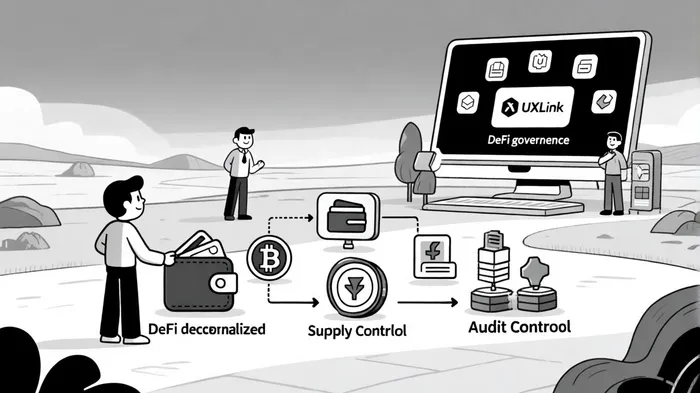
The recent $11.3 million hack of UXLink, a DeFi protocol claiming decentralized governance, has exposed the fragility of trustless architecture when centralization risks are not rigorously addressed. The incident, which exploited a delegate call vulnerability in UXLink's multisignature wallet, allowed attackers to mint 2 billion unauthorized tokens and drain assets including stablecoins, ETH, and WBTCWBTC-- [1]. This event serves as a stark reminder that even projects marketing themselves as decentralized can harbor centralized vulnerabilities, undermining the core principles of DeFi.
The UXLink Breach: A Case Study in Centralized Weakness
UXLink's hack was enabled by a combination of poor smart contract design and inadequate governance safeguards. Attackers exploited a lack of hardcoded supply caps and timelocks, stripping admin privileges and installing their own address as wallet owner [2]. The resulting token inflation caused a 70% price crash, from $0.30 to $0.09, and destabilized the project's economic model [3]. Security experts like Marwan Hachem of FearsOff emphasized that multisig wallets are tools, not silver bullets, and must be paired with transparency and independent oversight [4].
In response, UXLink deployed a new Ethereum-based smart contract, removed mint-burn functionality, and initiated a token swap to stabilize the ecosystem [5]. However, these reactive measures highlight a critical flaw: the protocol's reliance on centralized control mechanisms, such as a single multisig wallet for critical operations, created a single point of failure.
Industry Best Practices vs. UXLink's Model
Leading DeFi protocols like UniswapUNI--, AaveAAVE--, and MakerDAO offer contrasting approaches. These projects prioritize decentralized governance, transparent audits, and fixed token supply models to mitigate centralization risks. For instance:
- Uniswap uses its UNIUNI-- token to enable community voting on treasury allocations and protocol upgrades, ensuring no single entity controls decision-making [6].
- Aave employs a DAO model where AAVE token holders govern protocol parameters, while its V4 iteration introduces modular liquidity hubs to enhance cross-chain efficiency [7].
- MakerDAO (now Sky) maintains a 2-of-3 multisig wallet for fund security and enforces strict collateralization ratios for its DAIDAI-- stablecoin, backed by decentralized governance [8].
In contrast, UXLink's governance model relied on a trust-based social infrastructure, with community votes proposing token unlocks and reserve diversification but lacking the technical safeguards seen in industry leaders [9]. The absence of supply caps and timelocks in its smart contract design left the protocol vulnerable to rapid exploitation [10].
Post-Hack Industry Responses and Lessons Learned
The UXLink incident has prompted broader re-evaluation of DeFi security practices. Protocols are now prioritizing layered security measures, including:
1. Timelocks: Delaying sensitive actions (e.g., token minting) to allow community review.
2. Zero-Trust Architectures: Requiring multi-party approvals for critical operations.
3. Regular Audits: Engaging third-party firms to identify vulnerabilities before exploitation.
UXLink's post-hack recovery efforts—such as freezing hacker-linked addresses, collaborating with law enforcement, and launching a token swap—reflect these trends [11]. However, the irony of the hacker falling victim to a phishing scam themselves underscores the chaotic nature of DeFi exploits [12].
Implications for Investors
For investors, the UXLink hack underscores the importance of scrutinizing a protocol's technical governance structure and tokenomics. Key red flags include:
- Unrestricted Minting Rights: Protocols with no supply caps or burn mechanisms.
- Centralized Multisig Control: Reliance on a single wallet for critical functions.
- Lack of Timelocks: Immediate execution of governance proposals without community oversight.
Conversely, projects like Aave and MakerDAO demonstrate that decentralization is achievable through rigorous design, such as Aave's modular liquidity hubs and MakerDAO's Core + SubDAO structure [13]. These models distribute control while maintaining operational efficiency.
Conclusion
UXLink's hack is a cautionary tale for the DeFi ecosystem. While the project's recovery efforts highlight the importance of adaptability, the incident reveals that centralized control mechanisms—regardless of marketing claims—pose existential risks. Investors must prioritize protocols that embed decentralization into their technical architecture, not just their branding. As the industry evolves, the lessons from UXLink will likely accelerate the adoption of trustless governance models, ensuring that DeFi lives up to its promise of financial sovereignty.






Comentarios
Aún no hay comentarios