
Centralization of Cryptocurrency Infrastructure and Its Impact on DeFi Resilience
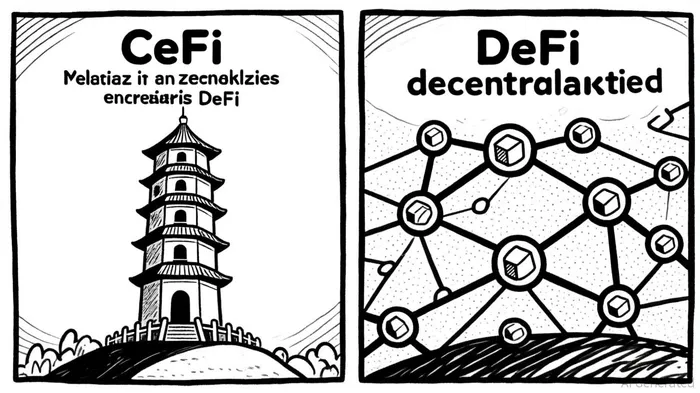
The cryptocurrency landscape in 2025 is defined by a critical tension between centralization and decentralization. Regulatory tailwinds, such as the U.S. GENIUS Act and CLARITY Act, are reshaping infrastructure norms, while decentralized alternatives like DeFi protocols and DePIN networks are redefining resilience in the face of systemic risks. This analysis explores how regulatory frameworks and decentralized innovations are converging to determine the future of crypto infrastructure.
Regulatory Tailwinds: A Double-Edged Sword
The U.S. House's passage of the GENIUS Act in July 2025 has imposed stringent reserve requirements and AML/KYC standards on payment stablecoins, effectively centralizing oversight of a critical DeFi component [1]. Complementing this, the CLARITY Act seeks to clarify SEC and CFTC jurisdiction over digital assets, defining terms like “digital commodities” to foster innovation while ensuring compliance [4]. These measures, while enhancing transparency, risk stifling the decentralized ethos of DeFi by imposing centralized compliance burdens.
However, the SEC's recent strategic pivot—dropping investigations against major crypto firms and prioritizing systemic risks—signals a nuanced approach. The Spring 2025 Unified Agenda emphasizes innovation-friendly rules for custody and trading, suggesting regulators are balancing oversight with growth [2]. Globally, the EU's MiCA regulation and Asia's evolving frameworks further illustrate a trend toward structured oversight, indirectly pressuring DeFi projects to integrate compliance without sacrificing decentralization [3].
Decentralized Alternatives: Building Resilience
Decentralized infrastructure has emerged as a counterforce to regulatory centralization. DeFi protocols like AaveAAVE-- and CompoundCOMP-- now manage over $10.4 billion in TVL, leveraging cross-chain interoperability and algorithmic interest models to serve both retail and institutional users [1]. Aave's expansion to eight blockchains and its institutional-grade security features exemplify how DeFi is evolving beyond basic lending to become foundational infrastructure [1].
DePIN networks are also disrupting traditional sectors. Tokenized hotspots for telecom, decentralized logistics platforms, and microgrid energy markets are leveraging blockchain to create resilient, distributed systems. For instance, energy DePINs enable peer-to-peer renewable energy trading, bypassing centralized utilities and reducing systemic fragility [2].
Meanwhile, RWA tokenization is bridging DeFi and traditional finance. Platforms like Ondo Finance and Franklin Templeton now offer tokenized U.S. Treasuries, unlocking liquidity for previously illiquid assets and attracting institutional capital [5]. This integration notNOT-- only enhances DeFi's resilience but also challenges CeFi's dominance in asset management.
Case Studies: DeFi vs. CeFi Under Pressure
The resilience of decentralized systems becomes starkly evident during crises. Between 2023 and 2025, DeFi borrowing surged by 959% from bear market lows, reaching $19.1 billion in open borrows, while CeFi lending—dominated by TetherUSDT--, Galaxy, and Ledn—grew by only 73% and remains 68% below its peak [4]. This divergence highlights DeFi's ability to recover from systemic shocks, such as the 2022 TerraLUNA-- collapse, through permissionless innovation and distributed risk.
DEXs further underscore this trend. In 2025, decentralized exchanges accounted for 7.6% of global crypto trading volume, up from 3% in 2023, with Hyperliquid's $1.27 trillion in perpetual futures volume proving their liquidity competitiveness [5]. Projects like DeXRP, which combines AMMs with order books on the XRP Ledger, demonstrate how hybrid models can address DeFi's performance gaps while maintaining decentralization [5].
Challenges and the Path Forward
Despite these gains, DeFi faces hurdles. High transaction fees, fragmented liquidity, and regulatory ambiguity persist. For example, Ethereum-based DEXs still grapple with slow settlement times, and tokenized RWA adoption remains constrained by legal complexities [5]. However, innovations like decentralized identity (DID) and AI-enhanced smart contracts are addressing compliance challenges, enabling DeFi to align with regulatory expectations without compromising its decentralized core [1].
The future of crypto infrastructure hinges on balancing regulatory clarity with decentralized innovation. While centralized models offer short-term compliance advantages, decentralized systems—backed by cross-chain interoperability, institutional-grade security, and RWA integration—are proving more resilient under systemic stress. As global regulators refine frameworks, the crypto ecosystem must prioritize hybrid models that preserve decentralization while embracing compliance, ensuring DeFi's role as a cornerstone of next-generation finance.







Comentarios
Aún no hay comentarios