
Central Europe's Strategic Pivot: Strengthening Defense Supply Chains Amid Geopolitical Turbulence
The geopolitical landscape in Europe has undergone a seismic shift since 2022, driven by the war in Ukraine, the intensifying Sino-American rivalry, and the weaponization of globalization. Central Europe, a region historically pivotal to European security, has emerged as a critical battleground for redefining defense coordination and supply chain resilience. Investors and policymakers alike are now scrutinizing how Central European nations are leveraging political continuity and collaborative frameworks to mitigate risks and secure their strategic autonomy.
Central European Defense Coordination: A Pillar of Political Continuity
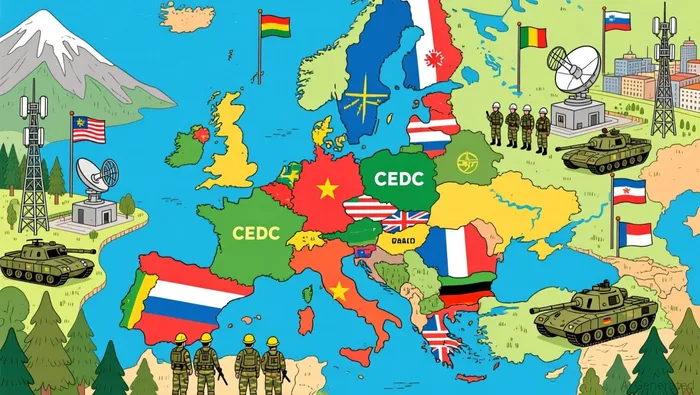
Central Europe's defense architecture has long relied on the Central European Defence Cooperation (CEDC), a forum uniting Austria, Croatia, the Czech Republic, Hungary, Slovakia, and Slovenia, with Poland as an observer. The CEDC's role has expanded significantly since 2022, as member states prioritize interoperability, joint procurement, and cultural alignment to counter shared threats. Under the Hungarian and Slovak presidencies in 2024 and 2025, the CEDC has institutionalized high-level ministerial meetings and working-level coordination to ensure continuity in defense initiatives.
This political continuity is not merely symbolic. The CEDC has spearheaded concrete projects, such as the development of a cost-effective medium tank and cross-border procurement of military equipment. These efforts align with broader EU frameworks like the Permanent Structured Cooperation (PESCO), which enables 26 member states to pool resources for capabilities in cyber, space, and maritime domains according to CEDC reports. By embedding regional collaboration within EU and NATO structures, Central European nations are creating a buffer against the fragmentation risks posed by divergent national strategies.
Supply Chain Resilience: From Raw Materials to Production
The war in Ukraine and the U.S.-China tech rivalry have exposed Europe's vulnerabilities in critical raw materials. The European Critical Raw Materials Act (CRMA) underscores the EU's 98% reliance on Türkiye for boron and 100% dependence on China for rare earth processing. For Central Europe, this dependency is a strategic liability, particularly as defense spending is projected to rise to 3.5% of GDP by 2035.
To address this, the CRMA sets ambitious targets: 10% domestic extraction, 40% processing, and 15% recycling of strategic materials by 2030. Central European nations are already investing in localized supply chains. For instance, the Czech Republic and Slovakia have partnered on joint pilot projects for rare earth processing, while Austria is exploring partnerships with Canada for lithium and cobalt according to industry analysis. These initiatives are complemented by the EU's Act in Support of Ammunition Production (ASAP), which allows direct procurement and financial support for domestic ammunition production to counter shortages as outlined by the EU.
Geopolitical Risk Management: From Transactional to Trust-Based Agreements
The shift from transactional contracts to trust-based agreements is reshaping European defense supply chains. The U.S. FY 2025 National Defense Authorization Act (NDAA) exemplifies this trend, with provisions to secure domestic and allied supply chains for critical components like small unmanned aerial systems as detailed in the final legislation. Central European nations are aligning with these efforts: Poland's defense spending has surged to 4.2% of GDP in 2024, with plans to reach 4.7% by 2025 according to financial monitoring data, while Austria and the Czech Republic are committing to 2% and 3% of GDP by 2032 and 2030, respectively as reported by defense analysts.
These investments are not just about meeting NATO benchmarks; they reflect a strategic recalibration. By co-developing technologies with trusted allies and diversifying suppliers, Central European states are reducing exposure to geopolitical shocks. For example, the CEDC's focus on joint Special Operations Forces training and CBRN defense ensures that capabilities are not only resilient but also interoperable with NATO and EU partners.
Investment Implications: A Resilient Ecosystem Emerges
For investors, the convergence of political continuity, supply chain innovation, and geopolitical risk management in Central Europe presents compelling opportunities. The region's defense industrial base is undergoing a transformation, with EU-funded cross-border projects and private-sector partnerships driving efficiency. Companies involved in critical mineral processing, advanced manufacturing, and logistics stand to benefit from the CRMA's 2030 targets and ASAP's procurement incentives.
Moreover, the CEDC's emphasis on cultural and institutional alignment reduces the transaction costs of collaboration. As Central European nations deepen their integration with EU and NATO structures, the risk of supply chain disruptions-whether from geopolitical rivalries or domestic policy shifts-diminishes. This creates a stable environment for long-term investments in defense infrastructure and technology.
Conclusion
Central Europe's strategic pivot toward resilient defense supply chains is a testament to the region's adaptability in an era of great power competition. By institutionalizing political continuity through forums like the CEDC, addressing raw material dependencies via the CRMA, and aligning with EU and U.S. initiatives, Central European nations are not only securing their own futures but also reinforcing Europe's collective defense posture. For investors, this represents a rare intersection of geopolitical necessity and economic opportunity-a space where strategic foresight and collaboration are redefining the rules of the game.







Comentarios
Aún no hay comentarios