
Central Banks and Geopolitics Drive Market Volatility in a Week of Critical Decisions
The week of May 7–8, 2025, tested investors’ resilience as central bank decisions, geopolitical tensions, and corporate earnings reports created a maelstrom of market-moving news. At the heart of the volatility was the U.S. Federal Reserve’s interest rate decision, which underscored the challenges of balancing growth with inflation.
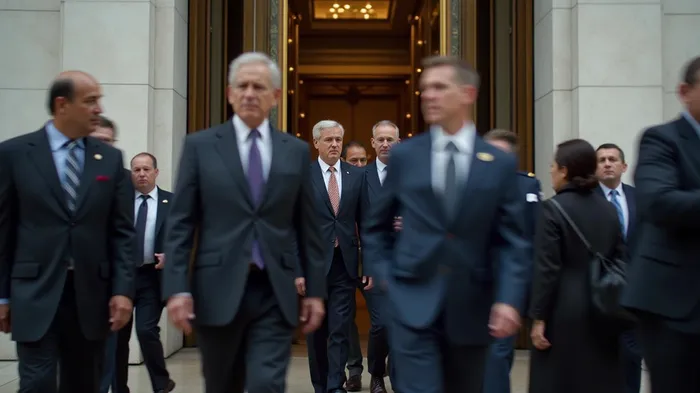
The Fed’s Tightrope Walk
On May 7, the Federal Reserve announced it would hold interest rates steady at 5.25%, defying market expectations of a cut. The decision reflected concerns over persistent inflation in services sectors, such as housing and healthcare. Fed Chair Jerome Powell emphasized in the post-meeting press conference that “the path forward is data-dependent,” but added a warning: “We remain vigilant to the risks of overshooting on inflation.”
The market reaction was immediate: the dollar surged 0.8% against a basket of currencies, while equities dipped as tech stocks, sensitive to rate hikes, led declines. The S&P 500 fell 1.2%, with NVIDIA—a bellwether for AI-driven growth—down 2.5% despite its recent stock split.
Crosscurrents Across the Atlantic
The following day, the Bank of England faced its own dilemma. With the UK economy mired in a productivity slump and the government’s fiscal credibility under fire, the Monetary Policy Committee (MPC) voted 6–3 to cut rates by 25 basis points to 4.5%. The move aimed to cushion households against soaring energy costs, but it drew criticism from inflation hawks who warned of eroding confidence.
The pound plummeted 1.5% against the dollar, reaching a 14-month low. Meanwhile, the UK’s 10-year bond yield dropped to 3.4%, narrowing the yield gap with U.S. Treasuries—a trend that could fuel capital outflows from British assets.
Corporate Earnings Highlight Global Risks
The week also saw stark reminders of how global supply chains and trade policies are reshaping corporate profitability. Toyota’s warning of a 21% profit decline to ¥3.8 trillion by March 2026—driven by U.S. tariffs and dollar weakness—highlighted the auto sector’s vulnerability. Analysts noted that every 1% drop in the dollar’s value against the yen reduces Toyota’s profits by ¥200 billion.
In Europe, defense contractor Kongsberg offered a contrasting narrative. Its 63% jump in Q1 orders—a result of soaring European military spending—pushed shares up 6%. This underscores how geopolitical tensions are diverting capital toward defense and away from traditional growth sectors.
The UK’s Fiscal Crossroads
Adding to the gloom was a report from The Telegraph estimating that UK Chancellor Rachel Reeves’ tax hikes risk a £57 billion fiscal shortfall by “weaponizing trade” to solve domestic economic woes.
Investor Takeaways
- Central Banks Are the New Drivers of Volatility: With inflationary pressures unevenly distributed across sectors, expect more divergent policy paths. The Fed’s caution contrasts with the BoE’s rate cut, creating a “two-speed” global monetary landscape.
- Geopolitical Risks Are Priced In—but Not Fully Understood: The Panama Canal’s role as a trade battleground and rising defense spending signal that geopolitical risks will remain a market wildcard.
- Corporate Earnings Are a Litmus Test for Resilience: Firms like NVIDIANVDA-- and Siemens Energy (which reported limited tariff impacts) are outperforming those reliant on fragile supply chains.
Conclusion: Navigating the New Normal
Investors must prepare for a world where central banks are both stabilizers and disruptors. The Fed’s “data dependency” mantra means markets will swing wildly on PMI reports and inflation data. Meanwhile, the UK’s fiscal challenges and Toyota’s tariff-driven losses illustrate the limits of corporate agility in a protectionist era.
The week’s events underscore a critical truth: In an interconnected economy, no company or currency is an island. Diversification, liquidity, and a focus on companies with pricing power—like Siemens or NVIDIA—will be vital. As Buffett’s Berkshire Hathaway meeting reminded us, “Trade should not be a weapon”—but until that ideal becomes reality, investors must brace for more volatility.





Comentarios
Aún no hay comentarios