
Central Banks in Crisis: China, Japan, and S.Korea Face Off Against U.S. Tariffs
Generado por agente de IAWesley Park
jueves, 10 de abril de 2025, 10:57 pm ET3 min de lectura
Ladies and gentlemen, buckleBKE-- up! The economic rollercoaster just took a sharp turn, and it's all thanks to the escalating trade war between the U.S. and China. The central bank deputies from China, Japan, and South Korea have been huddled in emergency meetings, trying to figure out how to navigate this storm. Let's dive in and see what's at stake!
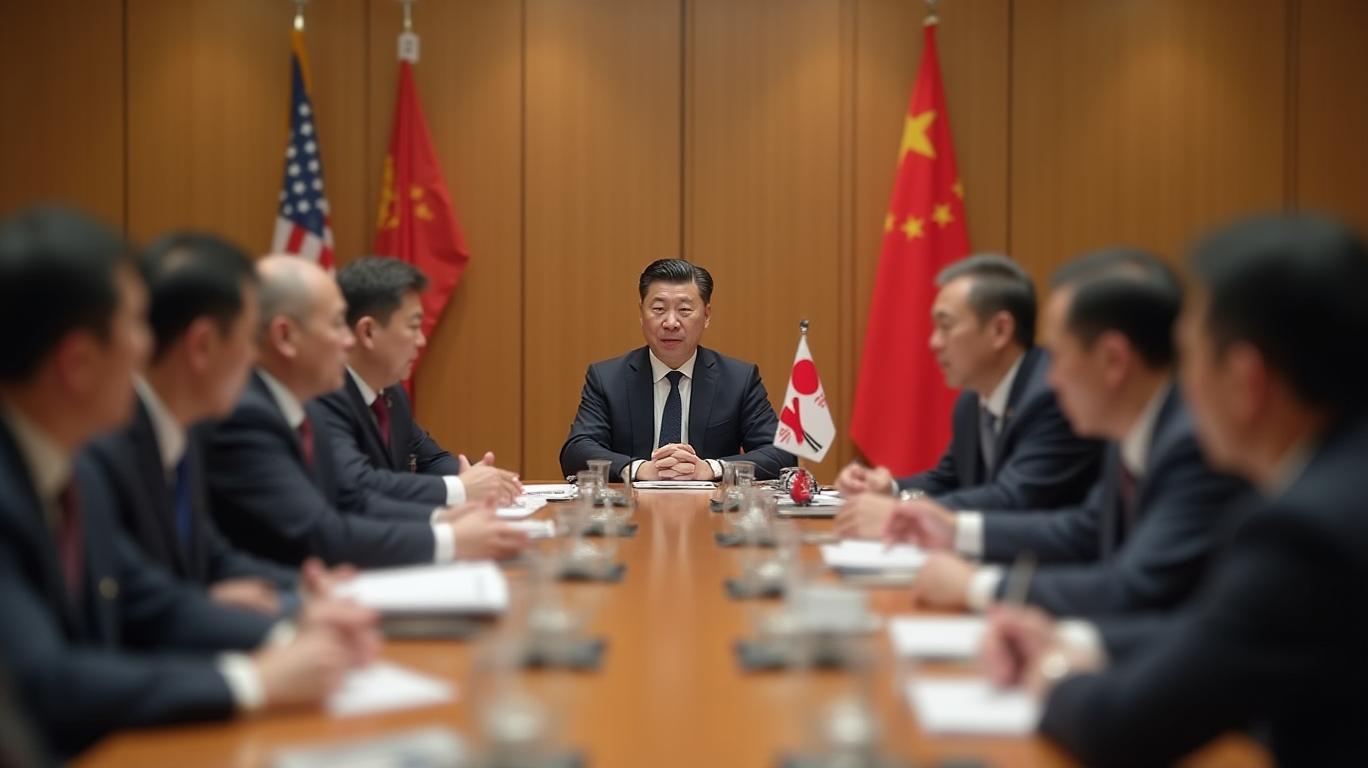
First things first, the U.S. has slapped some hefty tariffs on Chinese goods, and China isn't taking it lying down. They've retaliated with their own set of tariffs, and now the whole world is feeling the heat. The central bank deputies from these three economic powerhouses have been discussing the impact of these tariffs on the global and regional macroeconomic situation. And let me tell you, it's not pretty.
The U.S. tariffs are a double-edged sword. On one hand, they're designed to protect American industriesAIG-- from cheap Chinese imports. But on the other hand, they're causing a ripple effect that's hitting countries like China, Japan, and South Korea hard. These countries are major exporters, and the U.S. is one of their biggest customers. So when the U.S. slaps on tariffs, it's like cutting off their lifeline.
But these countries aren't going down without a fight. They're exploring a range of strategies to mitigate the adverse effects of the U.S. tariffs. Here are some of the potential moves they could make:
1. Diversification of Trade Partners: These countries can reduce their reliance on the U.S. market by diversifying their trade partners. For instance, South Korea is considering the establishment or strengthening of 14 overseas offices, including new Korea Trade-Investment Promotion Agency offices in Mexico and Georgia, as well as Korea International Trade Association offices in Brazil, South Africa, and Vietnam. This strategy aims to target export diversification, with a focus on emerging markets in the Global South.
2. Increased Domestic Demand: Countries can boost domestic demand to offset the reduction in exports to the U.S. China, for example, could further increase its efforts to expand domestic demand, reduce the cost of credit to producers, and seek to grow exports to third markets. However, given China’s very large surplus of over $1 trillion in 2024 and restrictions already imposed on Chinese goods in response, such as on electric vehicles, expanding trade elsewhere will be challenging.
3. Government Stimulus Measures: Governments can implement stimulus measures to support their economies. China has already announced stimulus measures over the past few months, and Beijing could further increase its efforts to expand domestic demand, reduce the cost of credit to producers, and seek to grow exports to third markets. South Korea, for example, has declared an "all-out" effort in response to escalating global tariff tensions, unveiling a substantial support package for local businesses under growing pressure. This includes a record 366 trillion won ($253 billion) in trade finance support for small and medium-sized enterprises, aimed at reducing trade insurance costs, raising loan guarantee limits, and expanding the overall scope of assistance.
4. Industry Consolidation: In some sectors, a slower economy could force manufacturers to consolidate, improving the long-term health of the sector. For example, China’s state planners could continue to help its manufacturers, who are already struggling due to intense domestic competition and increased trade barriers abroad. A slower economy could also force some Chinese manufacturers of clean energy technologies to consolidate, improving the long-term health of the sector.
5. Technological Advancements: Countries can focus on technology-led growth to reduce their dependence on trade. China, for instance, is focusing on technology-led growth, which could help reduce simmering tensions with commercial partners. Such a shift would require raising real wages, building a stronger social safety net, and stabilizing the housing market.
6. Currency Manipulation: Countries could potentially manipulate their currencies to make their exports cheaper and more competitive in the global market. However, this strategy is risky and could lead to retaliation from other countries.
7. Negotiations and Diplomacy: Countries can engage in negotiations and diplomacy to minimize the impact of tariffs. For example, South Korea's acting President Han Duck-soo ordered an "all-out" response to the United States' higher-than-expected reciprocal tariffs on imports from the country, urging the Industry Ministry to thoroughly analyze the detailed contents and impacts of the reciprocal tariffs, and to actively engage with the US in negotiations to minimize the impact.
But here's the kicker: the U.S. tariffs aren't just hurting these countries; they're hurting the U.S. too. The U.S. economy is already feeling the pinch, with higher prices, slower economic growth, and slowed down business investment. And if the trade war escalates, it could push the U.S. into a recession. So, who's really winning here?
The bottom line is this: the U.S. tariffs are a game-changer, and the central bank deputies from China, Japan, and South Korea are scrambling to find a way out. They're exploring a range of strategies, from diversifying trade partners to boosting domestic demand. But the road ahead is uncertain, and the stakes are high. So, buckle up, folks. It's going to be a bumpy ride!



Divulgación editorial y transparencia de la IA: Ainvest News utiliza tecnología avanzada de Modelos de Lenguaje Largo (LLM) para sintetizar y analizar datos de mercado en tiempo real. Para garantizar los más altos estándares de integridad, cada artículo se somete a un riguroso proceso de verificación con participación humana.
Mientras la IA asiste en el procesamiento de datos y la redacción inicial, un miembro editorial profesional de Ainvest revisa, verifica y aprueba de forma independiente todo el contenido para garantizar su precisión y cumplimiento con los estándares editoriales de Ainvest Fintech Inc. Esta supervisión humana está diseñada para mitigar las alucinaciones de la IA y garantizar el contexto financiero.
Advertencia sobre inversiones: Este contenido se proporciona únicamente con fines informativos y no constituye asesoramiento profesional de inversión, legal o financiero. Los mercados conllevan riesgos inherentes. Se recomienda a los usuarios que realicen una investigación independiente o consulten a un asesor financiero certificado antes de tomar cualquier decisión. Ainvest Fintech Inc. se exime de toda responsabilidad por las acciones tomadas con base en esta información. ¿Encontró un error? Reportar un problema


SOBRE NOSOTROS
Nuestra historiaAutores de noticiasBase de conocimientosPolítica de privacidadTérmino de usoDescargo de responsabilidad de corretaje de tercerosTérminos de uso de AIMEDivulgaciones de riesgos de AInvest AICarrerasCONTÁCTENOS
Email: support@ainvest.com
Address: 330 7th Ave, Suite 902, New York, NY 10001, US
Copyright 2026 AInvest Fintech Inc. All rights reserved.


Comentarios
Aún no hay comentarios