
Central Bank Policy in Q3 2025: Navigating Trade Uncertainty and Liquidity Shifts
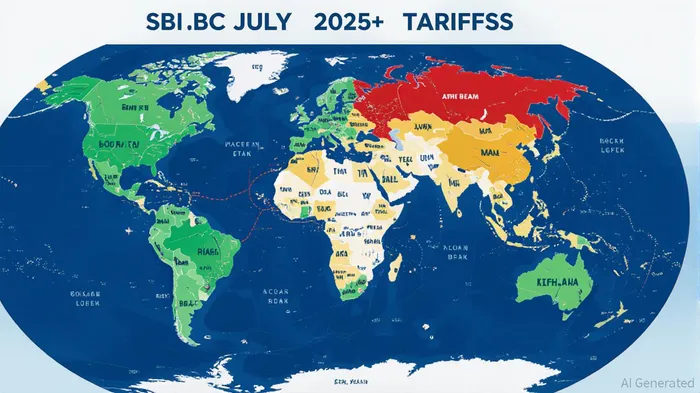
The third quarter of 2025 has emerged as a pivotal period for global markets, marked by a confluence of trade policy upheaval and evolving central bank strategies. While direct data on central bank interventions remains sparse, the ripple effects of geopolitical realignments and economic fragmentation are reshaping liquidity cycles and market timing dynamics. Investors must now parse these indirect signals to anticipate shifts in monetary policy and asset valuations.
Trade Policy Uncertainty and Central Bank Caution
The reintroduction of sweeping U.S. tariffs in late July 2025 has catalyzed a surge in trade volatility, with targeted duties on imports from Canada, the EU, Mexico, and Brazil creating immediate headwinds for global supply chains [1]. These measures, while ostensibly aimed at protecting domestic industries, have triggered retaliatory measures and accelerated the search for alternative trade partners. For instance, Canada's expedited negotiations with ASEAN and South Korea, alongside Indonesia's pivot toward the EU, underscore a fragmentation of traditional trade blocs [1].
Central banks, traditionally focused on inflation and growth, now face a dual challenge: mitigating the inflationary pressures from disrupted trade flows while managing the liquidity needs of economies recalibrating their export strategies. According to a report by the World Economic Forum, developed economies have shown stronger trade rebounds, whereas developing nations grapple with rising debt-servicing costs and constrained capital access [1]. This divergence suggests that central banks in advanced economies may adopt a more accommodative stance to offset trade-driven slowdowns, while emerging market counterparts could face tighter liquidity conditions.
Liquidity Cycles and the Energy Transition
The energy transition further complicates the liquidity landscape. While progress in clean energy adoption has improved sustainability metrics, energy security remains a pressing concern, particularly for import-dependent economies [1]. Central banks in regions reliant on fossil fuel imports may prioritize liquidity injections to stabilize energy markets, even as global interest rates trend upward. For example, the European Central Bank (ECB) could face pressure to extend emergency lending facilities to support green infrastructure projects, balancing inflation control with long-term energy resilience.
Market Timing in a Fragmented World
For investors, the interplay between trade policy and liquidity management demands a nuanced approach to market timing. The heightened uncertainty has amplified risk premiums, particularly in sectors exposed to cross-border trade. Data from the World Economic Forum indicates that equities in export-oriented industries, such as automotive and manufacturing, have underperformed relative to domestic-focused sectors like utilities and healthcare [1]. This trend suggests that central bank liquidity measures may increasingly favor sectors critical to energy security and domestic stability.
Strategic Implications for Investors
- Diversification Across Geopolitical Realignment: As trade alliances shift, investors should overweight regions with emerging trade agreements (e.g., ASEAN partners) and underweight those facing tariff retaliation.
- Liquidity-Driven Sector Rotation: Sectors benefiting from central bank liquidity—such as renewable energy and critical minerals—may outperform, while trade-exposed industries face valuation pressures.
- Currency Hedging: Currency volatility is likely to persist amid divergent monetary policies. Hedging strategies should account for both inflation-linked rate hikes and trade-driven currency devaluations.
Conclusion
While Q3 2025 lacks explicit central bank policy announcements, the indirect impacts of trade fragmentation and energy transition are reshaping liquidity dynamics. Investors must remain agile, leveraging macroeconomic signals to anticipate policy responses and adjust portfolios accordingly. The coming months will test the adaptability of both central banks and market participants in an increasingly polarized global economy.







Comentarios
Aún no hay comentarios