
Central Bank Policy Normalization and the Marginal Impact on High-Yield Assets
Central bank policy normalization has emerged as a defining theme in global financial markets from 2023 to 2025. As institutions like the U.S. Federal Reserve and the European Central Bank recalibrate their post-pandemic strategies, the marginal impact of "slightly restrictive" monetary settings on high-yield assets-particularly bonds and equities-has become a focal point for investors. This analysis synthesizes recent research to assess how normalization efforts, coupled with evolving economic conditions, are reshaping risk premiums, sectoral performance, and valuation dynamics.
The Fed's Balancing Act and High-Yield Bonds
The Federal Reserve's normalization process has prioritized a measured reduction in balance sheet runoff while maintaining "ample" reserves to support the floor system of monetary policy implementation, as described on the Fed's policy normalization page. By late 2025, the Fed aims to strike a balance between liquidity provision and avoiding distortions in market dynamics. This cautious approach has influenced high-yield bond markets, where spreads have narrowed but remain elevated relative to pre-pandemic levels. As of September 15, 2025, the ICE BofA U.S. High Yield Bond Spread stands at 2.85%, reflecting a risk premium that accounts for both credit concerns and the broader interest rate environment, per Macrotrends high-yield spread.
Slightly restrictive monetary settings-such as the Fed's 525-basis-point rate hikes from 2022 to early 2024-have amplified discount rates for high-yield bonds, reducing the present value of future cash flows, as explained in an Investopedia explainer. However, the impact on spreads has been tempered by the Fed's forward guidance; for example, the Fed's 2024 rate cuts, announced in response to moderating inflation, have stabilized investor sentiment, preventing a sharper widening of spreads, per FEG's Research Review. This dynamic underscores the non-linear transmission of monetary policy, where communication strategies can offset some of the direct effects of rate hikes, according to a Kansas City Fed review.
Sectoral Heterogeneity in Equity Markets
Equity markets have exhibited pronounced sectoral divergences under slightly restrictive monetary conditions. Growth stocks, particularly in technology and real estate, have shown heightened sensitivity to interest rate changes. For example, the S&P 500 Information Technology sector gained over 17% in Q4 2023 amid expectations of Fed rate cuts, while real estate equities benefited from improved financing conditions (see FEG's Research Review: Fourth Quarter 2023). Conversely, value stocks-often linked to sectors like utilities and consumer staples-have demonstrated resilience, as their lower leverage and stable cash flows make them less vulnerable to rising borrowing costs, according to BlackRock's equity outlook.
The sectoral asymmetry is further amplified by macroeconomic factors. A Macrosynergy study highlights that "conceptual parity scores," derived from macroeconomic variables like 10-year yields, predict sectoral equity returns with a Sharpe ratio exceeding 1. For instance, energy and financials have positively correlated with higher yields, while communication services and technology have shown negative correlations due to their long-duration growth profiles, as noted in an SSGA analysis. This suggests that investors must adopt a nuanced, sector-specific approach to navigate the marginal impacts of monetary policy.
Valuation Shifts and Risk Premium Compression
The equity risk premium (ERP) has narrowed significantly in a higher-yield environment. By October 2023, the ERP for U.S. stocks-measured as the S&P 500 earnings yield minus the 10-Year Treasury yield-had fallen to 1.2 percentage points, down from an average of 3.1% between 2009 and 2022, according to an AllianceBernstein analysis. This compression reflects a recalibration of investor expectations, as rising bond yields have reduced the relative appeal of equities. However, historical data suggests that equities can still deliver robust returns in such environments; for example, the S&P 500 returned an annualized 10.2% from 1983 to 2008 despite similarly low ERP levels (see AllianceBernstein analysis).
High-yield bonds have also seen valuation shifts. The bond-yield-plus-risk method-which estimates the cost of equity by adding a subjective risk premium to a company's long-term debt yield-highlights the evolving risk-return trade-off. While the appropriate risk premium varies by industry, historical ranges suggest premiums between 3% and 6% for established firms. This framework underscores the importance of credit analysis in a slightly restrictive environment, where default risks are elevated for firms in macro-sensitive sectors like industrial manufacturing and energy, as documented in an MDPI study.
Policy Normalization and Fiscal Interdependence
The interplay between monetary and fiscal policy has added complexity to normalization efforts. Large-scale fiscal spending in 2021–2023 contributed to inflation surges, forcing central banks to adopt tighter monetary stances, as shown in an NBER working paper. As normalization progresses, higher interest rates are expected to increase debt service costs, potentially exacerbating inflation unless fiscal policy is tightened. This dynamic highlights the need for coordinated policy frameworks to ensure macroeconomic stability and mitigate spillovers into high-yield markets, according to an OECD analysis.
Conclusion: Strategic Implications for Investors
The marginal impact of slightly restrictive monetary settings on high-yield assets is neither uniform nor linear. While high-yield bonds face valuation pressures from rising rates and credit risks, equities exhibit sectoral divergences driven by macroeconomic sensitivities. Investors must prioritize quality and valuation metrics, favoring firms with strong free cash flow and robust balance sheets (see BlackRock's equity outlook). Additionally, diversification across sectors and geographies can help mitigate the asymmetric risks of policy normalization. As central banks continue their recalibration, the ability to adapt to evolving monetary conditions will remain critical for navigating high-yield markets in 2025 and beyond.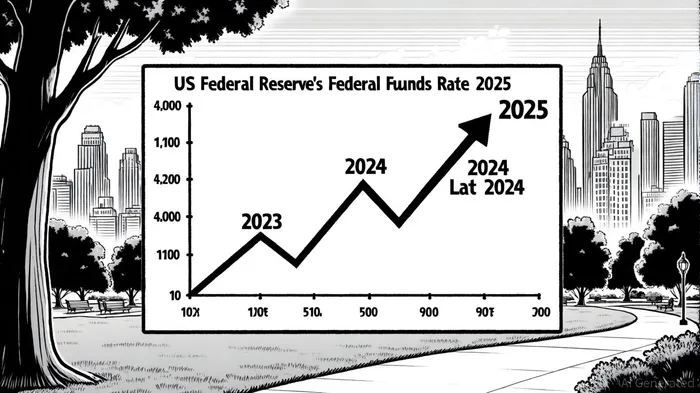





Comentarios
Aún no hay comentarios