
Central Bank Policy Divergence in Asia: Strategic Positioning for Emerging Market Equities and Currencies
In 2025, Asia's central banks are navigating a fragmented monetary policy landscape shaped by divergent inflation trajectories, geopolitical risks, and the lingering shadow of the U.S. Federal Reserve's "higher-for-longer" rate stance. While many Asian economies have shifted toward easing cycles to stimulate growth, the pace and magnitude of these adjustments vary significantly, creating both challenges and opportunities for emerging market investors.
Policy Divergence and Its Macroeconomic Implications
According to J.P. Morgan's APAC outlook, central banks across Asia are prioritizing growth over inflation control, with the People's Bank of China (PBOC) adopting a "moderately loose" stance and the Reserve Bank of Australia (RBA) poised to cut rates in Q2 2025. Meanwhile, the Bank of Japan (BoJ) has raised rates twice in 2024, signaling a potential shift toward normalization. This divergence reflects domestic conditions: China's property sector slump and weak consumer confidence contrast with Australia's resilient labor market and Japan's inflationary pressures from energy and service costs.
The narrowing interest rate differentials between Asia and the U.S. have already triggered capital outflows and currency depreciation in some emerging markets. For instance, Indonesia, India, and the Philippines have collectively cut rates by over 475 basis points since early 2025, outpacing the Fed's modest easing, according to a Bloomberg analysis. This has reduced the appeal of Asian emerging market bonds, which returned just 4.1% in 2025 compared to 7.1% for global emerging debt. The Bloomberg piece also highlights that the strong U.S. dollar and higher global rates have exacerbated external funding costs, weighing on equities in Asia, Eastern Europe, and Latin America.
Strategic Positioning in Equities and Currencies
The divergent policy environment demands a nuanced approach to asset allocation. For equities, investors should prioritize markets where structural reforms and domestic demand can offset currency headwinds. Japan's equity market, for example, has shown resilience due to corporate governance reforms and wage growth, despite the yen's weakness against the dollar, as noted in a Pueo Project analysis. Conversely, Asian emerging markets with weaker currencies and less supportive policy frameworks-such as Thailand and South Korea-face downward pressure on valuations.
In currencies, the focus should shift to hedging and arbitrage opportunities. Central banks in New Zealand, Singapore, and South Korea have accelerated easing due to declining inflation and export-driven growth, creating potential for carry trade strategies, a dynamic discussed in a J.P. Morgan note. Meanwhile, countries like Australia and Malaysia, which maintain cautious easing, offer relative stability in a volatile dollar environment. Investors should also monitor geopolitical risks, such as U.S.-China trade tensions, which could amplify currency swings in the region.
Long-Term Considerations and Risk Mitigation
Emerging markets account for 60% of global GDP and 80% of global growth, yet they represent only 10% of global market capitalization, a gap highlighted in a Lombard Odier report. This disparity underscores their long-term potential, particularly as U.S. trade policies moderate and the dollar weakens. However, risks remain: weak currencies, political uncertainty, and regulatory shifts in countries like Argentina and Indonesia could disrupt inflows.
To mitigate these risks, investors should diversify across asset classes and geographies. Hedge funds and macro strategies can capitalize on cross-border arbitrage, while active equity strategies in small-cap emerging markets may uncover undervalued opportunities. Additionally, macroprudential policies in countries like India and South Korea provide buffers against external shocks, enhancing their appeal; these buffers are also noted in the J.P. Morgan report referenced above.
Conclusion
Central bank policy divergence in Asia is reshaping the investment landscape for emerging market assets. While rate cuts in key economies offer growth support, they also create currency and equity volatility. Strategic positioning requires a balance between growth-oriented equities in reform-driven markets and hedged currency exposure in divergent policy environments. As the Fed's rate cuts deliver less support for Asian bonds, investors must prioritize flexibility and regional specificity to navigate this complex macroeconomic terrain.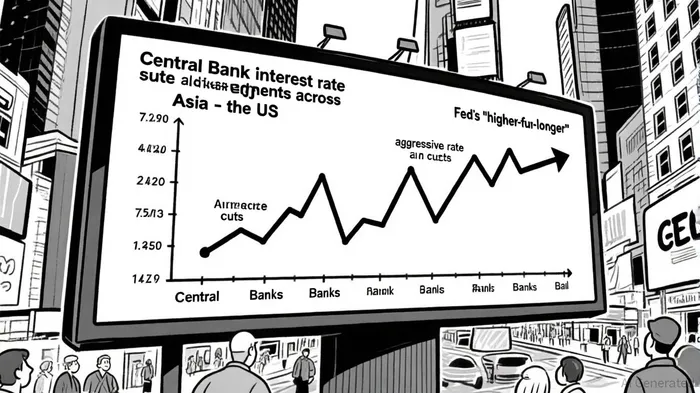







Comentarios
Aún no hay comentarios