
Central Bank Policy and the Crypto Surge: A Strategic Allocation Play in 2025
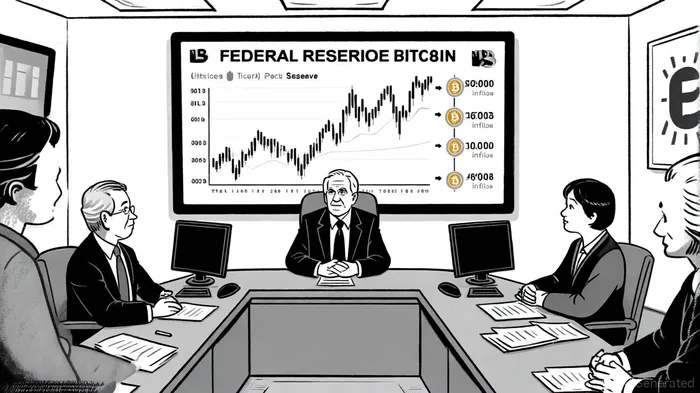
The Central Bank Tightrope: Balancing Inflation and Growth
Central banks in 2025 are navigating a delicate tightrope. The U.S. Federal Reserve, European Central Bank (ECB), and Bank of Japan (BoJ) are all shifting toward accommodative policies to stimulate growth while managing persistent inflation. The Fed, for instance, has signaled a 3.75% policy rate by Q3 2025, down from its 2022–2023 tightening cycle[1]. This shift is mirrored globally: the ECB aims for a 1.75% deposit rate by summer 2025, while the BoJ raised its target rate to 0.25% in 2024 and plans further hikes[2]. These adjustments reflect a broader recognition that overly tight monetary policy risks stifling growth, particularly in economies grappling with geopolitical tensions and supply chain fragility[3].
Monetary Stimulus and the Crypto "Buy the Rumor, Sell the News" Dynamic
The interplay between central bank stimulus and crypto markets has become a defining feature of 2025. As the Fed and other banks pivot to rate cuts, crypto assets have exhibited a classic "buy the rumor, sell the news" pattern. For example, BitcoinBTC-- surged to $117,000 in anticipation of Fed easing but corrected 5–8% post-announcement, settling around $104,000[4]. Altcoins like SolanaSOL-- (SOL) and DogecoinDOGE-- (DOGE) faced sharper declines, with 15–20% drops if expectations were unmet[4]. This volatility underscores crypto's sensitivity to macroeconomic signals, but it also highlights opportunities for strategic allocation.
Monetary easing reduces the opportunity cost of holding non-yielding assets like Bitcoin, making them more attractive in a low-interest-rate environment[5]. EthereumETH-- (ETH), in particular, has outperformed during accommodative cycles due to its utility in DeFi and staking protocols, with analysts projecting a $5,200 target by Q1 2026[4]. Meanwhile, publicly traded crypto miners like Marathon Digital and Riot PlatformsRIOT-- have benefited from higher Bitcoin prices, amplifying returns for investors with diversified exposure[4].
Institutional Inflows: Regulatory Clarity Fuels Adoption
The surge in institutional crypto adoption in 2025 is a direct result of regulatory clarity and central bank stimulus. The U.S. Securities and Exchange Commission's (SEC) July 2025 approval of in-kind creation/redemption for spot Bitcoin and Ethereum ETFs has been a game-changer. This innovation enabled authorized participants to create ETF shares directly in crypto, boosting liquidity and reducing tracking errors[6]. As a result, ETFs from BlackRockBLK-- and Fidelity amassed over $80 billion in assets under management by Q2 2025[6].
Institutional confidence has also been bolstered by the removal of the “reputational risk” clause for banks engaging with crypto firms, allowing traditional financial institutionsFISI-- to offer custody and trading services[7]. A CoinbaseCOIN-- survey revealed that 59% of institutional investors now hold at least 10% of their assets in crypto, with 75% planning to increase allocations in 2025[7]. This trend is further supported by corporate treasuries and sovereign wealth funds treating Bitcoin as a strategic reserve asset, with nearly 15% of the total BTC supply held by institutions[8].
Strategic Allocation: Why Crypto Fits in 2025 Portfolios
The case for strategic crypto allocation in 2025 is rooted in three pillars:
1. Macroeconomic Tailwinds: Central bank easing reduces the discount rate for future cash flows, favoring high-growth assets like crypto.
2. Institutional Legitimacy: Regulatory frameworks like the EU's MiCA and U.S. ETF approvals have normalized crypto as a core asset class.
3. Diversification Benefits: Bitcoin's low correlation with traditional assets (e.g., -0.3 vs. equities) enhances portfolio resilience amid inflationary pressures[9].
Moreover, the rise of tokenized real assets and stablecoins is expanding crypto's utility beyond speculative trading. Institutions are leveraging stablecoins for yield generation and foreign exchange, while tokenized real estate and art offer liquidity previously unavailable in traditional markets[10].
Risks and Mitigations
Critics argue that crypto's volatility and regulatory uncertainty pose risks. However, the maturation of institutional infrastructure—such as custodial solutions and derivatives markets—has mitigated these concerns. For example, the Fed's September 2025 rate cut reduced the opportunity cost of holding Bitcoin, stabilizing its price during periods of macroeconomic noise[11]. Additionally, the growing dominance of high-utility altcoins (e.g., Ethereum, Solana) over speculative projects ensures capital flows to projects with long-term value[4].
Conclusion: A New Era for Crypto Investing
Central bank policies in 2025 are notNOT-- just shaping crypto markets—they are accelerating digital asset adoption. With institutional inflows surging, regulatory barriers dissolving, and macroeconomic conditions favoring risk-on assets, crypto has transitioned from a speculative niche to a strategic allocation. Investors who position themselves now stand to benefit from a market that is increasingly integrated into global finance.





Comentarios
Aún no hay comentarios